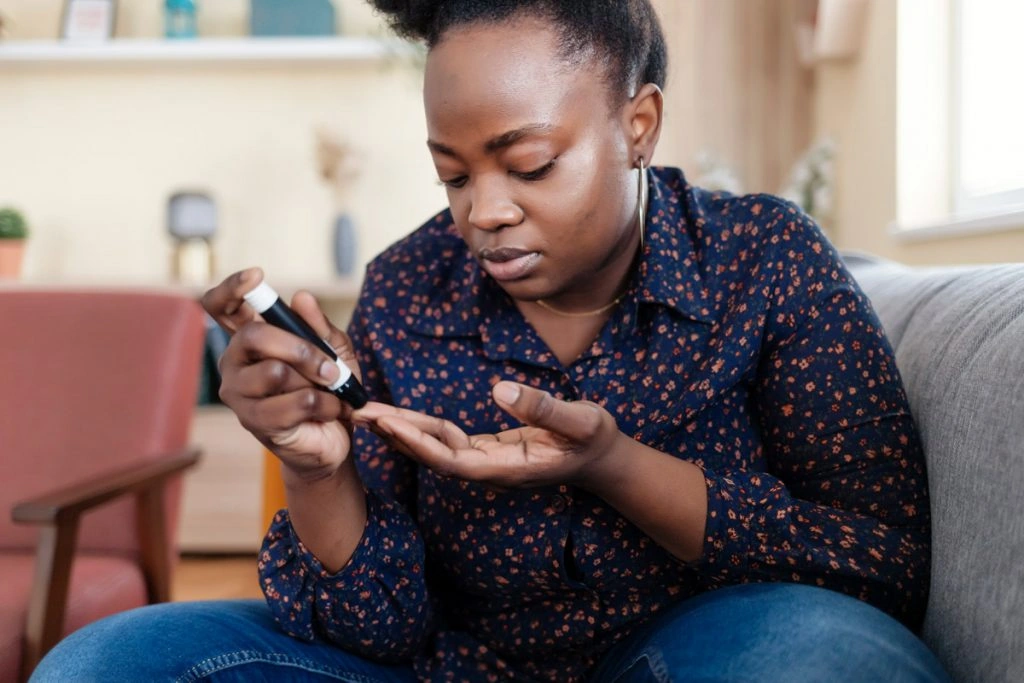
Diabetes is a chronic health condition that impacts roughly 37 million people in the United States.
Managing diabetes can also be costly.
Between insulin, test strips, glucose meters and needles, out-of-pocket expenses for diabetes supplies can total hundreds — or even thousands — of dollars each year.
To help lower those steep costs, here are practical ways to obtain the diabetes supplies you need for less.
Ways to Save on Test Strips and Blood Glucose Meters
If you have diabetes, it’s often necessary to check your blood sugar at least two to three times daily.
All those test strips add up quickly.
In some cases, buying test strips through your insurance can actually be pricier than paying cash.
- Shop around.If you use insurance, certain brands of test strips may be less expensive than others. Contact your insurer to learn if it prefers a specific brand.
- Reduce pharmacy charges.Some diabetes supply manufacturers provide copay cards that lower your pharmacy expenses. Mail-order subscription plans can also cut costs.
- Search for coupons.Compare prices. Using digital coupon services like GoodRx can trim costs, especially for those without insurance.
- Consider alternative brands.For example, Walmart’s ReliOn brand sells 100 test strips for about $18. These strips are compatible with ReliOn meters, which are priced from roughly $9 to $20.
Copay Cards for Strips and Meters
Manufacturers of glucose meters and test strips often provide copay cards that lower what you pay at the pharmacy.
- LifeScan’s OneTouch strips: Through LifeScan’s Automatic Savings Program, you can obtain 100 OneTouch test strips for $25. To use the copay card you must be enrolled in a prescription plan that doesn’t cover OneTouch strips, and you cannot be enrolled in a government insurance program.
- Ascensia’s Contour meters and strips: Eligible privately insured or self-pay patients pay the first $25 for up to a 100-count box of Contour Next test strips.
- Accu-Chek prescription discount program: Accu-Chek lists two primary discounts, including a starter pack for $50. You can buy 50 Accu-Chek Guide test strips for $20, then $10 for each additional 50. A prescription from your clinician is required and discounts can’t be used with health insurance.
You can also obtain a complimentary Accu-Chek meter via the company’s free meter program.
Subscription Plans for Test Strips and Meters
Subscription plans can lower the price of test strips and glucose meters.
These plans typically don’t require a prescription or insurance, and often cost less than buying at the retail pharmacy.
Diathrive
A diabetes supplier called Diathrive allows you to schedule recurring deliveries of supplies or to make a one-time purchase. There’s no long-term commitment and you can cancel anytime.
Here’s a sample of prices:
- $10 for a one-time meter purchase; a lancing device and carrying case are included at no extra charge.
- $8 per 50 test strips. You pick the quantity and delivery frequency.
- Lancets are provided at no cost.
- Free shipping on orders over $25.
Diathrive does not accept insurance, but you can use HSA or FSA funds to buy supplies.
How to Lower Insulin Costs
Not every person with diabetes uses insulin. But for those who do, the cost can be a major concern.
Insulin prices have risen substantially in recent years. A 2021 analysis by the RAND Corporation showed insulin costs in the U.S. are far higher than in dozens of other nations.
On average, insulin prices in the U.S. were more than ten times the average of the other countries studied.
The three main insulin makers — Eli Lilly, Novo Nordisk and Sanofi-Aventis — offer copay cards and patient assistance programs for people with and without insurance.
- Copay cards are typically available to insured patients to reduce the copay amount at the pharmacy.
- Patient assistance programs are for people who meet income-based eligibility and are usually time-limited. You must apply for these programs, and approval can take several days to weeks.
The simplest way to discover which programs you might qualify for is to use an online matching site like GetInsulin.org or the Medicine Assistance Tool.
After entering your prescription, income, insurance status and location, these tools provide tailored information on discounts and assistance you may be eligible for.
The American Diabetes Association also shares detailed guidance about the four insulin manufacturers that provide immediate help and longer-term resources.
You can also call your insulin manufacturer to ask about available savings programs.
Patient Assistance Program Phone Numbers By Manufacturer
| Eli Lilly Diabetes Solution Center | Novo Nordisk NovoCare | Sanofi Patient Savings Programs |
|---|---|---|
| 833-808-1234 | 844-668-6463 | 855-984-6302 |
Additional Ways to Reduce Insulin Expenses
Manufacturer discounts and assistance aren’t the only means to save on insulin.
Eli Lilly Price Reductions
On March 1, 2023, Eli Lilly reduced the price of one of its most common insulin products by 70%. The change was described by the company as a way to “help Americans who may have difficulty navigating a complex healthcare system,” in a company statement.
Here are some of the updated prices:
- Starting May 1: Eli Lilly’s unbranded lispro injection will be $25 per vial without insurance, down from about $82.41.
- Starting April 1: The company launched Rezvoglar, an insulin glargine product interchangeable with Sanofi’s Lantus, priced about 78% lower than the Sanofi option at $92 for a five-pack of KwikPens.
- Starting Q4 2023: Humalog, Lilly’s widely prescribed insulin, will be priced about 70% lower, with a five-pack of pens falling from roughly $530.40 to about $160 without insurance.
Additionally, commercially insured people who use Lilly insulin may now pay no more than $35 at participating pharmacies, according to the company.
Authorized Generic Insulins
Authorized generic insulins arrived on the market in 2019, offering a lower-cost, chemically equivalent alternative to brand-name insulin.
Generics are typically around half the price, and many pharmacies can substitute an authorized generic even if your prescription names the brand product.
Eli Lilly was the first to release an authorized generic — insulin lispro, the counterpart to Humalog. Since then, the FDA has approved multiple generic versions of various insulins.
If your pharmacy doesn’t stock the less expensive version, ask the pharmacist to order it.
Walmart’s ReliOn Insulin
Walmart and Sam’s Club pharmacies offer Novo Nordisk insulin for about $25 per vial without a prescription.
That insulin isn’t ideal for every patient. Novo Nordisk’s human insulin is an older formulation that requires careful timing and dietary attention.
In June 2021, Walmart introduced ReliOn NovoLog, a fast-acting analog insulin, but it’s pricier — about $73 per vial or $86 for a five-pen pack.
Insulin Pens
Many people prefer insulin pens for their convenience, as the medication and delivery device are combined.
Some pens are disposable and others are refillable with replacement cartridges.
Unfortunately, using pens can drive up costs.
GoodRx reports that rapid-acting insulins can cost nearly 40% more when purchased as pens rather than vials.
Your insurance may cover pen packs, but you’ll probably still have a copay.
If you value the convenience of pens, consider reusable pens. The American Diabetes Association notes that while reusable pens may be more costly up front, replacement cartridges tend to be cheaper than disposable pens, making them similarly priced over time.
Community Health Centers
Community health centers may supply low-cost or free insulin to people who meet income guidelines. Use the U.S. Department of Health and Human Services search tool to locate a clinic near you.
Talk to Your Clinician and Insurer
If you have health insurance, contact your plan to find out which insulin brand it prefers. If your doctor agrees another insulin can work for you, switching might reduce costs.
Also discuss options with your clinician. They might provide free samples of test strips or connect you to local resources that can help with expenses.
 State Insulin Copay Limits
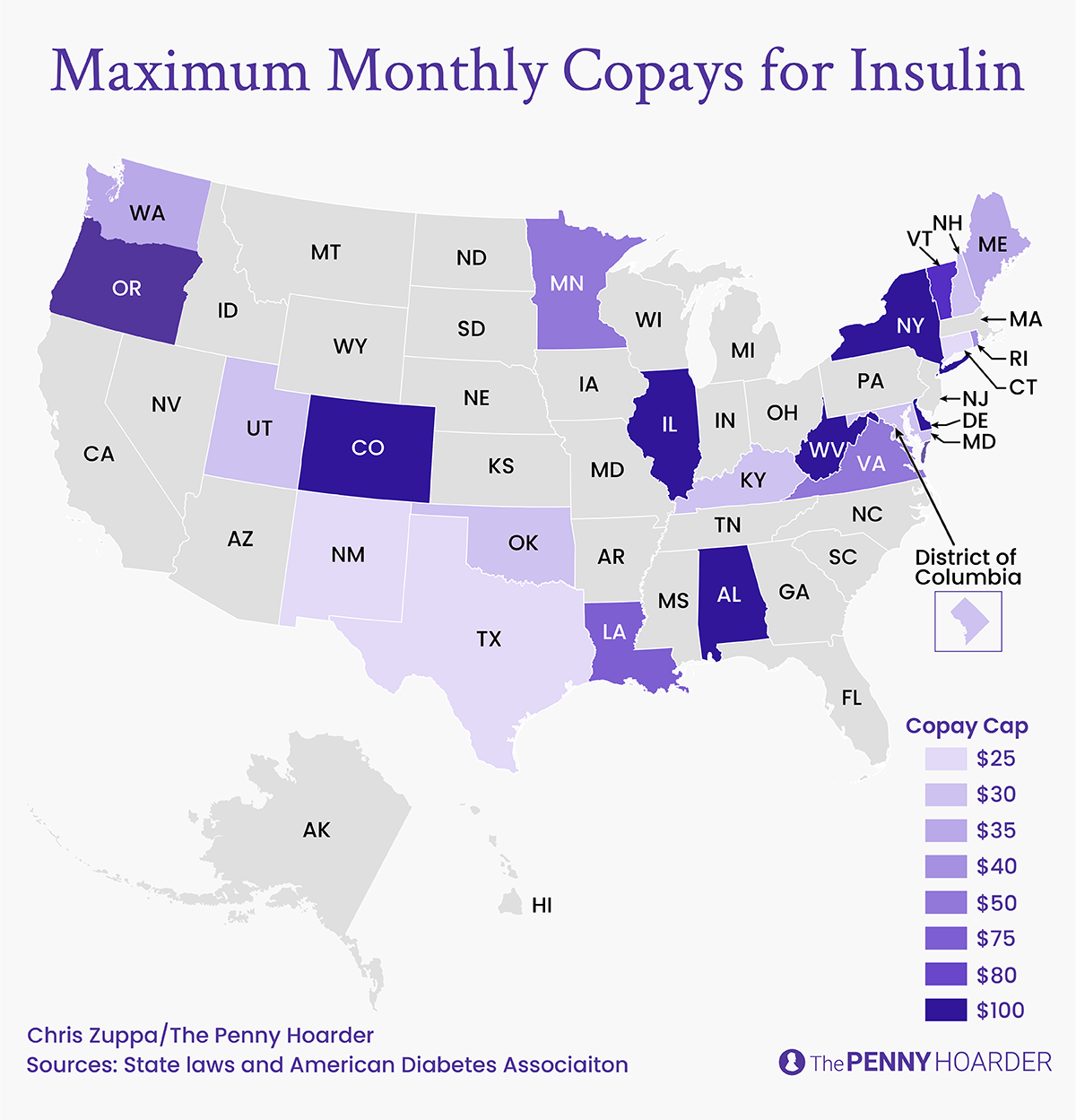
Several states have enacted laws that limit how much an insurer can charge out of pocket for insulin.
These caps typically restrict the cost of insulin to somewhere between $25 and $100 for a 30-day supply.
Colorado’s cap was the first to take effect in January 2020.
Today, nearly half the states have insulin copay cap laws, including Illinois, Utah and West Virginia.
For more on state laws affecting diabetes care, see this resource from the National Conference of State Legislatures.
Ways to Obtain Free Diabetes Supplies
Saving money is useful, but getting supplies for free is even better.
No-Cost Insulin
If you need free insulin, the three major manufacturers run patient assistance programs. Eligibility typically requires income below a certain threshold — often around 400% of the federal poverty level ($54,360 for an individual in 2023 and $111,000 for a family of four).
You’ll need to complete an application. The amount of free insulin provided may be limited; for instance, NovoCare’s program supplies a 90-day allotment.
- NovoCare Patient Assistance Program: Applicants must be at or below 400% of the federal poverty level and uninsured to qualify for 90 days of free insulin. The company will follow up before your supply ends to check ongoing eligibility.
- Lilly Cares: This program can provide up to 12 months of prescribed Eli Lilly insulin products to those who earn less than 500% of the federal poverty level and who meet other requirements.
- Sanofi Patient Connection: Sanofi offers free insulin for 12 months to uninsured people with incomes at or below 400% of the federal poverty level. If more assistance is needed, reapplication is possible annually.
Other Sources for Free Supplies
Many glucose meter manufacturers give away meters to encourage customers to buy their test strips.
Local nonprofits may also provide vouchers or direct financial help for diabetes supplies, particularly for uninsured, low-income individuals. Dialing United Way’s 211 can help you find local assistance.
Below are three additional ways to get supplies at no cost.
Free FreeStyle Meter
You can receive a FreeStyle meter at no charge by enrolling in the FreeStyle Promise Program. Registration may also unlock discounts on test strips.
The discounted strip program is not available to those covered by federal or state health insurance programs. The FreeStyle Promise card applies savings after an initial $15 payment; exact discounts vary per the company’s terms.
Free Contour Glucose Meter
You may qualify for a free Contour Next EZ meter if you are privately insured and have a prescription.
The meter itself is free, but you must purchase at least a 50-count box of Contour Next test strips at the pharmacy to redeem the offer.
Diabetes Will’s Way
Diabetes Will’s Way is a nonprofit that awards two types of grants to families with children who have Type 1 diabetes.
One grant covers durable medical equipment, such as insulin pumps and continuous glucose monitors. The other grant provides emergency cash assistance to help families buy everyday supplies like insulin, test strips and syringes.
There isn’t an online application on the site; you’ll need to contact the organization directly for details.
Alex Morgan is a Certified Educator in Personal Finance and a senior writer for Savinly. Alex focuses on retirement, investing, taxes and life insurance.