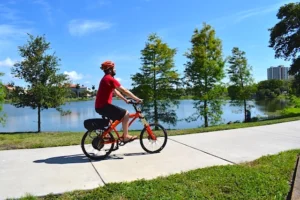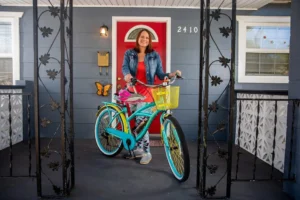
I count myself among the fortunate who celebrate Bike to Work Day (Friday, May 17) by doing what I do nearly every weekday: riding my bike to the office.
My workplace is close enough to home — about 3.2 miles, per Google Maps — and I live in the fairly bike-friendly city of St. Petersburg, Florida, so I can ride my cruiser without working up too much of a sweat.
And I’m not the only one — roughly 872,000 Americans say they bike to work, according to the latest American Community Survey.
But before you get overly envious (see what I did there? going green? okay, I’ll stop), there’s a lesser-known reality about commuting by bike.
It’s not as cheap as you might initially assume.
Don’t misunderstand me: It’s far more economical than filling up a car with gas, replacing parts like an alternator or paying for downtown parking. I know because I used to do all of that.
Still, if you’re weighing the idea of switching to a bike commute, be aware of some sometimes-surprising costs that accompany pedaling to work. And if you’re curious about alternative commuting options, consider biking to work as one practical choice.
Costs of Commuting by Bike

Below is an itemized list of my initial spending on commuting by bike. I’m sharing my figures, but your actual costs (and how far you ride) may differ.
- Bike: I bought a seven-speed cruiser on sale, though opting for a used bike could have cut the price further. Cost: $160
- Repairs: I handle basics like inflating tires and lubricating the chain, but anything more complicated goes to the local shop. I also carry a compact repair kit so I can limp to the nearest cafe if needed. Cost: $30
- Lock: I picked a basic U-lock that works for me, but if you’re worried about theft you might spend over $100 on a mix of locks and cables. Cost: $25
- Helmet: After trying several in-store, I chose the budget-friendly option — it seemed just as protective and produced the same helmet hair as the pricier models. Cost: $30
- Lights, mirrors, turn signals: Beyond safety, lights and a mirror are my way of signaling drivers that I’m a considerate rider — though it doesn’t always guarantee reciprocal behavior. I’m considering an integrated rear light/turn-signal setup, but for now I use hand signals. Cost: $35
- Bags: A waterproof rear pannier holds my bike essentials, while a backpack carries my laptop and a change of clothes. After learning the hard way that leftover lasagna and a backpack are a bad mix, I now bring a separate lunch bag clipped to the front with a carabiner. Cost: $60
- Weather gear: Living in Florida means a poncho, reflective apparel, extra sunscreen and decent sunglasses are must-haves. Cost: $140
- Laundry: I essentially doubled my weekly washloads because even on mild days I work up a sweat. At roughly $5 per load, that’s an extra $20 each month. Cost: $20
- Toiletry kit and spare clothes: Helmet hair is a reality. So is the chance you’ll get splashed by a passing truck. Cost: $10
- Extra cash: Every bike commuter eventually encounters a day when you must take transit, drive, or grab a rideshare; these moments are usually unplanned, so I keep some emergency cash on hand. Cost: $20
Grand total: $530.

Compared with driving — AAA reports that owning and operating a new vehicle averages $737 per month — biking saves me money both immediately and over time.
On top of the monetary savings, I also gain intangible benefits by getting exercise in natural light during my commute, which gives me a productive, energized start to the day.
Enjoy the ride!
Marissa Hale is a staff writer at Savinly.