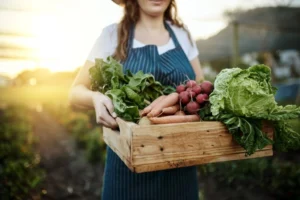
Choosing fresh fruits and vegetables that are in season isn’t just healthier — it’s easier on your budget too.
You may have observed that strawberries are less expensive in summer than in winter, or that butternut squash becomes a bargain in the fall. That’s because produce generally costs less when it’s being harvested locally and in abundance.
Focusing your grocery list on seasonal produce helps you make your food dollars go further.
What Does “In Season” Mean for Produce?
Produce is considered “in season” during the period of the year when it’s naturally harvested.
Different plants have distinct growth cycles. Some perform best in warm weather, while others prefer cooler conditions.
At certain times of year, specific fruits and vegetables are ready to be picked, plucked, dug up or gathered. When a crop is being harvested in large quantities, grocery stores often drop prices because local supply is plentiful.
Conversely, fruits and vegetables cost more when they aren’t in season because they must be transported from far-off farms with suitable climates. Transportation and import costs are typically passed along to shoppers.
Which Produce Is Available Year-Round?
Certain fruits and vegetables don’t have a pronounced season and can be harvested throughout the year. Their prices tend to remain relatively steady regardless of timing.
According to the U.S. Department of Agriculture’s SNAP-Ed program, these include:
- Apples
- Bananas
- Carrots
- Celery
- Lemons
- Limes
Know Peak Seasons and Timing
Many fruits and vegetables have peak times when they’re at their best. Others are harvested across several months. Prices typically fall during peak season and climb when items are out of season. You may also see fewer out-of-season items on store shelves.
The USDA’s seasonal produce guidance can help you shop smarter and save money.
Summer Produce
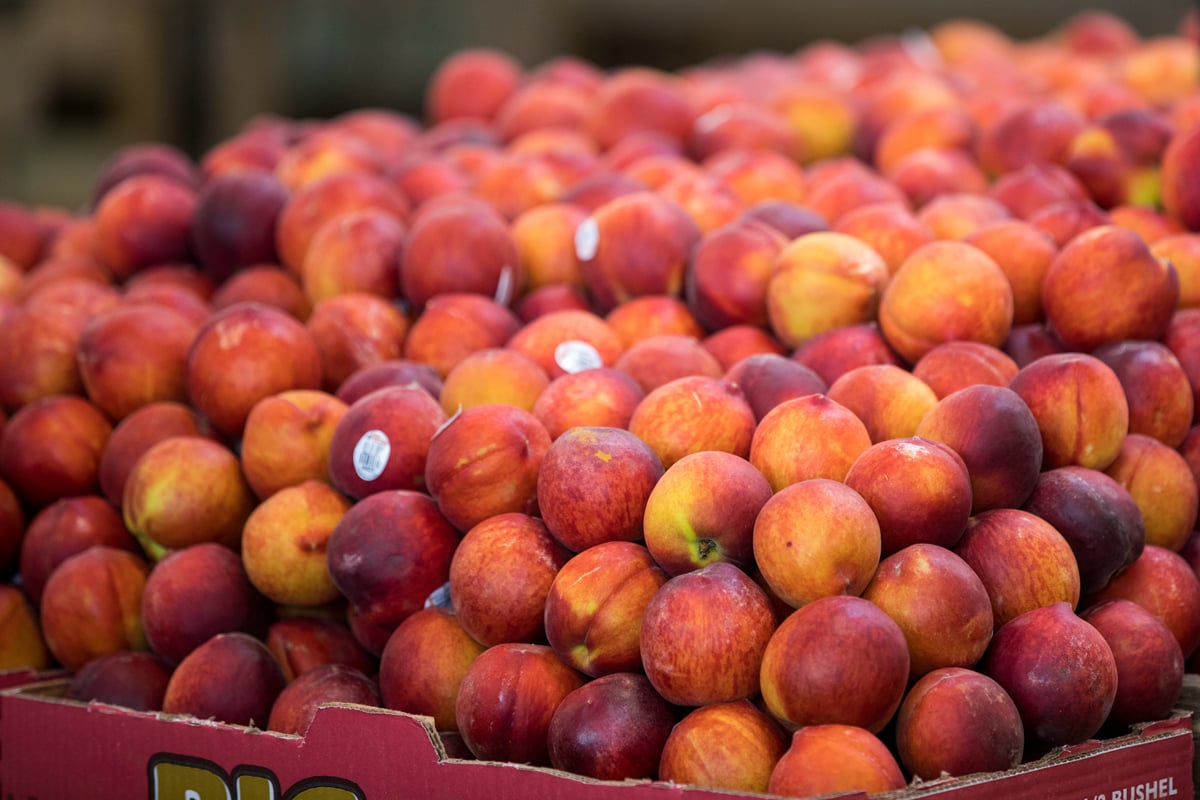
Summer calls to mind ripe berries and refreshing watermelon. Beyond those standbys, try grilling zucchini or corn on the cob at your next backyard cookout for tasty sides.
Produce you’re likely to find in season during summer includes:
- Apricots
- Avocados
- Beets
- Bell peppers
- Blackberries
- Blueberries
- Cantaloupe
- Cherries
- Corn
- Cucumbers
- Eggplant
- Garlic
- Green beans
- Honeydew melon
- Lima beans
- Mangos
- Okra
- Peaches
- Plums
- Raspberries
- Strawberries
- Summer squash
- Tomatillos
- Tomatoes
- Watermelon
- Zucchini
Fall Produce
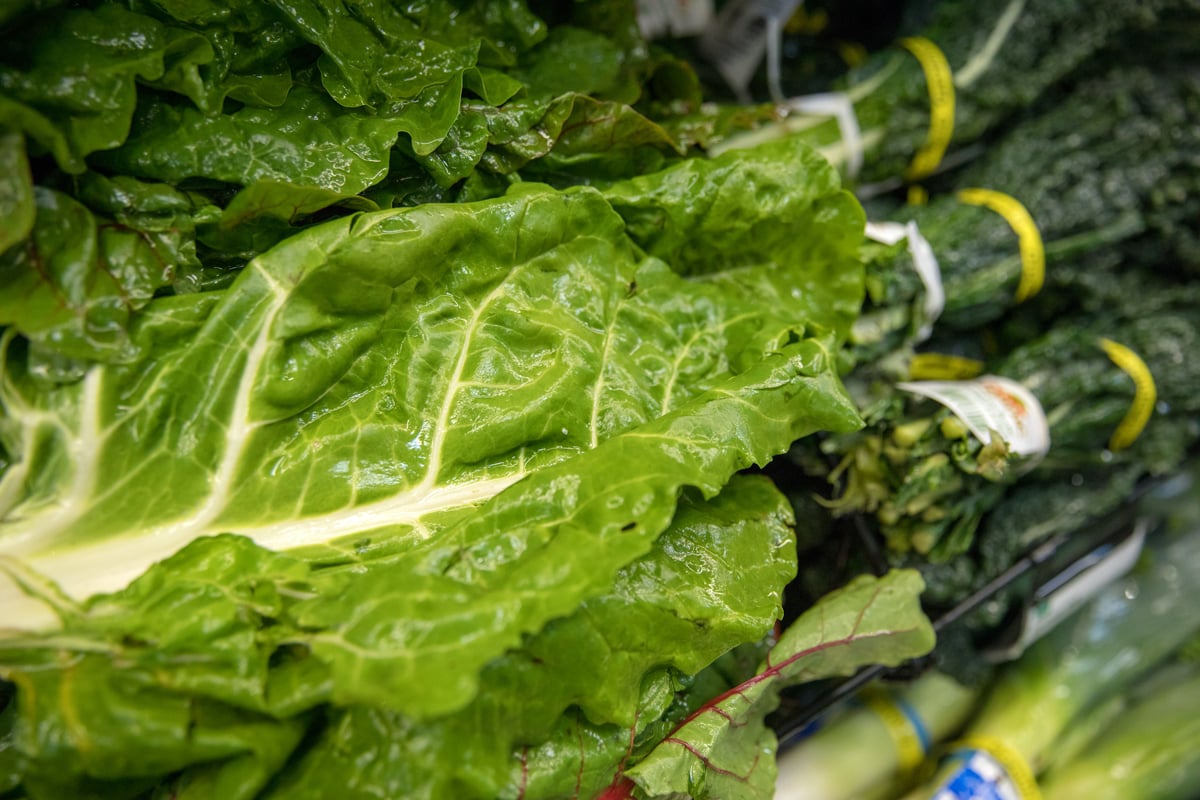
As the season shifts to autumn, root vegetables and squashes become wallet-friendly options at the market.
Seasonal picks in fall include:
- Beets
- Bell peppers
- Broccoli
- Brussels sprouts
- Cabbage
- Cauliflower
- Collard greens
- Cranberries
- Garlic
- Ginger
- Grapes
- Green beans
- Kale
- Kiwifruit
- Lettuce
- Mangos
- Mushrooms
- Onions
- Parsnips
- Pears
- Peas
- Pineapples
- Potatoes
- Pumpkin
- Radishes
- Raspberries
- Rutabagas
- Spinach
- Sweet potatoes and yams
- Swiss chard
- Turnips
- Winter squash
Winter Produce
Including fresh fruits and vegetables in winter helps counterbalance the sugary treats common during the holidays. Citrus fruits like oranges and grapefruit are great for a vitamin C boost as cold and flu season arrives.
Produce that’s in season during winter includes:
- Avocados
- Beets
- Brussels sprouts
- Cabbage
- Collard greens
- Grapefruit
- Kale
- Kiwifruit
- Leeks
- Onions
- Oranges
- Parsnips
- Pears
- Pineapples
- Potatoes
- Pumpkin
- Rutabagas
- Sweet potatoes and yams
- Swiss chard
- Turnips
- Winter squash

Spring Produce
As temperatures rise and flowers bloom, leafy greens become more abundant. Here are the fruits and vegetables commonly in season in spring:
- Apricots
- Asparagus
- Avocados
- Broccoli
- Cabbage
- Collard greens
- Garlic
- Kale
- Kiwifruit
- Lettuce
- Mushrooms
- Onions
- Peas
- Pineapples
- Radishes
- Rhubarb
- Spinach
- Strawberries
- Swiss Chard
- Turnips
Tips for Shopping Seasonal Produce
While the lists above reflect seasonality across the United States generally, availability can differ depending on your region. For instance, berries grown in Florida often peak in spring rather than summer.
For more localized information, check your state’s agriculture department or local extension service. The Seasonal Food Guide shows what’s in season by state.
Building relationships with nearby farmers can also make it easier to buy produce at its peak. Visit farmers markets or consider joining a Community Supported Agriculture (CSA) share to get seasonal fruits and vegetables at better prices.
Other ways to maximize seasonal produce include meal prepping and using all edible parts of plants. If you want to enjoy seasonal produce later in the year, preserve it by freezing or canning items you purchase during peak harvest.
When you plan to eat produce soon, learn the right storage methods so items last longer. And don’t worry if some pieces become overly ripe — there are many recipes and uses for overripe avocados, browning bananas, soft pears and wilting spinach that keep them out of the trash.
Alex Morgan is a senior writer at Savinly.