No matter where we live, we depend on our HVAC units to keep us comfortable — whether cooling us during scorching weather or warming us when it’s frigid. Still, the cost of HVAC upkeep can be a real shock to the budget.
That’s especially true when the system fails on the hottest or coldest day of the year. Or when it breaks down over a weekend and technician rates spike.
Routine care of your system can help you avoid some expensive emergency fixes.
But what exactly should be done, and what will it cost?
HVAC Fundamentals
HVAC means heating, ventilation, and air conditioning. There are multiple configurations, but split systems — with one component indoors and one outdoors — are the most common in homes.
The equipment varies depending on the climate where you live.
- Furnace and air conditioner: These work well in regions with wide temperature swings, from cold winters to hot summers. Most furnaces run on natural gas, though some use heating oil. The condenser unit for the AC sits outside and the evaporator coil is inside. The evaporator coil absorbs heat and transfers it to refrigerant via copper lines.
- Air handler and heat pump: In milder climates, a heat pump is an efficient choice. It provides heating and cooling by reversing its operation, while an air handler’s blower moves warmed or cooled air through the house.
- Furnace and heat pump: In very cold areas, a single heating source may not be enough. A dual-fuel or hybrid system automatically switches from the heat pump to the furnace when temperatures drop too low.
All systems require routine upkeep.
“If issues create a dirty or clogged system, it can negatively affect performance and increase wear on the equipment,” said Wes Davis, Director of Technical Services at Air Conditioning Contractors of America (ACCA). “That has tangible consequences for the lifespan of the equipment and how well it heats or cools your home.”
Why Preventive Maintenance Matters
Think of your HVAC like your car. You change the oil to keep the engine running smoothly and to reduce the chance of being stranded. The same logic applies to HVAC systems.
Taking a proactive approach instead of waiting for breakdowns can save money and also:
- Help prevent unexpected failures.
- Improve indoor air quality.
- Lower energy consumption.
- Extend the system’s useful life.
- Provide maintenance records required to preserve warranty coverage.
- Prevent dangerous carbon monoxide from entering the home through cracks or leaks.
How often maintenance is needed depends on several factors.
“A relatively new system may not require checks as frequently as an older system,” Davis said. “It also depends on the geographic region and where the equipment is installed. Equipment located in a hot attic in the South will experience more stress than gear in a basement in a dry climate, where it will often last many more years.”
Ultimately, Davis said you and your HVAC technician should agree on a maintenance plan tailored to your system and climate.
Routine HVAC Maintenance
Some maintenance tasks are simple enough for homeowners to handle; others need a trained technician.
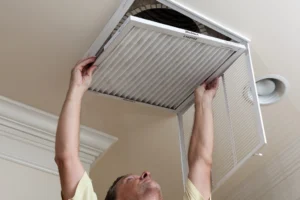
Changing the air filter is one easy job and should be done every one to three months. Filters are usually placed in the return air area before the air reaches the unit.
Higher-priced, high-efficiency filters such as HEPA aren’t always the best choice for every system.
“If your system is designed for a low-efficiency filter that allows air to pass freely and you install a very high-efficiency filter, the higher resistance can restrict airflow and have serious consequences,” Davis explained. Low airflow can cause parts to overheat and may force the system to shut down.
Conversely, allowing more air through can deposit more dust and debris on the coils, causing them to get dirty.
Replace filters more often if you have allergies, pets, or if the system runs constantly.
A 20-by-20-inch air filter typically costs $2 to $12 depending on quality. That size is common, but be sure you know the exact size your unit requires — there are many options.
Davis also emphasized the importance of these homeowner-friendly tasks:
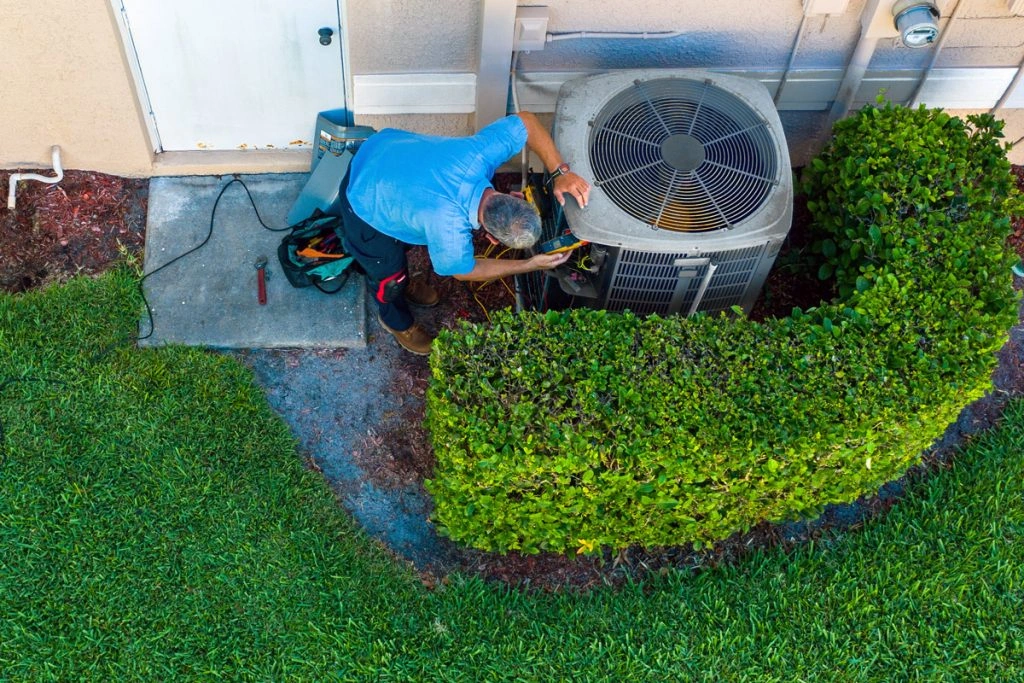
- Keep the area around the outdoor unit clear: Maintain at least 2 feet of clearance around the compressor. Remove leaves and plants that are too close and trim trees that could drop debris on the unit.
- Clean the condenser unit: Metal fins collect dirt, pollen, and other material. Use a garden hose (not a pressure washer) to rinse them gently. A fin comb can carefully straighten any bent fins that impede airflow.
- Ensure the unit is level: An uneven compressor can fail prematurely.
- Clear the drain pipe and pan: Clogs can lead to leaks or backups.
If you have a furnace, shut off the humidifier’s water supply in summer when it’s not in use. Before cold weather returns, change the humidifier filter and turn the water back on.
For window air conditioners, confirm the seal between the unit and the window is secure and that it touches the metal casing of the AC. Moisture can degrade the seal and let cool air leak out.
While some chores are easy, you should leave others to professionals. Depending on your area, a maintenance visit can range from promotional rates around $30 up to more than $100.
Davis said differences in services and pricing prompted the ACCA to produce national standards, establishing a baseline of tasks that should be completed during an HVAC inspection.
Technicians should:
- Flush the coils.
- Check drainage.
- Vacuum blower compartments.
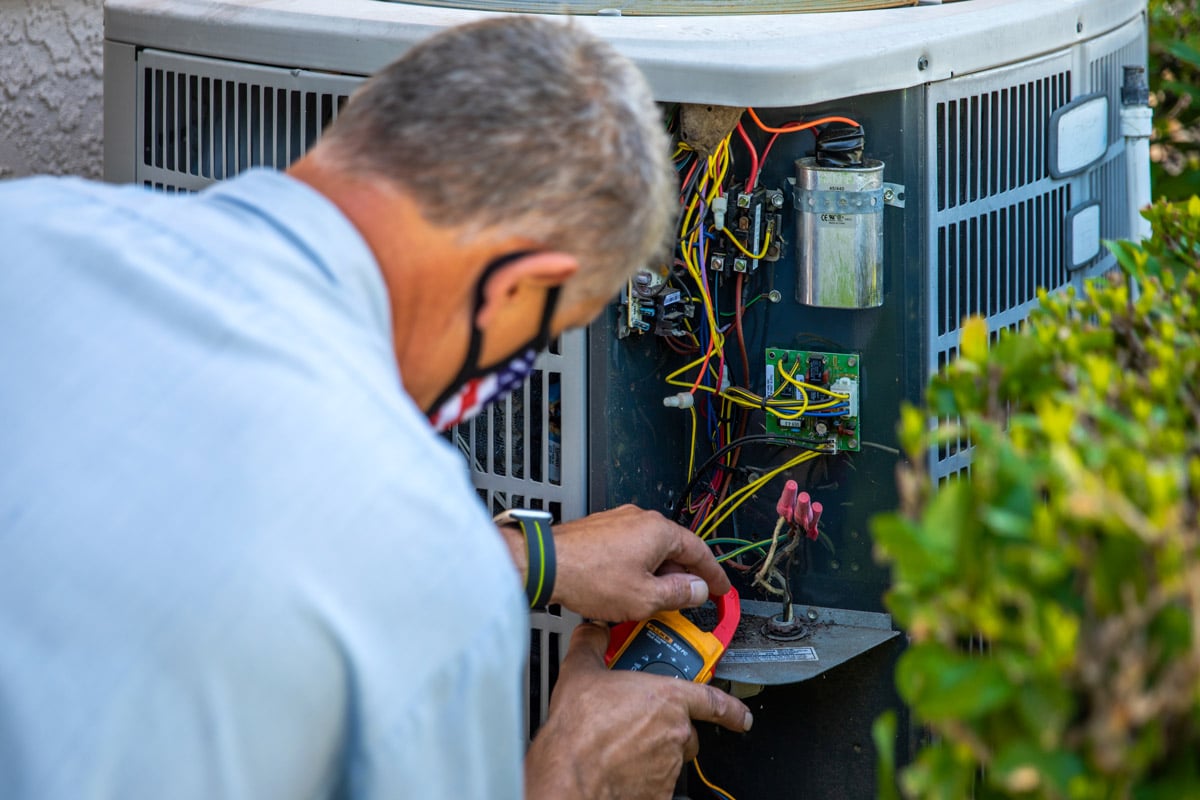
- Inspect voltage and all electrical connections.
- Verify refrigerant levels.
- Search for leaks that force the system to work harder.
- Lubricate motors.
- Clean condenser lines.
- Measure airflow through the evaporator coils.
- Inspect visible ductwork for moisture or biological growth.
- Test safety devices.
Some HVAC firms offer annual maintenance plans that may include perks like priority service, so check with the company you use to learn about any potential advantages.
Davis advised asking the HVAC provider which tasks they will perform during a maintenance visit, noting that some lower-cost companies focus more on generating leads and new sales than on preventing problems. He also recommended checking whether a company follows ACCA standards or belongs to a trade organization.
“Those kinds of indicators often point to contractors who do better work,” he said.
Warning Signs of HVAC Trouble
Even with good maintenance, issues can still appear.
Watch for these possible signs of trouble:
- Warm air blows from vents when the AC is on.
- The system intermittently shuts itself off.
- Temperatures vary noticeably from room to room.
- Noises are louder than usual while the unit runs.
- Energy bills spike unexpectedly.
At a minimum, Davis suggests scheduling a maintenance visit if you can’t recall the last time your system was serviced.
Jordan Blake is a freelance reporter based in Florida with more than 25 years of experience covering finance, health, travel, and related topics.