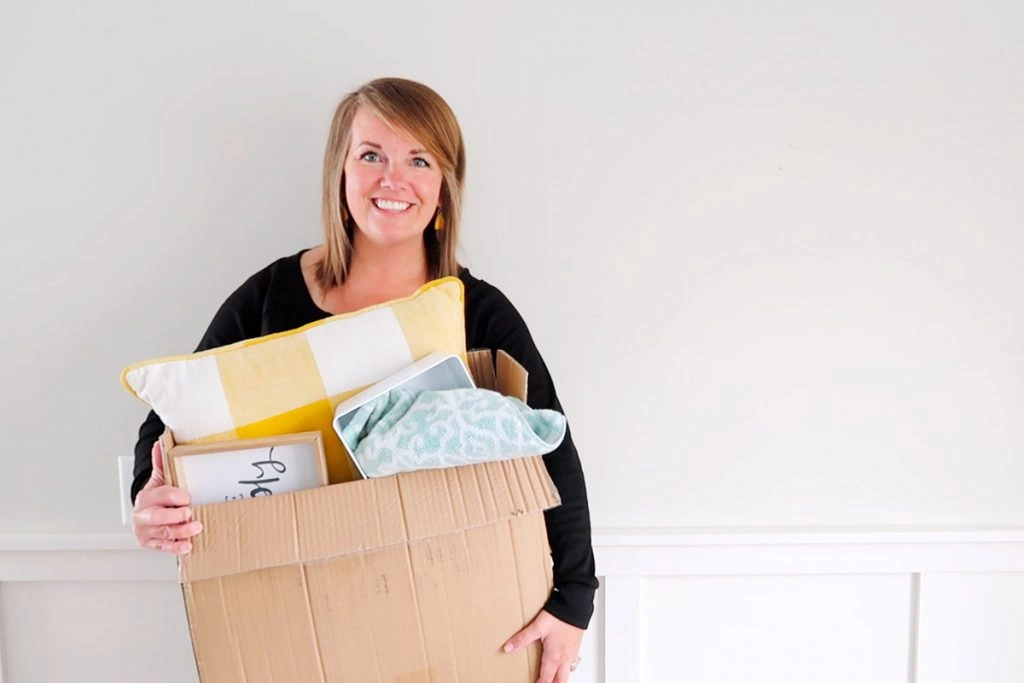
Minimalism is a way of living that favors owning fewer things. It stands against the consumer-driven culture that pushes us to keep buying more.
For Dawn Madsen, a Minnesota wife and mother of four, adopting a minimalist lifestyle seven years ago has been nothing short of transformative.
“[The] stuff — once it’s gone, you don’t miss any of it,” said Madsen, who posts as The Minimal Mom on YouTube. “And what’s left is just so wonderful. So meaningful.”
It even helped her household become free of debt.
We spoke with Madsen about how she cleared out clutter and welcomed minimalism into her family’s routine.
The Journey Toward Minimalism
Madsen first became curious about minimalism when her children were all 4 and under and she felt overwhelmed trying to keep the house in order.
“There was stuff everywhere, and I couldn’t keep up with it,” she recalled.
She discovered a podcast by Joshua Becker — an early leader in the modern minimalism movement and author of “The More of Less” — and was immediately drawn in. Realizing other families were managing fine without heaps of possessions convinced her that her family could too.
“I didn’t really have anything to lose,” Madsen said.
She began removing items around the home that her family wasn’t currently using or unlikely to use within six months. Many of the toys and clothes she’d routinely nag her kids to clean up — she decluttered quietly.
“Now that they’re older, I think they value it,” Madsen said. “There was just too much for them to handle.”
Minimalism’s Major Financial Impact
Although saving money wasn’t the main reason she embraced minimalism, Madsen said financial benefits were a fantastic side effect.
About a year after starting their minimalist lifestyle, Madsen and her husband Tom decided to tackle their debt seriously. Even though Madsen considers herself frugal — shopping dollar stores, thrift shops and garage sales — she estimates their family now saves a few hundred dollars each month thanks to minimalism.
Adopting a simpler life weakened consumerism’s hold on them, she said.
“When you remove, like, 80% of your possessions in a year, you develop an aversion to reaccumulating [things],” Madsen said.
That mindset made it easier to commit to paying down debt and avoiding new liabilities. Following Dave Ramsey’s approach and the debt snowball method, Madsen and her husband managed to eliminate $130,000 in consumer debt in roughly two years.
“I can’t say which changed our lives more — simplifying our home or getting out of debt,” she said. “I didn’t realize how much weight we were carrying while in debt. And I didn’t see how much stress all that stuff in our house caused me.”
After clearing their consumer debts, the Madsens went on to pay off their mortgage earlier this year. Becoming debt-free has allowed them to focus on what truly matters to their family.
“Our priorities are so different now,” Madsen said. “We don’t rely on things to try and make us happy. We find satisfaction in helping others, spending time together, and being able to travel. It’s not about the stuff anymore.”
Tips for Families Considering Minimalism
Whether you want to reduce clutter or cut spending, Madsen recommends first learning about minimalism.
“Start by watching YouTube videos or reading articles and books about it, and then give it a try,” she advised.
If your children are young like hers were, she suggests decluttering their items without them.
“I do think kids are minimalists at heart,” Madsen said. “We all flourish in simplified spaces without lots of things to manage, and children are no different.”
Another important point: minimalism doesn’t require removing every nonessential.
“We still want our home to feel warm,” she said. “So we keep decorations, pillows, throw blankets and similar comforts.”
It’s also fine to make the transition gradually. When it came to holidays and birthdays, Madsen said it took a couple of years to teach her family to rethink how they give gifts. They now favor experiences or useful presents.
“[My kids] enjoy receiving new clothes because most of what they otherwise get is secondhand,” she noted.
She and her husband are intentional about telling relatives and friends what their kids actually need.
It isn’t always simple. Children receive so many things and are surrounded by consumer messages today, Madsen said. Still, her kids have come to value simpler living and are good at sorting through their things to let go of items they no longer use.
While she’d hoped decluttering would be a one-off task, she recognizes it’s a continual effort as items come and go from their home.
These days, she’s no longer the frazzled parent constantly reminding her children to pick up toys.
“[Our house is] pleasant to be in. It’s easy to keep tidy,” Madsen said. “Even though our home is small — only 1,500 square feet — we absolutely love it. We love being here.”
Emily Carter is a senior writer at Savinly.