Monopoly makes buying property look simple. In reality, there’s no landing on “payday,” and rent in New York doesn’t cost $16.
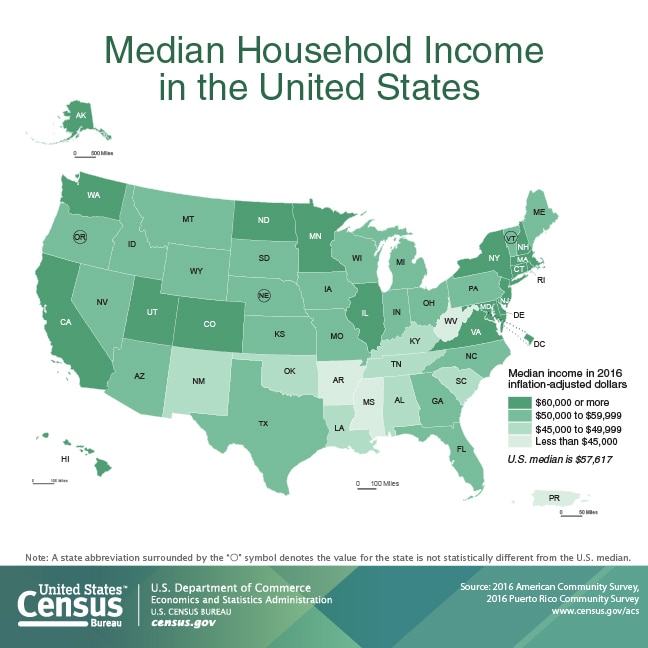
In fact, the median monthly rent for a two-bedroom apartment in the U.S. is $1,178. That represents about 35% of median take-home pay after taxes, based on the median household income.
Like all medians, that means half of households are even more financially stretched than the typical American family. (Let’s call them the Joneses.) Factor in the nation’s roughly $1.4 trillion in student loan obligations, and the idea of accumulating a down payment can feel laughable.
Still, numerous polls show homeownership remains a central financial goal for many Americans. A 2017 survey discovered that 68% of millennial homeowners expect to own more than one home over their lifetimes.
If you’re among the millions aiming to save for a house, here’s where to begin.
Work Out How Much You’ll Need for a Down Payment
The starting point is figuring out how much you must accumulate. The required down payment often depends on the type of mortgage you pursue.
Many people still repeat the old advice to save 20% so you can avoid mortgage insurance, but that’s not the only—or necessarily the best—route.
When the National Housing Act created the Federal Housing Administration (FHA) in 1934, it also introduced FHA loans. Because the FHA insures loans made by approved lenders, it lowers the lender’s risk and can translate into more favorable terms for borrowers, such as the following:
If your credit score is 580 or higher, you might be eligible for an FHA loan with just a 3.5% down payment. These loans often permit a higher debt-to-income ratio than conventional mortgages and even allow gift funds to be used toward the down payment.
If your credit score lies between 500 and 579, approval becomes tougher, but you might still qualify with a 10% down payment. If your score is in this range, there are strategies you can try to reach the 580 threshold.
Other low-down-payment alternatives include conventional 97 mortgages, which demand just 3% down. Veterans may be eligible for VA loans that require no down payment.
Interest rates on FHA loans typically fall between about 4.2% and 5.99%.
When you compare mortgage lenders, they’ll ask about your assets, monthly expenses and household income to provide a prequalification estimate. This gives you a rough sense of how much you’ll need to save to move forward. Patience matters here — shop around to ensure you get the most favorable terms you qualify for.
After choosing a lender, you’ll work with a mortgage officer to secure formal preapproval for particular terms before making any offers.
What about our median family, the Joneses? With credit scores in the high 600s, they’d meet the 3.5% threshold. If they’re targeting a home priced around $216,000, Zillow suggests they’d need about $7,560 for the down payment.
But the Joneses must account for more than the down payment. Closing costs generally range from 2% to 5% of the home’s price, so they might encounter up to roughly $10,000 in extra fees — with $3,700 being the national average for buyers — to complete the purchase. They could roll these fees into an FHA loan, but that adds decades of interest on those costs.
If they pay closing costs out of pocket, the Joneses’ saving target climbs to just over $11,000.
Plan for the Ongoing Costs of Owning a Home
It’s easy to miscalculate: one minute you’re using a mortgage calculator, the next you realize your rent covered what now looks like a private island payment.
But mortgage principal and interest are only part of the monthly expense of homeownership. You’ll also be responsible for property taxes, homeowners insurance, mortgage insurance (if applicable), possible homeowners association dues and maintenance.
Research the local tax rate (often called the millage rate) in the neighborhoods you’re considering. Ask lenders for detailed estimates so you’re not surprised by fees. When you find a property you like, invest in a professional inspection to identify likely repairs in the near term.
According to The Balance, around $177 of the median monthly mortgage payment goes toward taxes and insurance. Additionally, it’s wise to set aside about 1% of the home’s value each year for maintenance. Using the Joneses’ $216,000 house as an example, those extra costs beyond principal and interest would amount to approximately $360 per month.
How to Actually Save for a House
After you establish your savings target, the real effort begins.
If you’re a first-time buyer, you might qualify for an assistance program in your state. Whether you qualify or not, having a deliberate strategy to save for a house is essential.
Explore budgeting systems to find what fits your habits. The key is tracking every dollar and being able to justify each expense. For instance, a zero-based budget requires assigning a purpose to every cent.
Consider your discretionary spending and ask yourself: is this worth postponing homeownership for?
Look for ways to reduce major living costs. Bringing on a roommate or opting for coliving arrangements can substantially cut housing expenses.
Would it make sense to downsize temporarily while you save? USA Today reports that the price gap between two-bedroom and one-bedroom units can be as large as 30%.
Don’t overlook the smaller aspects of your finances either.
As you build your nest egg, ensure your savings are earning as much interest as possible. Some accounts yield over 1% APY. It may sound modest, but over time it adds up.
Every dollar matters.
Sam Mercer is a former editor at Savinly.