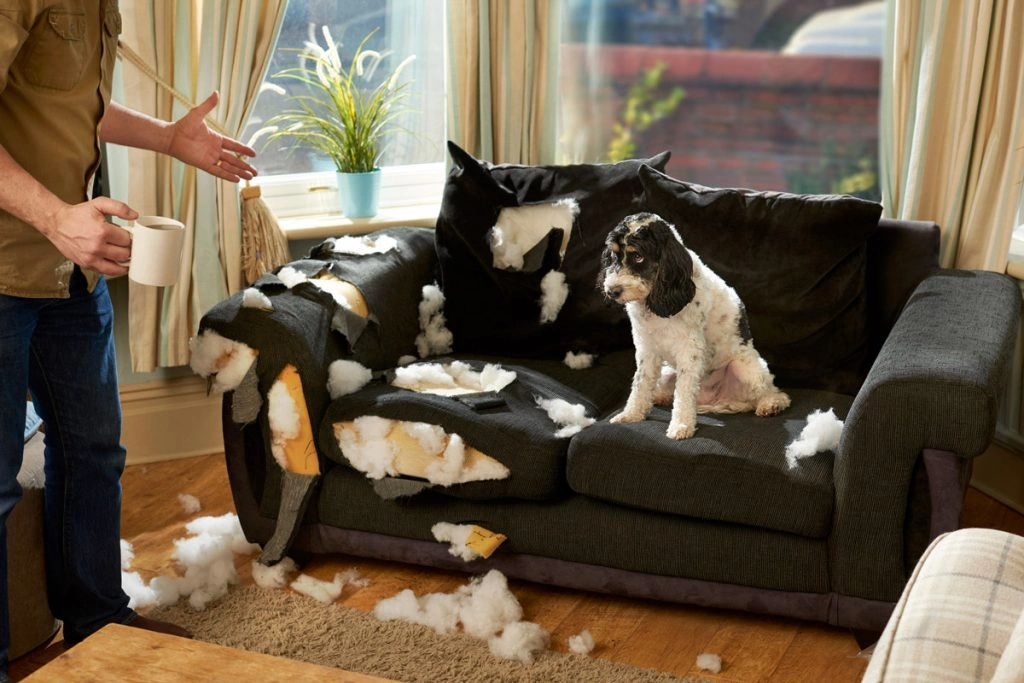
If you share your home with a dog or cat, chances are you also deal with shredded upholstery, urine-marked rugs and floors that have seen better days.
But swapping out furniture, ripping up carpets and refinishing floors every time a pet leaves its mark isn’t realistic for most households — not least because of the cost.
In these cases, prevention is often your best strategy: pet-proofing your living space.
Besides saving your furnishings and your budget, pet-proofing can also benefit your animal companion.
”When implemented correctly, pet-proofing can enrich your pet’s life and channel their energy and instincts in ways that don’t harm your home,” said Jen Jones, a professional dog trainer and behavior specialist who founded Your Dog Advisor, a resource for dog owners.
6 Ways to Pet-Proof Your Furniture
We reached out to Jones and several other animal professionals for practical, low-cost ideas to help pet-proof your house so you can enjoy your furry pals without constantly worrying about damage.
1. Bitter Chew Spray
If your dog loves to gnaw, a bitter chew spray is essential, says Daniel Caughill, co-founder of The Dog Tail. Caughill recently added a puppy to his household and knows young dogs will chew shoes, couch corners, door frames — literally almost anything.
“Bitter chew spray lets you quickly spritz whatever item your dog fancies and discourage them for a while,” Caughill said. “The effect isn’t permanent and it won’t stain or harm your belongings, but over time your pup should link the item with an unpleasant taste.”
You can concoct a homemade version using water, lemon and vinegar, but many commercial products are formulated specifically for this need. Caughill suggests Bodhi Dog’s Bitter Chew Spray ($14.95) because of its natural ingredients.
2. Slipcovers
If you don’t want to replace your sofa or want to shield what you already own, an inexpensive pet-friendly slipcover can protect a couch, loveseat or upholstered chair, says Lorri Caffrey, interim executive director of the Mt. Pleasant Animal Shelter in East Hanover, New Jersey.
Caffrey recommends Gorilla Grip, which offers no-slip covers in a variety of sizes. Even the most costly cover she suggested runs under $45.
3. Scratching Posts and Deterrents
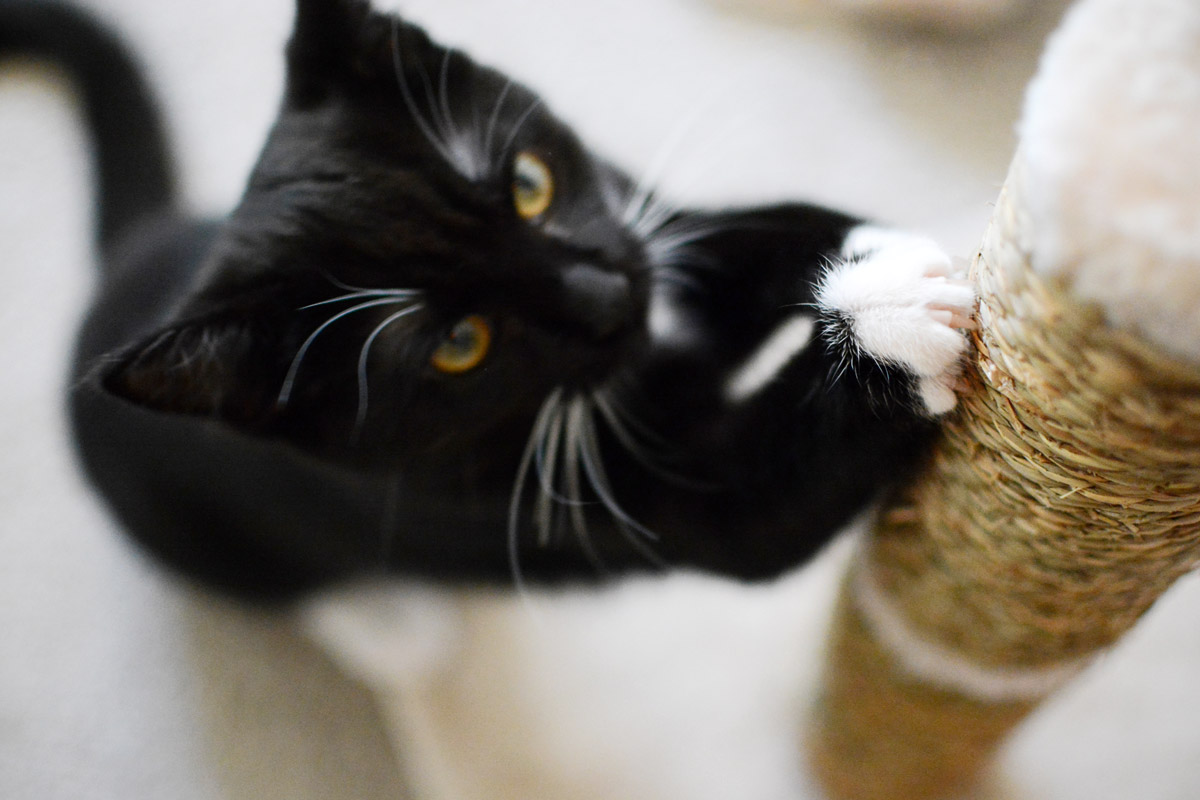
The most effective way to curb scratching or chewing is to offer your pet an appropriate outlet, says Nick Garside, a veterinary surgeon with Viovet Ltd.
“Scratching is normal for cats and rabbits, and chewing is normal for dogs, so trying to eliminate these behaviors entirely is unlikely to work,” Garside said. “Scratching helps wear down rabbits’ and cats’ nails, and chewing helps keep dogs’ teeth cleaner.”
Garside advises providing scratching posts and climbing structures for cats. Position these posts and chew toys near the item your pet originally targeted — often the couch — for best results.
Experiment with different scratching styles — horizontal, vertical, angled, corrugated cardboard, sisal rope or carpet-covered — to figure out which your cat prefers, suggests Jennifer Coates of Pet Life Today.
You might also try applying FeliScratch ($19) to the new scratching post to attract the cat to the proper place.
If you prefer a DIY route, Coates recommends covering the tempting spots on your couch with double-sided tape or aluminum foil. The unpleasant texture will discourage your cat from scratching there.
4. Absorbent, Washable Pads
Does your pet have a favorite couch spot? Place an absorbent, washable pad on that area, suggests Jamie Thomas, executive director of the Motley Zoo Animal Rescue, who cares for multiple animals and has fostered over 1,000 pets.
A pad will guard that spot from scratches and accidents, and it cuts down on the hair that ends up on your couch — especially if it’s not leather.
Experts we consulted highly recommend the Two-Pack Washable Pee Pad for Dogs ($25.99).
5. Pet-Friendly Fabrics
If you’re shopping for a new sofa, choose your upholstery carefully — some materials handle pets much better than others, Thomas says.
“I’ve found that leather with a pronounced, thick grain tends to be incredibly durable,” Thomas said. “I had a set of thick-grained leather couches for 15 years; I only replaced them when the cushions lost their loft — they still looked great.”
Ironically, soft, smooth, high-end leather is more susceptible to scratches and can be ruined easily, so Thomas urges pet owners to opt for grainier leather, which is usually more affordable.
Avoid bonded leather — made from leather scraps glued together — which won’t hold up. The same warning applies to polyurethane and other faux leathers.
“They don’t recover like real leather — which, if scratched, you can sometimes rub out or condition to make the damage less noticeable,” Thomas explains.
Bonus: If a pet has an accident on leather, you can often blot it with a paper towel or cloth and a cleaner and remove it.
Your next-best option is microfiber, Thomas says. It’s typically durable and cleans up well if you act quickly.
Although some microfiber fabrics are marketed as water-resistant, be sure to test any fabric you’re considering in the store before purchasing (with permission).
6. A Good Carpet Cleaner
Carpets often suffer the most when a new puppy arrives, says Skylar Dial of Pet Care Resource. No matter how vigilant you are, they often find the worst spot and use it as a toilet.
Dial recommends choosing tile, vinyl or wood floors if possible, but if you have carpet and aren’t replacing it soon, consider investing in a carpet cleaner. Dial suggests the Hoover SteamVac ($199).
“This can significantly reduce odors and stains, literally giving you a fresh starting point,” she said.
Looking for a cheaper pick for hard floors? The Bissell PowerEdge Pet Hardwood Floor Bagless Stick Vacuum is also well-rated ($59.99).
Alexandra Reed is a contributor to Savinly.