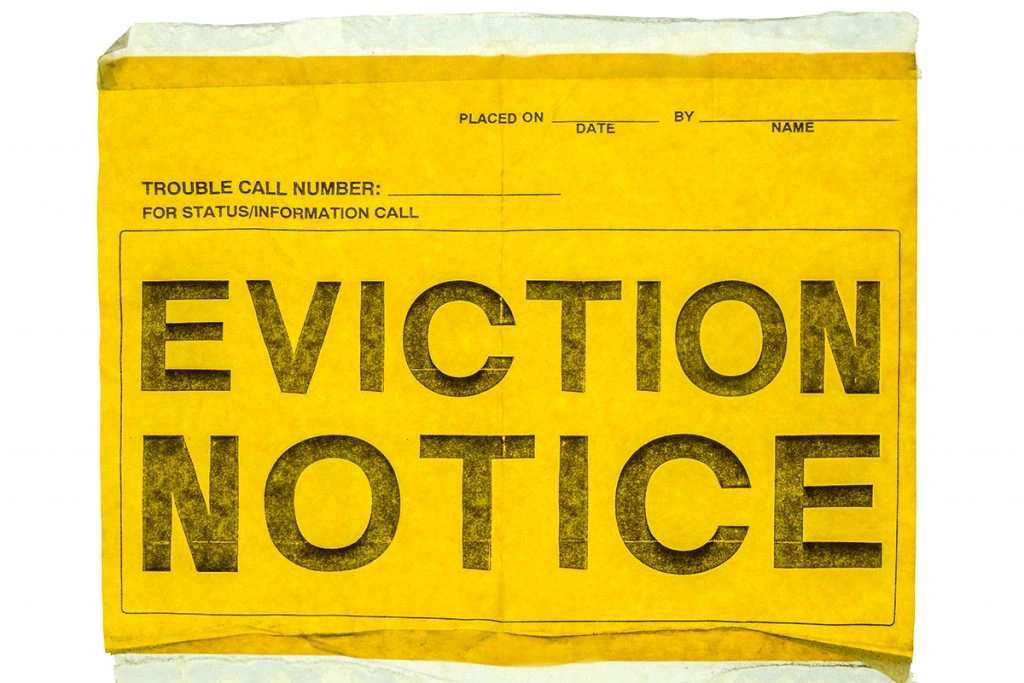
A few months before the housing market started to collapse, 22-year-old Alisa Daly and her boyfriend — now husband — were expecting their first baby.
She worked at a small trucking firm in Arizona and was close with the office manager; her mother was employed at the same place. So Daly was stunned when her mother phoned to say she was about to be let go. Then, a few months later, the couple’s car failed and her boyfriend lost his job after missing work.
“It made us feel awful, anxious, depressed and furious,” Daly recalls. “We couldn’t find work anywhere, doing anything. And no one would hire someone who was pregnant.”
As a renter in 2007, she managed to avoid eviction, unlike the 958,000 tenants who lost their homes during the housing crisis. But she stood on the edge of a life-altering, community-wide calamity, according to recent figures from the Eviction Lab, a project led by Princeton University professor Matthew Desmond with significant funding from the Gates, JPB and Ford Foundations and the Chan Zuckerberg Initiative.
Fortunately, Daly—today a homeowner—worked out a week-to-week payment arrangement to prevent falling behind on rent — showing what experts say is often your best option if eviction looms. She says splitting the rent into weekly payments simplified her budgeting.
When she later moved out to break her lease after a burglary attempt, she avoided extra charges by hiring an attorney and arguing her landlord breached the lease by failing to maintain the apartment properly — another route to contest an eviction action.
While foreclosures have dropped 67% since the Great Recession, rental evictions fell only 9.6% to 898,479 in 2016, the most recent year available. With experts increasingly alarmed about housing affordability, especially for renters, and wages largely stagnant, the eviction crisis is likely to persist.
“If you reside in a neighborhood plagued by evictions, then it absolutely feels like an epidemic, but it’s an epidemic that has always existed,” said David Dworkin, president and CEO of the National Housing Conference and a former housing policy adviser at the U.S. Treasury Department. “And if you don’t live in one of those areas, it’s an epidemic that’s been easy to overlook.”
General Guidance on How to Prevent an Eviction

Because the Eviction Lab struggled to gather full eviction records from several states, including New York and California, the true number of people evicted each year is likely in the millions. It could be your neighbor. A relative. It might even be you.
As Alisa Daly’s experience illustrates, you can face eviction through circumstances beyond your control.
In Maricopa County, Arizona, Judge Pro Tem Jeremy Rovinsky can handle as many as 100 eviction cases in a busy day when he’s filling in on the civil docket.
“It’s very painful for me to have to look people in the eye—people who are struggling, people who are hurting—and tell them they must leave their home,” he says. “The worst aspect of my job is having to look them in the face and say this is the law.”
So how does an eviction proceed?
First, landlords cannot lawfully evict you on their own by changing locks, cutting off utilities or other tactics. They have to use the court system.
Typically, you’ll receive a notice to vacate and later appear before a judge. Keep in mind it’s uncommon for a tenant to prevail in a nonpayment eviction case. If the judge sides with the landlord, a law enforcement officer will execute the eviction and you’ll be forced to leave.
Although eviction statutes differ by state, there are common steps you can take if facing eviction for unpaid rent. Below are the timeframes landlords generally must follow in eviction proceedings in each state.
Negotiate with Your Landlord or Leasing Agency
Often, it’s in a landlord’s interest to reach a payment plan so a tenant doesn’t get far behind. For Daly, that meant paying week-to-week, but it might be a short grace period while you recover financially.
Whatever you agree to, make sure it’s documented in writing.
“[The landlord] neither wants the hassle of going to court nor the property sitting empty,” Rovinsky says.
Collect and Preserve Documents
Depending on where you live, technicalities may require a landlord to pause or stop eviction actions — such as failing to maintain the property or retaliating when a tenant asks the landlord to follow local housing laws. These are potential defenses to an eviction.
But you’ll need evidence. Keep your lease and read it closely — or request a copy from your local Clerk of Court if you misplaced it. Save emails, texts and letters from the landlord and photograph the condition of the unit.
“Pictures really are worth a thousand words in these cases,” said Alan Mills, executive director of the Uptown People’s Law Center in Chicago. “Judges must decide who’s telling the truth, and the more documentation you have, the better your odds.”
Seek Legal Aid or Support From Community Groups
With the complicated differences among state landlord-tenant rules, it can be overwhelming to research your options — especially if you’ve lost a job or care for a family.
Remember, a landlord cannot lock you out or switch off utilities — so stay calm and contact a nearby legal-aid office. Many offer low-cost or free help, and because they work with vulnerable populations, they often have tenant-rights specialists.
Rovinsky described a case where a church congregation contributed $500 so a tenant could avoid eviction for that month. Sometimes a single month of assistance is enough to get back on track.
Plan for the Worst Even If You’re Fighting
“Make a contingency plan,” Mills advises. “The worst outcome is the sheriff showing up and putting your possessions on the curb.”
That means using any savings to rent an inexpensive storage unit for a month and arranging for friends or family to care for children if necessary, or finding shelter services.
Your first move should be to call thenational resource hotline 211.
After stabilizing your situation, keep in mind an eviction can stay on your rental record. So when searching for a new place, be upfront with prospective landlords before paying for multiple background checks. Doing so could save you from paying half a month’s rent on several screening fees if you’re repeatedly denied, Mills said.
But don’t give up; nonpayment is typically the least damaging type of eviction on your record.
“If landlords only rented to people with no eviction history, a lot of properties would remain vacant,” Rovinsky said. “It doesn’t mean you’ll never rent again or that your life is finished.”
State-by-State Eviction Rules and Resources

The short summaries below outline typical timelines and some tenant rights when rent isn’t paid on time. There are many legal nuances across jurisdictions and housing types — and this is not legal advice — so we include contacts for legal-aid organizations and tenants’ advocacy groups who can help.
These groups can help clarify your rights and may assist in fighting an eviction.
Savinly also examined eviction rates — the share of rental units where tenants faced eviction in 2016 — to list cities with the highest eviction activity. For perspective, the national eviction rate is about 2.3%.
Alabama
In Alabama, landlords must provide tenants with notice and seven days to vacate unless the rental agreement is satisfied. During that week the tenant may pay, and the landlord cannot legally pursue eviction.
Legal Services Alabama, Statewide, 866-456-4995
Montgomery — 5.82%
Gadsden — 5.53%
Hueytown — 3.76%
Tillman’s Corner — 3.76%
Mobile — 3.66%
Arizona
In Arizona, where Rovinsky presides, tenants receive five days’ notice before eviction. There are three ways to stop it: pay rent in full within five days; pay rent and any late fees after five days; or, before final judgment, pay rent, late fees and court costs.
Drexel Heights — 6.15%
Tucson — 6.03%
Casas Adobes — 2.91%
Marana — 2.53%
Catalina Foothills — 1.99%
Arkansas
In Arkansas, landlords can pursue eviction via a civil suit or criminal charge. For civil actions they must give a three-day written notice of intent to sue for “unlawful detainer.” After a court summons, you have five days to contest. For criminal charges, they give 10 days to vacate; staying beyond that can lead to misdemeanor charges and fines up to $25 per day.
Legal Aid of Arkansas, Jonesboro, 800-967-9224
Center for Arkansas Legal Services, Little Rock, 501-376-3423
Legal Aid of Arkansas, Statewide, 800-952-9243
Jacksonville — 1.99%
Marion — 1.96%
West Memphis — 1.85%
Little Rock — 1.76%
North Little Rock — 1.68%*
*These are eviction filings rather than completed evictions.
California
California requires a three-day notice to vacate. If the tenant fails to pay within those three days, the landlord can file for eviction.
Bay Area Legal Aid, Oakland, 510-663-4755
Legal Aid Foundation of Los Angeles, 323-801-7991
Hemet — 5.08%
Moreno Valley — 4.81%
Perris — 3.31%
Arden-Arcade — 2.97%
Rancho Cordova — 2.86%
Colorado
Colorado gives tenants three days before landlords can start eviction proceedings. If rent is paid within those three days, the landlord cannot continue. Tenants who move out within three days remain liable for rent; if a security deposit does not cover the balance, the landlord may sue for the remainder.
Colorado Affordable Legal Services, Denver, 303-996-0010
Northglenn — 6.24%
Aurora — 5.52%
Welby — 5.4%
Sherrelwood — 5.16%
Thornton — 4.64%
Connecticut
Connecticut offers a relatively generous timeline: nine days before the landlord can pursue eviction, then a three-day notice to vacate. A judge will hear both sides if the tenant contests.
Connecticut Fair Housing Center, Hartford, 860-247-4400
Connecticut Legal Services, Middletown, 860-344-0447
Waterbury — 6.1%
Hartford — 5.73%
Bridgeport — 5.03%
New Britain — 4.68%
Meriden — 4.45%
Delaware
Delaware tenants have five days after receiving a notice to pay rent to do so. If unpaid, they must either contest the eviction in court or leave.
Legal Services Corporation of Delaware, Wilmington, 302-734-8820; 302-575-0408
Delaware Legal Help Link, Statewide, 302-478-8850
Wilmington — 7.62%
Glasgow — 7.05%
Dover — 6.94%
Bear — 6.04%
Brookside — 4.29%
Washington DC
In D.C., landlords generally must give tenants 30 days to pay rent via formal notice, though leases may waive this. If a judge rules for the landlord, the tenant typically has three days before removal. D.C. is also a “pay-and-stay” jurisdiction, meaning tenants can pay until U.S. Marshals remove them.
D.C. Tenants’ Rights Center, Washington, 202-681-6871
Howard University School of Law Fair Housing Clinic, Washington, 202-806-8082
Districtwide — 2.59%
Florida
Florida landlords must issue a three-day notice for unpaid rent. If the tenant pays within three business days of the notice, the eviction cannot proceed. Otherwise, the tenant will be served with a summons and has five days to respond to the lawsuit.
Florida Housing Coalition, Tallahassee, 850-878-4219
Jacksonville Area Legal Aid, 904-356-8371
Lauderhill — 7%
Pine Hills — 5.88%
Jacksonville — 5.34%
University (Tampa area) — 5.26%
Miramar — 4.65%
Georgia
Georgia does not require a waiting period between notice of missed rent and filing for eviction, so tenants may land in court immediately. The state also doesn’t mandate a written notice, allowing verbal notice. However, tenants can pay the owed rent within seven days after a court summons without penalty.
Atlanta Volunteer Lawyers Foundation, 404-521-0790
Georgia Legal Services Program, Atlanta, 404-206-5175
Redan — 13.99%
Union City — 11.67%
East Point — 11.3%
Candler-McAfee — 11.17%
Warner Robins — 10.69%
Hawaii
Hawaii landlords must give a written five-day notice before moving to evict a tenant.
Hawaii Fair Housing Enforcement Program at Legal Aid Society of Hawaii, Honolulu, 808-536-4302
Hilo — 0.51%
Kihei — 0.41%
Kahului — 0.26%
Idaho
Idaho law also requires a three-day written notice prior to eviction; payment within that window stops the process. Idaho permits tenants to withhold rent to compel repairs.
Idaho Legal Aid Services, Boise, 208-336-8980
Nampa — 1.31%
Post Falls — 1.29%
Burley — 1.2%
Caldwell — 1.18%
Twin Falls — 1.16%
Illinois
Illinois requires a five-day notice before a tenant can be sued for eviction; paying in that timeframe prevents the landlord from filing.
Illinois Tenants Union, Chicago, 773-478-1133
Legal Aid Society of Metropolitan Family Services, Chicago, 312-986-4000
Matteson — 5.92%
Crest Hill — 5.5%
Kankakee — 5.35%
East St. Louis — 5.27%
Bolingbrook — 4.67%
Indiana
Indiana may have high eviction rates, but the statute provides landlords must give a 10-day written notice before filing suit, during which the tenant can repay owed rent.
Indiana Legal Services, Statewide, 844-243-8570; Bloomington office, 812-339-7668 or 800-822-4774
Indiana University Bloomington Tenant Assistant Project
Griffith — 11.27%
Marion — 8.52%
Elkhart — 8.50%
Auburn — 8.06%
Kokomo — 7.95%
Iowa
Iowa landlords must provide a three-day window to pay overdue rent before filing an eviction; paying within that period prevents the lawsuit.
Iowa Legal Aid, Statewide, 800-532-1275
Waterloo — 5.73%
Davenport — 4.72%
Clinton — 4.02%
Ottumwa — 3.72%
Council Bluffs — 3.49%
Kansas
Kansas requires a three-day notice for tenancies under three months and a 10-day notice for longer tenancies.
Kansas Legal Services, Topeka, 800-723-6953
Edwardsville — 7.68%
Park City — 6.88%
Kansas City — 5.60%
Bonner Springs — 4.86%
Wichita — 4.44%
Kentucky
Kentucky tenants receive seven days to pay overdue rent before a landlord can pursue eviction. As elsewhere, tenants can contest if the landlord breached the lease.
Legal Aid of the Bluegrass, Lexington, 859-431-8200
Kentucky Legal Aid, Western Kentucky, 866-452-9243
Legal Aid Society, Louisville, 502-584-1254
Shively — 5.45%
Franklin — 4.84%
Louisville — 4.82%
Lexington-Fayette — 4.59%
Campbellsville — 4.48%
Louisiana
Louisiana requires a five-day notice before filing for eviction, but that period is only a chance to vacate; the state won’t allow the tenant to pay and stop the eviction.
Legal Services of North Louisiana, Shreveport, 318-222-7186
Southeast Louisiana Legal Services, Baton Rouge, 225-448-0331; Hammond, 985-345-2130; Covington, 985-893-0076
Woodmere — 7.23%
Baton Rouge — 6.45%
Slidell — 5.49%
Baker — 5.13%
Marrero — 4.30%
Maine
In Maine, a tenant must be seven days behind in rent before a landlord may issue an eviction notice. After that, the tenant has seven days to pay and stop the proceedings.
Pine Tree Legal Assistance, Portland, 207-774-8211
Waterville — 5.25%
Lewiston — 4.79%
Sanford — 4.68%
Augusta — 4.28%
Biddeford — 4.25%
Maryland
Maryland has no required notice period before a landlord can sue for eviction — they may file the day after serving notice. Nevertheless, tenants can avoid eviction by paying rent, fees and court costs by the hearing date.
Public Justice Center, Baltimore, 410-625-9409
Maryland Legal Aid, Baltimore, 410-951-7777
South Laurel — 7.14%
Chillum — 3.37%
Bowie — 1.93%
Laurel — 1.88%
College Park — 1.50%
Massachusetts
Massachusetts tenants have 14 days to pay or vacate after being served legal papers to avoid eviction.
Alliance of Cambridge Tenants, 617-499-7031
Quincy Community Action Programs, 617-479-818, ext. 4
Haverhill — 2.93%
Lynn — 2.75%
Weymouth — 2.71%
Brockton — 2.69%
Framingham — 2.53%
Michigan
Michigan landlords must serve a seven-day written notice before filing to evict; paying within that period allows the tenant to stay.
Lakeshore Legal Aid, Statewide, 888-783-8190
Michigan Poverty Law Program, Ann Arbor, 734-998-6100
Muskegon — 10.91%
Saginaw — 10.54%
Battle Creek — 9.98%
Dearborn Heights — 9.82%
Jackson — 9.71%
Minnesota
Minnesota generally does not require notice before eviction unless the tenant is “at will” (usually month-to-month), in which case a 14-day notice is required.
Home Line, Minneapolis, 866-866-3546
Southern Minnesota Regional Legal Services, St. Paul, 888-575-2954
East Bethel — 2.59%
Brooklyn Park — 1.86%
Brooklyn Center — 1.44%
Moorhead — 1.38%
Ramsey — 1.23%
Mississippi
Mississippi law mandates a three-day notice to pay before a landlord may file an eviction for nonpayment.
Mission First Legal Aid, Jackson, 601-608-0050, ext. 2
Mississippi Center for Legal Services, Statewide, 800-498-1804
Horn Lake — 11.90%
Gulfport — 9.68%
Pascagoula — 9.38%
Jackson — 8.75%
Southaven — 7.86%
Missouri
Missouri does not specify a statutory notice period before filing for eviction, though legal resources typically recommend at least three days’ notice.
Arch City Defenders, St. Louis, 855-724-2489
Legal Services of Eastern Missouri, St. Louis, 314-534-4200 or 800-444-0514
Spanish Lake — 14.33%
Old Jamestown — 12.76%
Bellefontaine Neighbors — 11.51%
Berkeley — 9.13%
Murphy — 8.75%
Montana
Montana tenants have three days to pay rent after being served a late-notice by the landlord.
Montana Legal Services Association, Statewide, 800-666-6899
Evergreen — 3.69%
Lockwood — 2.02%
Hardin — 1.92%
Butte-Silver Bow — 1.86%
Great Falls — 1.81%
Nebraska
Nebraska landlords must serve a three-day notice to tenants late on rent; payment within that window prevents eviction.
Legal Aid of Nebraska, Statewide, 877-250-2016
Plattsmouth — 4.79%
Omaha — 3.87%
Waverly — 3.24%
Chalco — 2.68%
Bellevue — 2.63%
Nevada
Nevada requires a five-day notice to pay rent before pursuing eviction; paying during that timeframe halts the action.
Legal Aid Center of Southern Nevada, Las Vegas, 702-386-1070
Nevada Legal Services, Las Vegas, 702-386-0404; Reno, 775-284-3491 or 800-323-8666
Whitney — 6.82%
North Las Vegas — 5.82%
Sunrise Manor — 5.31%
Winchester — 5.15%
Paradise — 4.33%
New Hampshire
New Hampshire allows one week for a tenant to pay to avoid eviction. Tenants can pay rent plus $15 during that seven-day period after receiving written notice.
New Hampshire Legal Aid, Statewide, 800-639-5290
(No eviction percentage data available.)
New Jersey
New Jersey does not require a landlord to provide a payment window, so tenants may face eviction proceedings immediately after missed rent.
New Jersey Tenants Organization, Fort Lee, 201-342-3775
Fair Share Housing Center, Cherry Hill, 856-665-5444
South Plainfield — 0.07%
Newark — 0.05%
Westfield — 0.04%
Clifton — 0.03%
East Orange — 0.03%
New Mexico
New Mexico requires a three-day notice to pay before landlords can pursue eviction.
New Mexico Legal Aid, Statewide, 833-545-4357
Albuquerque — 4.72%
Clovis — 3.58%
Roswell — 3.53%
South Valley — 3.10%
Grants — 2.93%
New York
New York landlords must allow three days for rent payment before filing for eviction. Payment within that period prevents the lawsuit.
Legal Services NYC, New York, 917-661-4500
Legal Services of Central New York, Syracuse, 877-777-6152
Poughkeepsie — 2.76%
Auburn — 1.74%
New York — 1.615 (Bronx, 6.23%, Brooklyn, 1.28%, Staten Island, 3.42%)
Watertown — 1.45%
Middletown — 0.95%
North Carolina
In North Carolina, landlords must serve a 10-day written notice to pay overdue rent before filing for eviction. Paying within that period prevents the eviction.
Pisgah Legal Services, Statewide, 828-253-0406, 800-489-6144
Graham — 11.14%
Kinston — 10.24%
Shelby — 9.10%
Henderson — 9.08%
Wilson — 8.60%
North Dakota
North Dakota requires a three-day notice of eviction, served by a process server or deputy.
Ohio
Ohio landlords must give a three-day notice before suing for eviction, but they aren’t required to accept rent during that period or stop the process if paid.
Legal Aid Society of Greater Cincinnati, 513-241-9400, 800-582-2682
Legal Aid Society of Cleveland Tenant Information Line, Cleveland, 216-861-5955. (For legal help, dial 216-687-1900 or 888-817-3777.)
Legal Aid Society of Columbus, 614-241-2001
East Cleveland — 8.87%
Middletown — 8.41%
Canton — 8.34%
Euclid — 7.93%
Trotwood — 7.72%
Oklahoma
Oklahoma requires a five-day notice to pay rent before a landlord can pursue eviction.
Legal Aid Services of Oklahoma, Oklahoma City, 405-521-1302
Neighbor for Neighbor, Tulsa, 918-425-5578
Tulsa — 7.77%
Del City — 7.32%
Midwest City — 6.63%
Durant — 6.46%
Oklahoma City — 6.19%
Oregon
Oregon provides an eight-day period before landlords can serve a notice of eviction, after which tenants have three days to pay or face a suit. Alternatively, landlords can serve a six-day notice, giving tenants up to 11 days overall to catch up.
Legal Aid Services of Oregon, Portland, 503-224-4086
Portland Tenants United, 503-836-7881
Gresham — 2%
Springfield — 1.86%
Hayesville — 1.65%
Medford — 1.62%
Salem — 1.62%
Pennsylvania
Pennsylvania law requires a 10-day notice before a landlord can file for eviction; tenants may pay during that timeframe to stop the action.
Regional Housing Legal Services, Glenside, 215-572-7300
Community Legal Services of Philadelphia, 215-981-3700
Glenolden — 10.03%
Folcroft — 6.99%
Brookhaven — 6.91%
Reading — 6.22%
Uniontown — 4.29%
Rhode Island
In Rhode Island, tenants have 15 days after the rent due date before a landlord may serve a five-day notice to pay. If the tenant still doesn’t pay, the landlord can pursue eviction.
Rhode Island Legal Services, Providence, 401-274-2652
Providence — 3.82%
Cranston — 2.63%
Warwick — 2.44%
South Carolina
South Carolina requires a five-day written notice for late rent before filing suit. However, a lease may contain language that allows immediate filing without additional notice:
“IF YOU DO NOT PAY YOUR RENT ON TIME. This is your notice. If you do not pay your rent within five days of the due date, the landlord can start to have you evicted. You will get no other notice as long as you live in this rental unit.”
South Carolina Legal Services, Statewide, 888-346-5592
Ladson — 24.00%
St. Andrews — 20.66%
Dentsville — 19.01%
Hanahan — 17.84%
Florence — 16.65%
South Dakota
South Dakota law gives tenants three days to pay after rent is due; landlords can serve a three-day notice and file an eviction suit if unpaid.
Dakota Plains Legal Services, Mission, 605-856-4444, 800-658-2297
East River Legal Services, Sioux Falls, 800-952-3015
Summerset — 1.9%
Brandon — 1.28%
Box Elder — 1.26%