But if you’re in the market for an air purifier, you might feel swamped by the choices, the technical terms and, of course, the price tags.
Do you actually need to spend a lot on a high-end air purifier to boost indoor air quality? Or will a fan set by a window suffice? How do you pick the right purifier that fits both your needs and your wallet?
Here’s what to know about air purifiers, plus guidance on how to get a solid unit without breaking the bank.
Air Purifier Buying Guide: What You Should Look For
Air purifiers come in nearly every price range, from under $100 to well over $1,000.
Tom Piscitelli, vice president of distributed markets at SecureAire, notes that many manufacturer claims tend to look very similar.
“It’s difficult for buyers to discern fact from marketing fluff,” he said.
Knowing a handful of important factors can help you distinguish legitimate claims from hype.
When assessing an air purifier, check:
- The Clean Air Delivery Rate (CADR), which indicates how much air the unit processes;
- The types of pollutants and irritants the purifier targets, such as pollen, viruses, odors, pet dander and smoke;
- The annual cost of replacement parts;
- The MERV rating (minimum efficiency reporting value), which describes how well the filter captures dust and other contaminants.
The MERV rating is usually printed on the purifier’s filter. A higher number means better performance: MERV 15 is commonly used in operating rooms.
“A product lacking a MERV rating is probably not very effective at removing fine particles,” Piscitelli said.
Also check whether the purifier uses HEPA filtration. That label indicates the filter can trap up to 99.97% of airborne particles.
Some purifiers include carbon filters, useful for removing smoke, cooking odors and other smells, says Arie Van Tuijl, owner of the home maintenance blog Home Inspector Secrets. Note that units capable of filtering smoke are often a bit pricier than those that don’t handle odors.
Most purifiers combine multiple filter types, so identify the particles you want removed and choose the right purifier/filter mix, advises Sabine Schoenberg, founder and CEO of Smart Healthy Green Living in Connecticut.
Lastly, pick a purifier sized for the room you’ll use it in. If the unit is too small for the space, it won’t be effective, warns Rex Freiberger, CEO of Gadget Review.
That said, don’t go too extreme the other way. You don’t need an industrial 1,000-watt disinfection device meant for warehouses in a 500-square-foot apartment, says Michael Hennessy, CEO and founder of Wavelength Lighting, an ultraviolet disinfection company.
A 300- or 500-watt model is sufficient for a 500-square-foot area, cycling the room’s air about four times per hour, Hennessy said.
What If You Can’t Afford an Air Purifier?
If you worry you can’t afford the air purifier you want, there are alternatives to consider.
One practical route is to build your own air purifier. Yes, that’s a genuine option.
Van Tuijl suggests anyone trying this should pick up a $20 box fan and a 20×20 furnace filter. Attach the furnace filter to the front of the fan and ensure the arrow on the filter points with the airflow.
“The benefit of this DIY purifier is people can buy filters at any home improvement store and choose the MERV rating they prefer,” Van Tuijl said. (Remember: a higher MERV number means stronger filtration.)
It’s also possible you might not need a portable purifier at all — you might just need better HVAC maintenance.
“As a home inspector, I’ve seen poor indoor air in many houses,” Van Tuijl said. “If homeowners simply clean their HVAC systems every few years and swap furnace filters monthly, a portable unit may be unnecessary.”
One approach that won’t work: relying on an oscillating fan. Fans may cool you, but they don’t purify air.
Most airborne particles are invisible and extremely small — under 1 micron — and they tend to remain airborne even when fans circulate air in a room, Piscitelli said.
Your fan only redistributes air; while that circulation can lower the chance of breathing concentrated particulates, it doesn’t eliminate them the way an air purifier does, Freiberger said.
Expert-Recommended (and Budget-Friendly) Air Purifiers
Want a budget-friendly model that still performs? Consider these options, each claiming to remove roughly 99% of indoor contaminants and priced under $120.
Note: Prices were current as of Nov. 11, 2020.
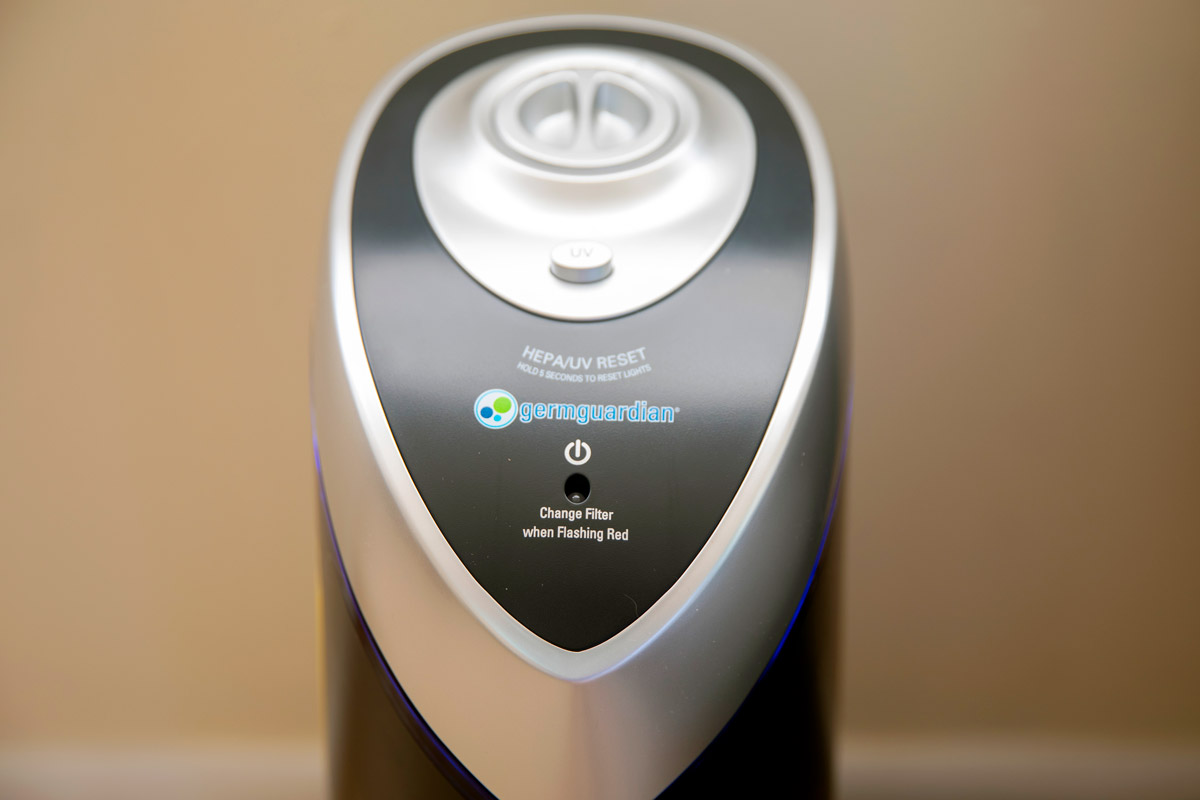
GermGuardian 167 Sq Ft Air Purifier ($99.99 at Best Buy)
This compact, four-in-one purifier is meant for small spaces. It includes a HEPA filter and is designed to kill germs, cut odors and remove dust and allergens. The filter (around $35) should be cleaned monthly and replaced every six months. A status indicator notifies you when replacement is needed.
Medify Air MA-14-B1 Air Purifier with H13 HEPA Filter ($99.99 at Amazon)
Well-suited for offices and bedrooms, this unit can cleanse the room’s air in about 30 minutes. It’s straightforward to set up and can neutralize pet odors. It comes equipped with H13 medical-grade filters.
Proton Pure ($112.95 at Clean With Proton)
Effective for spaces up to 150 square feet, this purifier removes up to 99.7% of indoor pollutants using HEPA and carbon filtration. It tackles volatile organic compounds, dust, mold, bacteria, smoke and other odors. The unit includes a battery lasting about seven hours so you can move it between rooms, or you can plug it in. Filters should be replaced every six to eight months.
Danielle Braff is a contributor to Savinly.