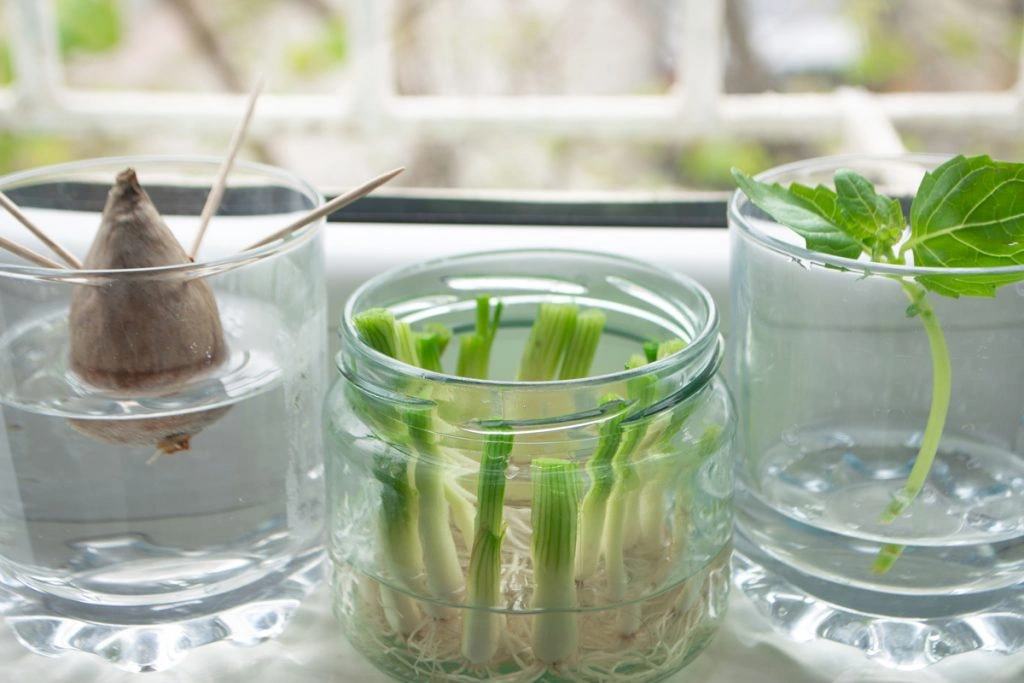
Raising your own fruits and vegetables can be an eco-friendly way to keep your fridge stocked with nutritious produce.
But not everyone has a large backyard to cultivate neat rows of favorite veggies.
Luckily, many common vegetables can be regrown using little more than kitchen leftovers. In fact, you probably already have what you need to begin regrowing produce at home right now.
You’ll want a bowl, plenty of clean water and small pots for replanting. The pots should be roughly four inches deep, although larger specimens — like avocado trees — will require bigger containers. If you’d rather not buy gardening pots, disposable plastic cups work fine. You’ll also need some potting soil and fertilizer to help your plants reach their full potential.
While a large number of vegetables can be regrown, some respond better than others. It’s also important to consider your indoor environment. Certain vegetables need direct sunlight and won’t thrive without it, whereas others prefer partial shade.
With a bit of know-how, you’ll be on your way to creating a home garden from the comfort of your kitchen.
Herbs: Basil, Mint, Cilantro and More
If you want to ease into this hobby, herbs are a fantastic starting point. Just cut a roughly four-inch stem and place it in a small vessel of water. A shot glass or similar tiny container works perfectly.
Set the glass where it will receive some direct sun and refresh the water every other day.
Roots should begin to form at the stem base. Once the roots reach around two inches, gently transfer the herb to a four-inch deep pot or cup.
Well done — you’ve started a kitchen-scrap garden.
Leafy Greens: Bok Choy, Lettuce, Celery, Bulb Fennel
Leafy greens are ideal for regrowing from kitchen bits. Keep the bottom two inches or so of the plant, whether it’s lettuce, celery, bok choy or another leafy vegetable.
Place the remaining portion in a glass or shallow dish with one to two inches of water. Be sure to change the water every couple of days.
Put the container in a warm, sunny spot so the plant can get some direct light. Once new shoots emerge from the stem, plant it in a four-inch cup or pot, burying the old stem with soil.
Green Onions & Leeks
These are among the simplest vegetables to regrow from scraps. Green onions and leeks are resilient, do well on a windowsill, and—if their root system stays intact—can be regrown repeatedly.
As with leafy greens, keep the final one to two inches of the green onion or leek and place it in a container with enough water to cover the roots. A glass is typically more suitable than a bowl for these.
Position the plant on a sunny windowsill that receives direct sunlight for part of the day. Replace the water weekly. Soon you’ll see new green shoots developing from the bulb. When the shoots reach around six inches, you can plant the bulb in soil.
Potatoes
When potatoes begin to sprout from their eyes, they’re ready to be regrown. Slice the potato into one-inch chunks, making sure each piece contains an eye. Let the pieces dry on a paper towel overnight before planting them in a roomy container.
Potatoes require ample space to develop, so an old gardening bucket can be an excellent planter. Set the pieces about four inches deep with the eyes facing upward. Water regularly and keep them where they will get some direct sunlight.
Sweet Potatoes
These require a bit more attention than standard russet or yellow potatoes.
Halve your sweet potato and stick four toothpicks into each side so the toothpicks rest on the rim of a glass. Arrange the toothpicks so the sweet potato sits with about two inches submerged, cut side down.
Refresh the water every couple of days, and roots will soon start to form. When those roots reach roughly five inches, gently remove them and let them sit in a shallow bowl of water.
Small shoots — called slips — will sprout from the roots in a few days. Once slips are an inch long, plant them in a deep bucket or pot.
Ginger
This is one of the most cost-effective additions to your kitchen-scrap garden because ginger can be pricey depending on where you shop.
If you plan to regrow ginger, buy organic. Some commercial growers treat gingerso it won’t sprout at home, preventing regrowth.
Break off a thumb-sized segment with several nodules — ginger’s version of potato eyes. These are the rough bumps often found near the tips.
Put about two inches of potting soil into a shallow container with a lid. A repurposed Tupperware works well. Poke drainage holes in the bottom. Lay the ginger nodules on the soil and sprinkle another inch of soil over them.
Cover with the lid but leave it slightly ajar to allow air circulation. Keep the container in a warm spot with indirect light, watering regularly until small green shoots appear.
After that, you’ll need a larger container. Like potatoes, ginger spreads out underground and needs room. An old cement bucket with holes in the bottom makes a good home for regrown ginger.
Add about four inches of potting soil to the bucket, place the sprouted ginger on top, then fill the rest of the container with soil.
Greens: Carrots & Garlic
While you can’t regrow an entire carrot or garlic clove from scraps, you can regenerate the flavorful greens. Carrot tops make a tasty addition to salads or vegetable stocks, and garlic greens can be used like scallions for a mild, nutty note.
For carrot tops, save the last half-inch of the carrot and trim off any old leaves. Set the carrot stub in a shallow dish of water, being careful not to submerge the top.
Place the dish in a sunny area and change the water daily. When new foliage emerges, transplant it into a four-inch pot, covering the top up to the leaves with soil.
Garlic greens are even simpler. If garlic cloves start producing green shoots, submerge them in one to two inches of water. Put the container in a sunny spot and replace the water every other day. Snip the green shoots to use as desired.
Anna Brugmann is a contributor to Savinly.