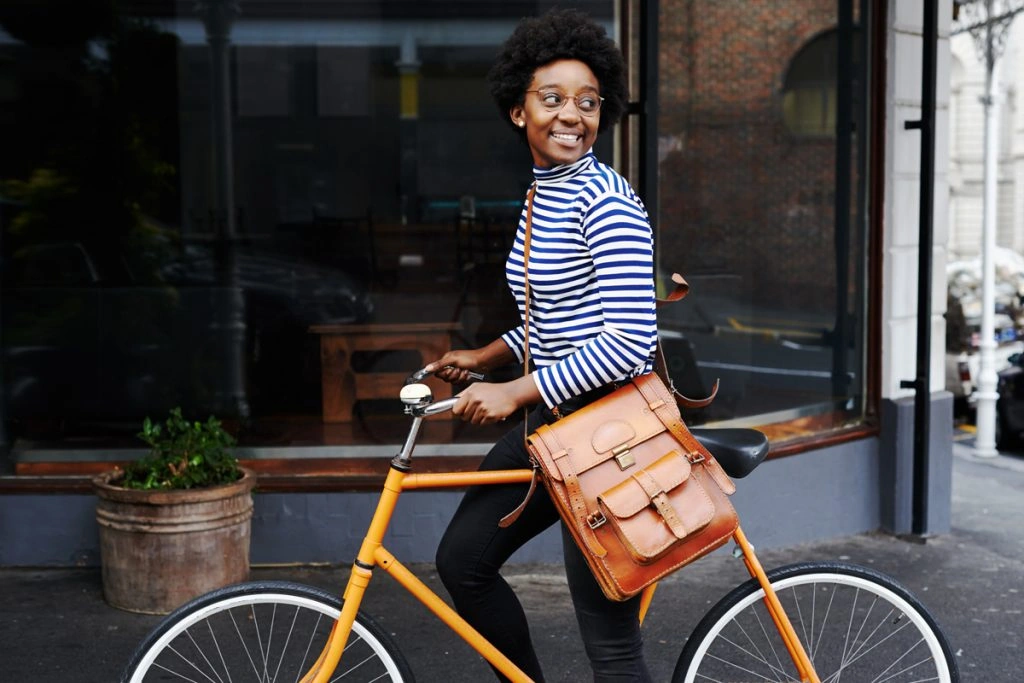
If you get a serious case of FOMO every time a colorful cruiser rolls past your house, you’re not alone.
With more people staying close to home, bicycles have become more than just transportation — they’re also doubling as fitness equipment.
That likely helps explain why adult leisure bike sales surged 121% in March — and why new bikes are suddenly hard to come by.
Plus, those flashy cruisers often start at around $200.
Shopping for a secondhand bike, though? It can feel like navigating a trap. Will you snag a fantastic bargain on Craigslist only to learn the bike needs hundreds of dollars in repairs to be rideable?
Or worse — how can you be sure the bicycle wasn’t stolen and someone’s trying to flip it? More than 2 million bikes are taken in North America each year.
Don’t add to that figure by unknowingly buying someone else’s loss.
Time to learn the ropes.
How to Buy a Used Bike
Want to pick up a used bike — online or in person — without getting duped? I consulted experts to learn how to find a legitimate used bike and what warning signs to watch for.
Hunting for a Bargain? How to Buy a Bike on Craigslist
Craigslist listings for cruisers usually fall into two camps:
- Ads for bikes in excellent condition, with many photos and details about make, model and ownership. These bikes generally look barely used and are listed for about $50 to $100 under retail.
- Ads that may omit make, model or size. They often include only one or two photos and a brief note about the bike. These can be priced as low as $35.
Color me dubious — and a bit wary.
I reached out to Bryan Hance, who launched StolenBicycleRegistry.com in 2004 after having five bikes stolen over nine years. He later merged that site with Seth Herr’s Bike Index in July 2014 to help owners register bikes and aid recovery if theft occurs.
Hance has seen nearly everything. Bike Index even put together an infographic to help everyday buyers avoid unknowingly purchasing a stolen bicycle.

It takes just a little know-how to spot signs a bike has been altered and might be stolen. For instance, if a racing bike has a big cushy seat, that’s suspicious. Most tires come in matching pairs, so mismatched front and rear tires are another warning sign.
“The first two things thieves usually replace after stealing a bike are the seat and the tires,” Hance said, because those parts are easily recognizable.
Next, sellers may try to hide distinctive colors — like covering bright bar tape with plain black on the handlebars. “Beyond that, you pretty much have to be a bike person” to detect other signs of theft, Hance added.
Your safest move is to check the frame serial number, typically on the bottom of the frame, against Bike Index or by contacting your local police department.
“There are lots of legitimate sellers on Craigslist, so use common sense,” Hance said. Most scammy deals are obvious. “If the seller won’t share the serial number, walk away. Sometimes stolen bikes still have a U-lock mark or crowbar damage on the top tube. Walk away. That bike is hotter than hell.”
Hance also noted that person-to-person marketplaces like Letgo and OfferUp can have a higher incidence of stolen bikes than Craigslist.
Where to Meet
A note on safety: this isn’t the time to drive to some remote garage to maybe buy a bike. Hance advises meeting in a busy, well-trafficked spot to inspect a bike for sale.
“Some cities have set up Craigslist trading areas,” he said — well-lit locations, sometimes at police stations, where people can safely exchange goods.
“If your area doesn’t have one, call your neighborhood bike shop and ask if you can meet there,” he suggested. “Then get the bike serviced by them.”
Despite online risks, there are also community-driven solutions. Some towns hold public bike sales and swaps that create a safer environment to buy used bikes.
Your Best Option: The Bike Shop
If you’d rather avoid the hassle of hunting a solid used bike yourself, buying through a bike shop is the simplest route — especially if you’re unsure about bike type or size.
A professional can recommend the right style — a cruiser for relaxed rides, a road bike for long-distance training, or a mountain bike for trail riding.
Fit matters more than you might expect. “Fitting a bike is pretty tricky,” Hance cautioned. “You wouldn’t believe how much physical discomfort the wrong-size bike can cause.”
Bike shops are often a dependable source of pre-owned bikes. Many shops adhere to strict intake procedures, logging incoming and outgoing used inventory in systems that check police and pawn databases.
Store owners like Ken Fong run serial numbers to screen for theft before buying a used bike to resell. Once a bike is added to the shop’s inventory, it receives a full cleaning and inspection before receiving a price tag.
“We offer a 90-day guarantee on our bikes,” Fong said. “So if something goes wrong, you’ve got someone to turn to.”
That type of support matters. Hance also points out that shops selling used bikes often offer discounts on tuneups or other services if you buy from them — new or used — creating an incentive to build a relationship with your local bike shop.
What to Watch for When Buying a Used Bike
Wherever you find your future ride, there are mechanical issues to inspect, Fong of Northeast Cycles in St. Petersburg, Florida, advised.
“Take it for a test ride, squeeze the brakes, shift through the gears,” he said. “Check that the wheels are true, because wheels can be up to a third of a bike’s value. Also, inspect the spokes for breaks or bends. If the spokes seem fine but the wheel is still wobbly, that’s a good indicator you’ll need replacement wheels.”
Don’t hesitate to ask about any worn or unusual-looking parts — if the brake pads need replacing, you might be able to haggle the price down.
If you found the seller online, a test ride is essential. Buying a bike unseen is risky.
“You can’t really assess what you’re buying when it’s online,” Fong said. “If you purchase remotely, you’ll likely end up bringing it to a shop anyway for fitting and inspection.”
How to Keep Your “New” Bike Secure

No matter how little you spend on the bike itself, budget for a solid U-lock.
“Cable locks are useless,” Hance said. “It’s like securing your bike with floss.” He suggests spending $60 to $70 on a quality lock.
Fong added that the best place to keep your bike is out of sight of would-be thieves. “If a bike is consistently visible outside, thieves can plan to grab it.” The most common complaint he hears from theft victims is, “I only left it outside for a minute!”
“If a professional thief needs one second, an amateur only needs five,” he said.
Then, register your bike. Some police departments keep their own registries, while others refer you to the National Bike Registry, which charges $10 to register a bike for 10 years.
Hance’s Bike Index is free. “Pull out your phone, take some photos, note the serial number, register it and forget it,” he recommended.
Even small photos can matter. You might not care about a scratch on the bike you bought, but documenting it increases the chance of recovery if it’s ever stolen.
Jordan Meyers is a former staff writer. Former SEO Analyst Jacquelyn Pica contributed to this piece.
For more guidance on buying secondhand vehicles and related tips, see how to buy a used car.