If you’re like most people, the likely response is, “Not much.”
But imagine if your front yard provided neighborhood ties, learning opportunities for your kids and a fresh bowl of salad?
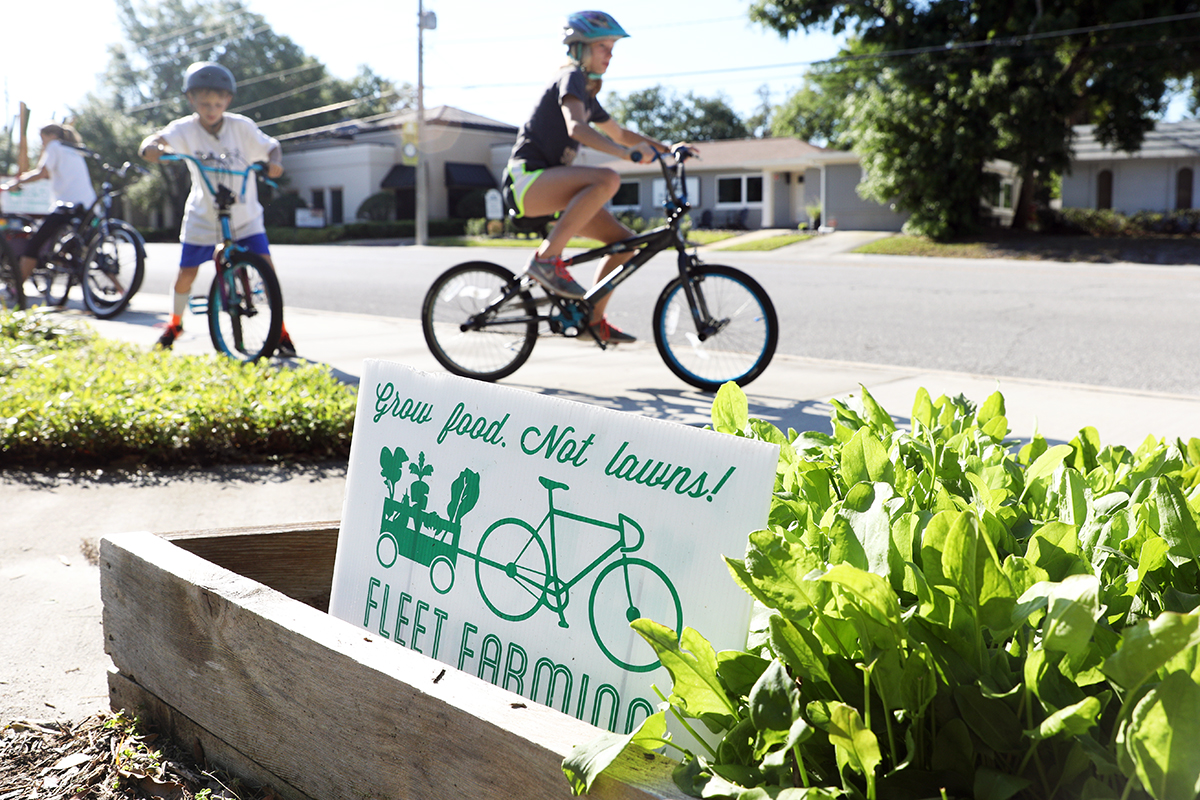
That’s precisely the vision behind the organizers of Fleet Farming. Their motto: “Grow food, not lawns.”
What is Fleet Farming?
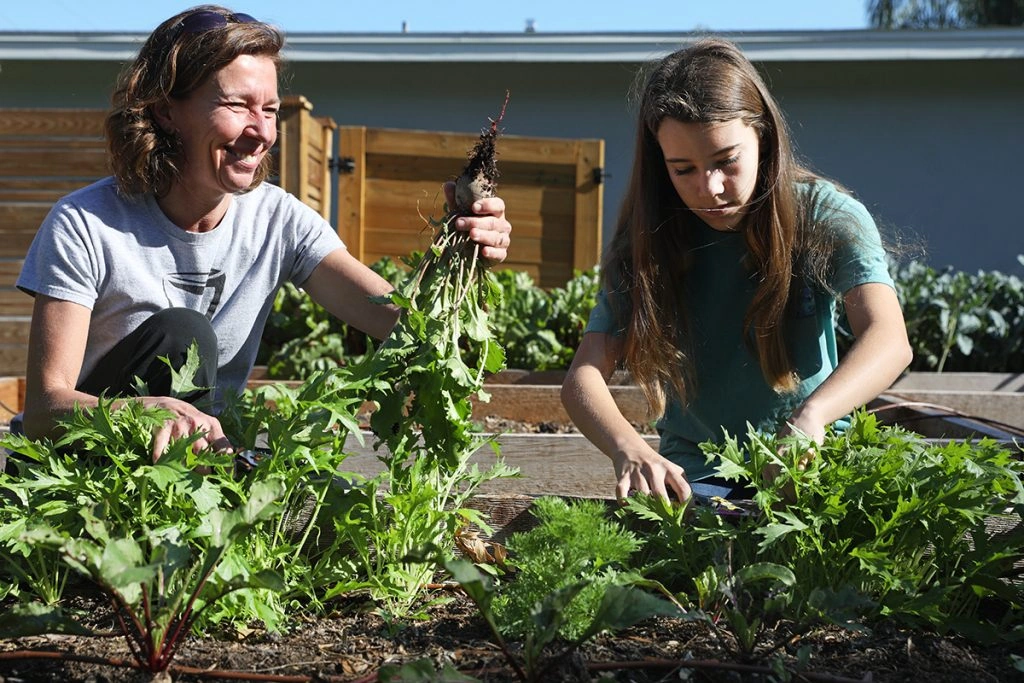
Fleet Farming, a project launched by the nonprofit IDEAS For Us, converts residential lawns into small-scale plots, lovingly referred to as farmlettes.
Here’s the model: homeowners offer up space in their yards, and volunteers plant, manage and harvest the beds. Homeowners keep a share of the harvest, while the rest is sold to nearby restaurants or at farmers’ markets.
And why “fleet”? Twice a month, dozens of volunteers gather forSwarm Ridesand ride bikes from property to property to tend the gardens.
Saving Families More Green

At present, the initiative manages about 20 farmlettes in Orlando’s Audubon Park neighborhood, where Fleet Farming began in 2014.
Program manager Caroline Chomanics says more than 500 households are waiting to join.
Families accepted into the program pay a $500 start-up fee and sign a two-year agreement so their gardens can be installed, cared for and harvested.
That works out to roughly $20.83 per month. For comparison, a family might spend $4 at the grocery store on a mix of organic salad greens that would only last a meal.
“All the revenue goes back into creating more farms, purchasing seeds [and] tools,” Chomanics explained. “There’s a lot that goes into running a farming program.”
Fleet Farming put a farmlette in Sarah Gal’s Audubon Park yard in May 2016. Her family’s plot yields Swiss chard, watermelon, sorrel, butter lettuce and Siberian kale.
Gal said her household aims to eat a salad made from yard-picked greens every day.
“I never realized how much better garden-fresh greens taste,” she said.
These tiny farms can also reduce the expense of landscaping. HomeAdvisor reports homeowners spend an average of $3,394 nationwide to install typical landscaping.
Benefitting More Than Bank Accounts

In December, Fleet Farming volunteers set up six raised beds in the side yard of Chris Schafer’s home, located just down the street from the Gals.
Schafer noted it’s helped his family cut grocery costs, though he hasn’t tallied the exact savings.
And the advantages aren’t only monetary.
“A big part of it is the education for my children,” he said.
The farmlette gives his three children — 13-year-old Aylin, 11-year-old Rowan and 9-year-old Cason — hands-on experience growing food. They participate in decisions about what to plant.
“The kids were all about carrots the first time around,” Schafer recalled. “One of my sons loves tomatoes. Now we’re at the point where we can plant tomatoes.”
The family also grows kale, Swiss chard, radishes, beets, peas, herbs and a variety of salad greens.
Gal added that the program provides much more than daily salad ingredients.
“I sometimes bag up some greens and walk them over to neighbors, which has helped us form closer connections with the people next door,” she said. “It’s an excellent tool for building community.”
Gal believes the program also contributes to neighborhood safety.
“Fleet Farming volunteers, who wear branded shirts or arrive with carts [or] wagons, drop by my yard at random to harvest or check on the garden,” she said. “I think this makes my home less likely to be targeted by burglars.”
Helping Mother Earth
Besides the direct perks for homeowners and neighbors, an important aim of Fleet Farming is environmental improvement.
The produce is carried by bicycle to restaurants and markets within roughly five miles, cutting down air pollution from transporting food long distances.
“[Fleet Farming] reduces the need to transport all that food to stores or for you to travel to the grocery,” Chomanics said. “So it helps lower the CO2 released into our environment.”
Lazy Moon Pizza is among the eateries that receive produce from Fleet Farming. Phil Jimenez, a manager at the pizzeria, said the restaurant uses spring mix greens from the nearby farmlettes in its salads. Sourcing locally ensures the greens are exceptionally fresh, he noted.
On April 9, Fleet Farming volunteers delivered a 15- to 20-pound crate of Swiss chard, sorrel and Bibb lettuce that had been harvested less than two hours earlier.
It doesn’t get much fresher than that!
A Growing Movement

Fleet Farming is still in its early stages, but it’s attracting substantial attention.
Audubon Park remains the flagship location, but the program has branched out to Oakland, California and Jacksonville, Florida.
In October, Fleet Farming secured grant funding from the USDA to extend the program into Orlando’s Parramore neighborhood, an area labeled a food desert.
Fleet Farming Director Lee Perry mentioned they’ve fielded more than 1,000 inquiries from people worldwide wanting to bring Fleet Farming to their communities.
“The demand is definitely strong,” she said.
Still, Perry emphasized that growth should be thoughtful, since each locale presents distinct challenges for growing crops.
“We need to tailor our techniques to each region,” she said.
By year’s end, organizers plan to open two new branches in Texas — one in Austin and another in Dallas.
Even if your area doesn’t yet have a Fleet Farming chapter, Chomanics encourages individuals to start cultivating food wherever they are. For tips on eco-friendly practices and saving money while doing so, consider ideas like reduce reuse recycle earth friendly ways to save money.
If you’re curious about launching a local branch, offering your yard, donating funds, or volunteering with Fleet Farming, visit this page to find out how to get involved.
Your Turn: Would you convert your lawn into a garden?
Nicole Dow is a staff writer at Savinly. She adores fruits and vegetables and plans to begin her own garden once she buys her first home.