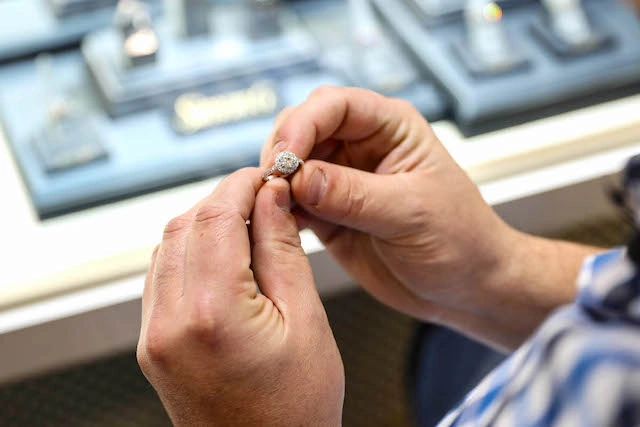
First comes love, then comes marriage … Well, almost. Between those two milestones sits a pretty significant purchase: the ring.
While it can’t compare to finding “The One,” selecting the right engagement ring is far from simple. Learning how to buy an engagement ring is practically a science.
From gemstones to settings, the process can quickly become intricate, overwhelming — and pricey. Worst of all, if you don’t know what you’re doing, it’s easy to be taken advantage of.
To help you navigate this pre-proposal quest, we put together a thorough guide covering everything you should know before buying an engagement ring.
Note: For clarity, this guide uses a man-proposing-to-a-woman scenario — but Savinly celebrates all kinds of love and ring-buying (or not-buying) choices!
5 Essential Tips for Engagement Ring Shopping

Need the basics? Sitting in your car outside the jewelry store right now?
If you’re pressed for time, read this section and screenshot the cheat sheet below. (But we recommend taking your time.)
1. The “Two Months’ Salary” Rule Is Garbage
You’re supposed to spend two months’ salary on an engagement ring, right?
That “rule” actually came from a very effective diamond-industry advertising campaign. (Diamonds and engagement rings have their own complicated backstory — that’s another tale.)
Before the sparkle and smooth sales pitches distract you, set a clear budget.
It’s simple: check how much you’ve saved and don’t exceed it.
Financing an engagement ring with borrowed money is usually a bad idea. Using a credit card can be fine (you’ll earn rewards), but only charge what you can pay in full when the statement arrives.
Remember: you’ll (hopefully) be together for a lifetime. You can always upgrade the ring later — or, if the jeweler allows, trade it in for a larger stone.
2. Plan for a Several-Week Wait
Think you’ll stroll in, pick a ring, and walk out with the perfect piece?
Not likely. Depending on design, setting and customization, rings often take two to six weeks (or longer) to be ready.
Factor that timing into your proposal plans so you’re not down on one knee with a temporary placeholder instead of the real thing.
3. Buying the Stone Online Can Cut Costs
Want to save money? Avoid pre-set, ready-to-wear rings. Loose diamonds typically offer better value than stones already mounted, and buying them online can be much cheaper.
“A ring with a 0.7-carat diamond that costs $4,895 from an online retailer like Blue Nile might sell for 20–25% more at an average brick-and-mortar store,” reports the New York Times.
That said, there’s value in inspecting the diamond in person.
Raju Khiatani, who runs Barclays Jewelers in Miami and has decades in the diamond trade, warns that dealers sometimes sell lower-quality stones to online vendors because buyers won’t see them first-hand. Traditional jewelers often handpick each gem.
“A certificate won’t tell you if a stone looks slightly hazy or lacks brilliance,” he explains.
Khiatani adds that buying in-store isn’t always pricier — you might find a technically lower-grade diamond that dazzles in person.
“Sometimes a lower color grade can look just as beautiful depending on the cut and sparkle,” he says. “You could save a few hundred or even a few thousand dollars depending on size.”
4. Many Women Don’t Want an Expensive Diamond
Before you dump a fortune into a flashy diamond, consider whether that’s truly what your future partner wants.
Some people prefer heirloom jewelry, specific gemstones, or view the diamond industry skeptically. Others might favor a romantic trip or a house down payment over an expensive ring.
If you’re uncertain, you could propose with an inexpensive piece and let them choose. (A friend once proposed with a Ring Pop — adorable!)
5. Be Wary
There’s no sugarcoating it: the diamond world can be murky.
Our best tip is to find a jeweler you trust. Skip major chain stores. Ask friends for recommendations or pick a local jeweler with strong reviews.
“Chain stores sometimes advertise a one-carat diamond for, say, $2,900,” Khiatani says. “It might actually be 0.85–0.90 carats and not as well cut. Customers often focus on weight and miss the cut quality.”
He recommends locating “a hometown jeweler with a solid reputation who stands behind their merchandise and will take things back if needed.”
If a local option isn’t available, reputable online retailers like Blue Nile are good alternatives (they even have a mobile app).
Cheat Sheet: How to Buy a Great Engagement Ring
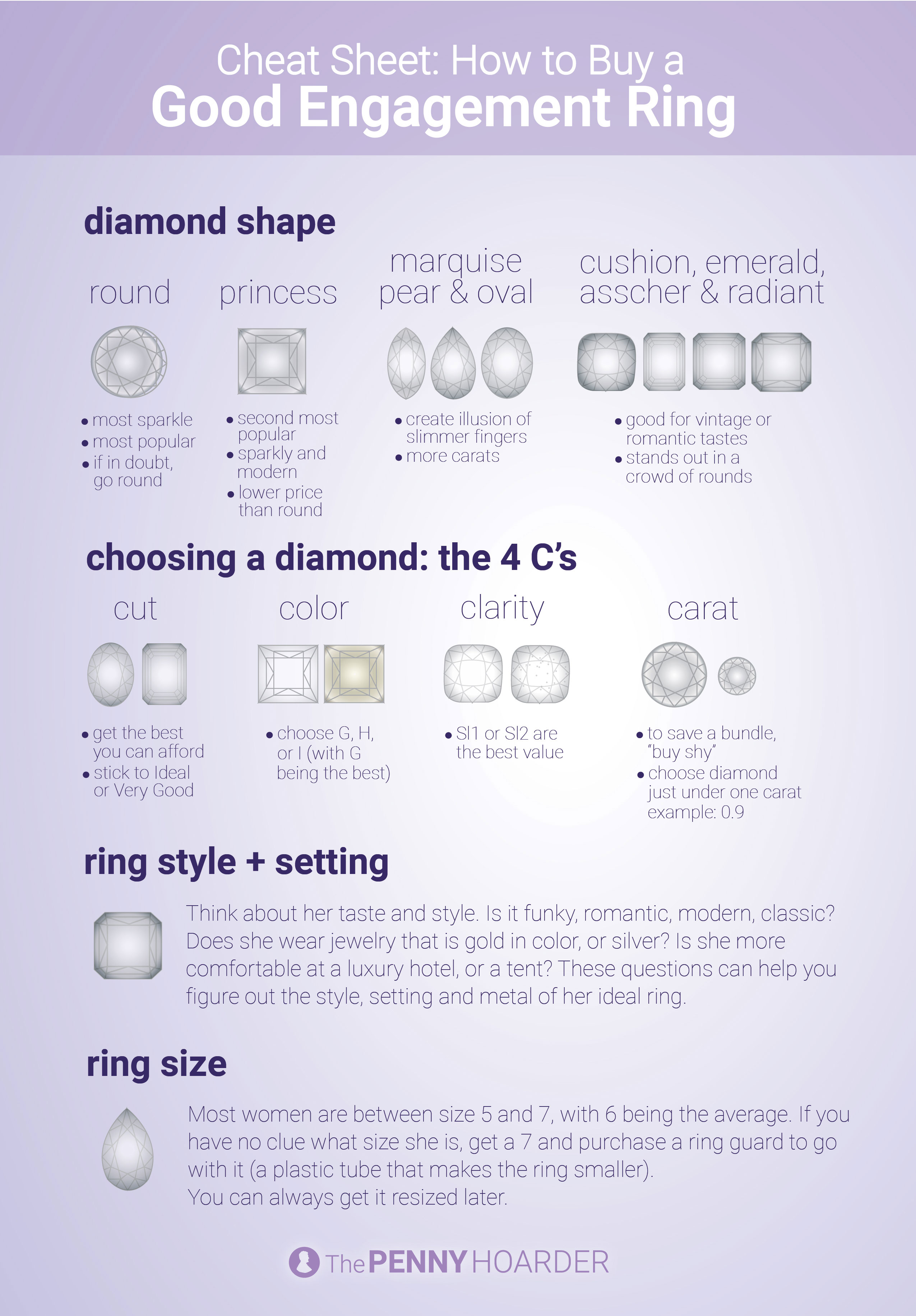
If you have the patience and energy to research, here are seven steps to help you choose the ideal engagement ring.
1. Be a Detective
Before you set foot in a shop, put on your detective hat. She may say yes to whatever’s in the box, but you want the ring to show you really understand her taste.
If you haven’t discussed ring preferences, try these tactics to deduce what she might like:
Listen for Clues
If she wants you to propose, she’ll likely hint at her dream ring.
When friends get engaged, note what she says about the ring’s look. Is it beautiful? Too big? Too plain? Just the right vintage vibe?
Ask Close Friends and Family
Her inner circle probably knows her ring preferences. Get her sister or best friend involved — they can offer great guidance and might even have pictures.
Think About Ethical Stones
If she cares about social issues, consider conflict-free (non-blood) diamonds.
Options include antique rings, family heirlooms, ethical vendors like Brilliant Earth, or Canadian diamonds from retailers such as Blue Nile.
At minimum, ensure any diamond has been vetted by the Kimberley Process — it’s imperfect, but it’s better than nothing.
2. Figure Out Her Ring Size
Secretly buying a ring makes this tricky.
Friends or family might know her size. If not (or you don’t want to ask), you can print a ring-sizing guide and compare one of her rings — though remember finger sizes vary.
The Gemological Institute of America (GIA) notes the average U.S. ring size is about 6.
“If she’s petite, her size is likely 4½ to 5½. If she’s larger or taller, it’s probably 6½ to 7½,” their guidance says.
When unsure, pick a size 7 and get a ring guard in case it’s too big. She can wear it for engagement photos, and you can resize it later. Some jewelers — including Blue Nile — offer free resizing.
3. Pick a Shape

A diamond’s shape is a central visual element of the ring.
Round is the most popular because it reflects the most light — it’s the sparkliest.
Princess is the second favorite, offering much of round’s brilliance in a more contemporary package, and it’s often less expensive.
Marquise, oval and pear shapes are long and slender, which can visually slim the finger and often appear larger because more of the stone shows.
Less-common cuts like cushion, emerald, asscher, radiant and heart-shaped are wonderful choices for those with vintage or romantic tastes, or anyone wanting a unique look.
4. Master the 4 Cs
Choosing the right diamond is the core of the engagement-ring decision.
You need to understand the 4 Cs: cut, color, clarity and carat.
These factors rate every diamond and help indicate quality — and price.
“Cut usually has the largest influence on price — about 25% to 50%. Carat weight affects roughly 10% to 20%, while color and clarity each contribute the last 10% to 15%,” reports Forbes.
(For deeper market insight, Rapaport Magazine lists pricing benchmarks for different diamonds.)
Ensure the diamond you buy is graded by the GIA — not just the jeweler — and it should come with a certificate that details its C ratings.
Here’s what to know about each C:
Cut
Cut refers to a diamond’s proportions and symmetry. It’s the single most important factor. “It determines how the diamond sparkles,” Khiatani says.
Don’t skimp: aim for the best cut your budget allows — Very Good, or ideally, Ideal.
Color
Diamonds are graded D (colorless) to Z (yellow). Less color generally means higher cost.
For a beautiful stone without overspending, look for grades G, H or I.
Clarity
Clarity measures internal flaws, called inclusions.
Stick to SI1 or SI2 ratings — they may have small inclusions but nothing obvious to the naked eye.
Carat
Carat is weight: 142 carats per ounce. Despite the attention it gets, it’s the least important of the four.
If forced to choose, favor quality over size. Pick a smaller, sparkly diamond over a larger, lackluster one.
Also consider “buying shy.” Purchase a diamond just under your target carat.
If you want a one-carat stone, a 0.95-carat gem will look almost identical and could save you up to about 30%.
The 4 Cs are useful benchmarks, but they don’t replace your personal judgment of how a stone looks. “Some diamonds that score lower on paper can genuinely sparkle,” Khiatani notes. “What matters is how it looks to you.”
5. Choose a Setting She’ll Adore

The diamond may be the focal point, but the setting determines the ring’s overall style. Your sleuthing should give you a sense of what she prefers.
Common settings include solitaire, sidestone, three-stone and pavé (where small diamonds surround the main stone). Bezel and halo styles raise the center stone, making it appear larger. For more details, Brilliant Earth offers a helpful guide.
Pick a metal as well: yellow, white or rose gold, or platinum are typical choices. If she wears mostly silver-toned jewelry, white gold or platinum is likely best. White gold is cheaper; platinum is more durable.
Totally unsure? Take photos of her jewelry collection and show them to a jeweler — they can often infer preferences from what she already wears.
Or, propose with just the diamond and let her pick the setting. Put it in a simple mount so she has something to show right after she says yes.
6. Insure the Ring
After investing in a pricey ring, the last thing you want is to lose it.
Buy ring insurance. Many people add it as a rider on their homeowners or renters policy.
“Annual insurance typically costs $1 to $2 for every $100 of replacement value,” The Knot reports. So a $3,000 ring would cost about $30–$60 per year to insure.
“A solid policy covers theft, damage and accidental loss,” the site adds.
Always read the policy details carefully.
7. Propose
You’ve done the homework — now plan the proposal. And the wedding.
No pressure.
Good luck!
Your Turn: Have you bought an engagement ring? Any advice to share?
Disclosure: We include affiliate links in this article. They help keep the Savinly team’s break room stocked.