Maintaining a nutritious diet is challenging for everyone.
But trying to eat well on a very limited income can seem nearly impossible.
During my lean periods, I survived on $5 subs and cheap pizzas — and on my worst days, tins of Beefaroni. I didn’t feel great, yet I convinced myself I lacked the funds, time, or skills to cook — or at least that’s what I believed.
Still, here’s the reality: My grocery budget was bigger than45 million Americanswho rely on food stamps. I only work a 40-hour week and don’t have children to support.
If I struggled to figure out how to eat healthfully with my constraints, I can only imagine how much more difficult it is for so many others.
That’s why I was thrilled to discover Leanne Brown, a champion of home cooking and nutritious meals that fit within a food-stamp budget.
Her cookbook, “Good and Cheap: Eating on $4/Day,” can be downloaded for FREE from her site, and it’s full of practical advice and approachable recipes.
I spoke with Brown — who quickly became my culinary crush — to learn her top strategies for eating well without spending much.
She shared many valuable ideas, so if you want to nourish your household with food that’s both wholesome AND affordable, read on…
Why “Good and Cheap” Matters
While pursuing her master’s at NYU in food studies, Brown examined the Supplemental Nutrition Assistance Program (SNAP) — commonly called food stamps — and was “shocked by the figures.”
Beyond the 45 million Americans on SNAP, she notes, “many more are nearly in that situation, haven’t enrolled, or are otherwise struggling with food insecurity.”
Many of these individuals default to processed convenience foods or eating out because they assume cooking takes too long or costs too much.
But Brown found the opposite to be true. “Cooking can make everything so much cheaper,” she says — and healthier as well.
So, for her thesis she developed a cookbook “aimed primarily at people living on food stamps,” adopting the motto “Eat well on $4 a day” — reflecting the typical daily food allowance.
After “Good and Cheap” blew up on Reddit, she launched a Kickstarter to produce printed copies. Her target was $10,000 — but she ultimately raised more than $144,000.
“It completely changed my life; it was an unbelievable experience,” she recalls.
Today the book is distributed widely. For each book sold, Brown donates another to nonprofits around the country, which then hand them out to people in need or incorporate them into broader public health initiatives.
“It’s been incredible,” she says. “It’s far exceeded my expectations. People have adapted it for many different communities… There’s a lot of joy in getting to eat diverse foods and feeling empowered to do so.”
11 Practical Tips for Eating Well on a Tight Budget
Brown’s journey is motivating, but you probably want actionable tips.
To get the full benefit of her guidance, I strongly recommend downloading her complete free cookbook — but here are the key tips she emphasized during our talk:
1. Begin Gradually
Adopting healthy eating habits is a long-term process, not something that happens overnight.
If you overcommit at first, you’re more likely to quit.
“Don’t expect to switch from almost never cooking to making three meals a day, every single day, ” Brown advises.
“That sets you up to fail… Maybe try three new recipes this week and see how it goes.”
The same principle applies to kitchen gear.
“If you think, ‘I can’t start cooking until I own every single tool and a fully stocked pantry,’ you’ll probably never start,” Brown says.
Buy what you need first, and add items gradually so you stay within budget.
2. Add Flavorful Staples
The “start slowly” approach works for ingredients too — you don’t have to stock an entire spice shelf before you cook your first meal.
“Try to add at least one major flavor item every few weeks,” Brown suggests.
“Whether it’s a bottle of olive oil or a few jars of spices… choose items that bring a lot of taste to your basic staples.”
In short: Identify the flavors you love most and invest in those first.
3. Make Vegetables a Priority
Brown isn’t insisting you become vegetarian, but she encourages making vegetables the center of many meals.
“I adore vegetables,” she says. “They’re vibrant, boost flavor easily, and are a simple way to add variety to your plate.”
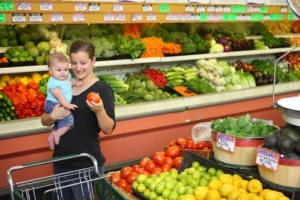
4. Buy Produce With Purpose
I often aim to economize at the grocery store by loading up on inexpensive produce I plan to use that week.
Then I come home exhausted and end up ordering takeout. It turns out I’m not alone.
Brown points out that wasted produce is one reason fresh fruits and veggies can seem pricier than processed options. She recommends purchasing produce you actually intend to use — at least initially.
“A major part of budgeting well is buying items and then ensuring you use them all,” she says.
“Even telling yourself, ‘I won’t buy more groceries until my crisper is empty,’ you’ll probably save $10–$20 a week.”
5. Pick Ingredients That Serve Many Purposes
A helpful rule: Avoid buying costly ingredients that only work for one recipe.
“One of the book’s principles is purchasing items that can be used in multiple ways,” Brown explains.
She recommends plain yogurt over flavored varieties: “You can season it however you want, use it for sauces, cooking, or baking. It’s extremely versatile.”
6. Shop Seasonal Produce
You’ve likely heard this before but may be unsure how to implement it.
Here’s a greatinteractive seasonal food guidethat shows what’s in season in your state.
Besides lower prices, Brown says seasonal eating “helps you naturally diversify your fruits and vegetables throughout the year because your go-to items change with what’s plentiful and affordable.”
7. Don’t Shy Away From Frozen or Canned Produce
If something isn’t in season, the frozen or canned aisle is your friend.
“Frozen produce is often excellent value and quality,” Brown says.
“Even canned items can be great… Canned tomatoes are wonderful. Outside of July and August, I’d usually prefer canned tomatoes to fresh.”
8. Cook Large Batches
Many of us use “no time” as the excuse for not cooking.
Brown recommends batch cooking to overcome that barrier.
She has a “Big Batch” section in her book with recipes to prepare on a free day and eat all week long.
Her suggestions include a huge pot of chili or beans that provide several meals, or a batch of hard-boiled eggs for quick snacks.
9. Accept That Cooking Takes Time
Brown doesn’t pretend cooking is as fast as grabbing fast food, but she believes the time investment is worthwhile — and as you learn techniques, meals won’t take that much longer.
“There’s a trade-off — I won’t sugarcoat it,” she admits.
“I know some people literally have only an hour at home a day because they work two or three jobs… so some recipes won’t fit, but several 20-minute meals will. It’s about figuring out what fits your reality.”
10. Be Gentle With Yourself
When you begin cooking, give yourself grace during the learning curve.
“There’s often so much guilt tied to healthy eating,” Brown explains.
“People feel like failures if they’re not doing everything perfectly… whereas being excited to try tasty, interesting food can be a more sustainable motivator.”
11. Enjoy the Process
Likewise, see cooking as something pleasurable rather than an obligation. That’s how you’ll stick to it.
“Center on the enjoyment it can bring you, or memories it evokes… instead of thinking, ‘I’m just doing what’s right for my household,’” Brown says.
A Simple, Wholesome Recipe: Crustless Vegetable Quiche
Time to taste the benefits!
When I asked Brown which recipe to feature, she suggested this crustless quiche — straightforward and highly adaptable.
“It’s delicious and ideal for lunch or dinner,” she says. “It’s actually tasty cold… It’s astonishingly forgiving — almost anything works with eggs.”
She also notes it’s a perfect way to rescue limp vegetables or ones nearing their expiration. This dish will revive them!
Ingredients
- 1 tbsp butter
- 1 large onion, sliced into half moons
- 3–4 cups chopped vegetables
- 8 eggs
- 1 cup milk
- 1 cup cheddar or another grated cheese
- 1 tsp salt
- ½ tsp black pepper
Directions
Preheat the oven to 400 °F.
Melt the butter in a skillet over medium heat. Add the onion slices and season lightly with salt and pepper. Cook the onions until they become golden and begin to caramelize.
Grease a pie dish and spread the onions in an even layer on the bottom. The onions create a crust-like base and a bit of texture.
About the vegetables: For dense items like broccoli, cauliflower, or winter squash, cook or steam them before adding so they finish tender. For quick-cooking items such as tomatoes, zucchini, or spinach, add them raw.
Arrange the vegetables evenly over the onions so the pan appears mostly full.
In a bowl, use a fork to lightly beat the eggs with the milk, cheese, salt, and pepper — just enough to combine yolks and whites. This forms a savory custard. Pour it over the vegetables and onions, letting it fill the gaps. Bake the quiche for about 1 hour.
When the top is lightly browned across, it’s done. Cool the quiche for roughly 20 minutes, then cut into wedges and serve with a side salad.
Sounds delicious, right? I’m eager to try more recipes from Brown’s collection!
To download your free copy, visit LeanneBrown.com.
Your Turn: What’s the biggest obstacle you face when trying to eat healthily on a small budget?
Maria Lopez, staff writer for Savinly, is always exploring affordable adventures. Say hello on Twitter @maria_lopez_writes.