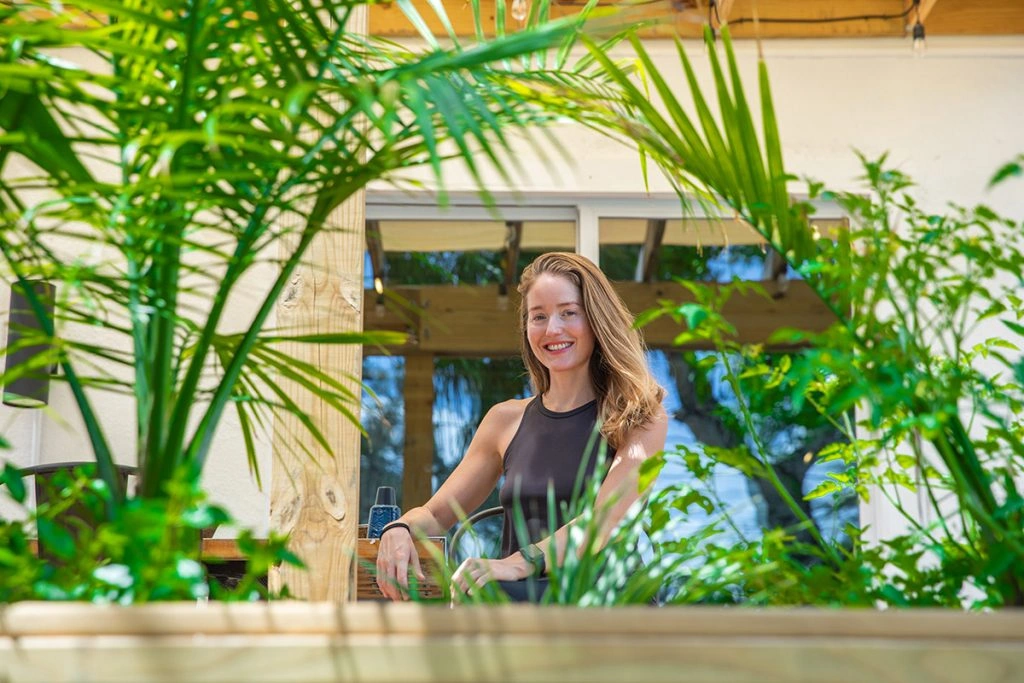
Even though many studio apartments in downtown St. Petersburg, Florida, command rents above $1,200 a month, Alexandra Hayes managed to secure a spot just two miles from the city center for roughly half that price.
She pays $600 monthly for her new place. That rent covers utilities — such as electricity, water and gas — in addition to high-speed internet, access to a printer and a twice-monthly cleaning service. Household essentials like paper towels and toilet paper are supplied, and complimentary coffee is available.
When Hayes needs to do laundry, she doesn’t have to hunt for quarters. On-site laundry is included as part of the arrangement.
The trade-off? It’s a coliving setup she shares with seven other people she didn’t know beforehand.
Coliving: Expanding Beyond Major Cities
Coliving, or communal living, refers to arrangements where multiple unrelated individuals share a residence. You typically have a private bedroom — and sometimes a private bathroom — while communal zones like the kitchen, dining and living areas are shared.
This isn’t a brand-new idea. From early human settlements and tribal groups to 19th-century boarding houses and counterculture communes, shared living has been around for ages. The contemporary coliving movement, however, tends to emphasize affordable housing for millennials and digital nomads who want to live near urban centers while forming social connections within their living community.
Although coliving has been most visible in big metropolitan areas such as New York, Los Angeles, San Francisco and Washington, D.C., it’s gaining traction in smaller cities too, including St. Petersburg.
Docked Living is a new coliving operator in the area. Property managers launched Docked at Harbordale — the eight-bedroom, eight-bath home where Hayes lives — in early June. A second coliving property, roughly three miles away, is currently being renovated.
“[St. Petersburg is] becoming really, really expensive to live close to downtown,” said Kate Berlin, a managing partner at Docked Living.
In response, rooms at Docked at Harbordale are priced between $550 and $750, depending on the room size. The bedrooms — each with a private ensuite bathroom — are about the size of a hotel room, Berlin said. The house is only a five-minute drive or a 15-minute bike ride from downtown.
The coliving property is intended to serve as a somewhat transitional option. Residents sign a minimum six-month lease but can leave with 30 days’ notice and no penalty. Rooms come furnished so tenants don’t need to move beds or couches when they arrive or depart.
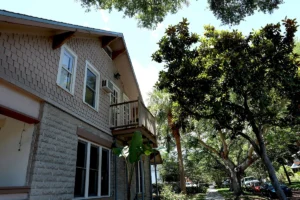
The 3,050-square-foot residence was a single-family home that was gutted and fully remodeled to create eight coliving units. There’s a small living area (which includes its own half bath), a coffee bar/workspace zone and a kitchen outfitted with eight individual minifridges and pantry cabinets, plus a full-size refrigerator, stove, microwave and shared storage space for all housemates.
The backyard features an outdoor kitchen with a dining nook and a lounge area with a fire pit and hammock. The laundry is accessible from the yard and there are three “tiny house” efficiency units on the property as well, offering options for renters who prefer not to be connected to the main house, those with pets, or couples and families.
If you’re curious about other shared-living options, check out coliving resources that explore similar arrangements in different cities.
Getting Used to Shared Living

Hayes discovered the coliving opportunity through Berlin, whom she knew through mutual acquaintances. She needed to relocate quickly and initially had reservations about living with seven other people.
“I lived alone for a long time, I’m pretty introverted, and I thought: ‘Oh no, this is going to be like a ‘Real World’ scenario.’ I’m not into that,” she laughed.
Hayes, 37, also worried about potential lifestyle conflicts with younger roommates. But the first two months have been smooth.
“I’ve been so happy here,” she said. “I’ve had no problems.”
Hayes placed trust in the property managers, who screen all applicants, and she also trusted her intuition. She said both are crucial for anyone thinking about coliving.
Money played a big role in her decision. Hayes looked at other places, but they were pricier and less attractive.
“I have a limited budget,” she said. “When I left my previous place, I wanted something that would be basically the same monthly outlay.”
Previously, she paid about $950 a month for her share of rent, utilities, internet and other services at her old residence.
“A major part of moving into the coliving house was being able to avoid juggling multiple bills and to plan my budget more easily,” Hayes said. “Essentially, you move in and the only thing you really have to worry about beyond rent is buying groceries.”
What about the social side of sharing a home with several strangers? It’s a far cry from the drama of MTV’s ‘The Real World.’
“Most of the time, there are only one or two of us in the common areas at once, unless we opt to hang out together,” Hayes said. “We like each other, but it’s actually nice that we don’t all crowd into the kitchen at the same time.”
She noted that everyone keeps different schedules and that housemates generally behave respectfully and courteously. The property managers occasionally organize group events, but participation is optional.
Still, Hayes said the most rewarding part of the arrangement has been the sense of community and mutual support among her housemates. They’ve even helped pull her a bit out of her introverted shell.
“They push me gently out of my comfort zone and that’s a big deal for me,” she said. “I’ve gained a new circle of friends I didn’t expect to find.”
Olivia Grant is a senior writer at Savinly.