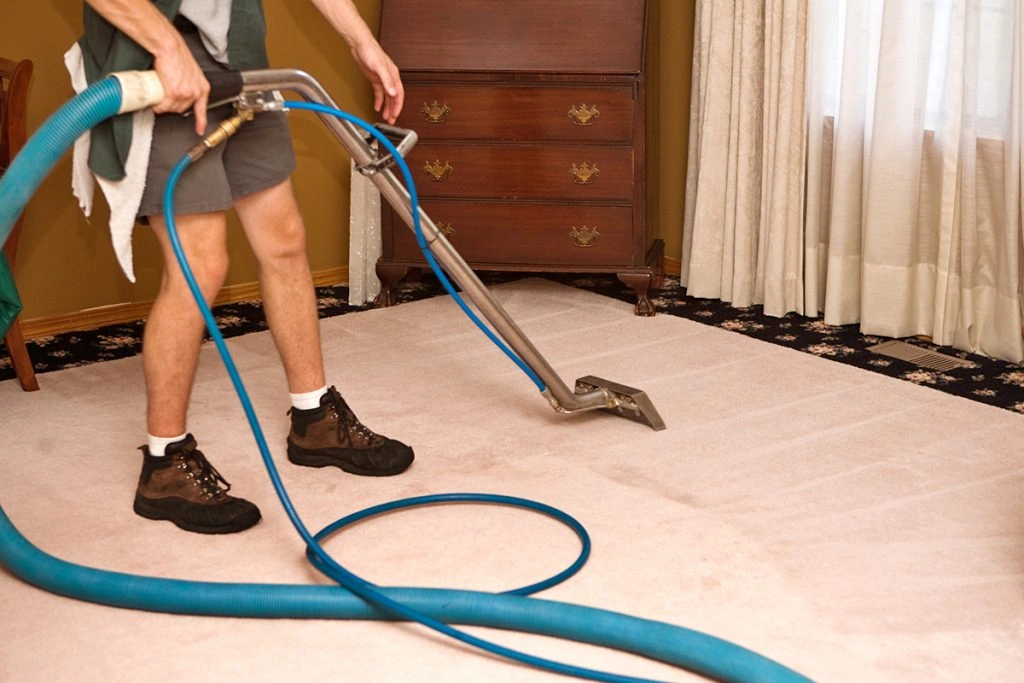
I used to work as a carpet technician, so I can tell you that pricing varies from person to person.
In fact, of the 10 tips below for saving on carpet cleaning, four explain how to obtain a reduced rate from pros. Then I cover ways to do the cleaning yourself, four methods to decrease how often deep cleaning is needed, and one more drastic alternative.
1. Vacuum Regularly
Like the next three tips, this helps lengthen the interval between professional cleanings. When dirt sits it grinds into the fibers; vacuuming more frequently means you’ll need a professional less often.
Shaw Industries, a leading carpet maker, suggests having a certified hot water extraction pro clean every 12 to 18 months. Their warranty can be voided if you skip a cleaning for two years. But if you apply this advice and the other strategies here and stretch cleanings to two-year intervals instead of one, you effectively halve your carpet-cleaning expenses. Start vacuuming!
2. Use Spot Treatments

Often the carpet is soiled only in certain areas. If you address stains and dirty spots, you can delay a full cleaning. Apply a little water with a drop of non-scented dish soap per ounce to the stain and blot (don’t rub) with plain white paper towels or a white cotton cloth. Repeat until no more stain transfers to the towel. If that fails, a thorough carpet stain guide will provide targeted steps for many different stain types.
3. Place Mats and Runners
On a microscopic scale, grit acts like tiny blades when embedded in carpet. It nicks fibers, shortening carpet life and increasing cleaning frequency.
A simple way to trap much of that grit before it reaches your carpet is to put mats and rugs both outside and inside entryways. Runners are also useful in high-traffic corridors.
4. Institute a No-Shoes Rule
Shoes carry dirt and other debris, so keeping footwear off inside keeps carpets cleaner. That increases the time between deep cleans and saves money. Shoes also wear fibers more than bare feet or socks, so your carpet will last longer without them.
5. Clean Your Carpets Yourself
A pro cleaning can top $600 if you have a lot of carpeting. Renting a portable machine and doing it yourself will run about $20 to $32, per Rug Doctor (their locator found 20 rental spots within 10 miles of me). That excludes cleaning solutions and a typical $3 fee for the hand tool (useful for stairs and upholstery), but you should be able to finish for under $50.
Portable machines don’t reach as deep as the truck-mounted hot water extraction units pros use. However, they’re effective on lightly soiled carpets and are a good interim option if you plan professional cleanings only every two years to preserve a warranty.
6. Measure Your Rooms

Some cleaners bill per room, while others charge by square footage. According to Angie’s List, rates hover around $0.30 to $0.50 per square foot. So if a cleaner estimates 850 sq ft and your tape shows 750 sq ft, ask them to re-measure and you could save $30 to $50. Mistakes happen—don’t pay for them.
7. Shift Your Furniture
If you’re willing and able, some cleaners will lower the price if you move furniture before they arrive. This is useful if you have a spot to store items temporarily, like an enclosed porch or an uncleaned room.
8. Clean Only High-Traffic Zones
Often the carpet under and behind sofas and other pieces is relatively clean or easily vacuumed. Most soil accumulates in “traffic areas,” where people walk regularly. Some pros may offer a discount to clean only those sections. I did this when I worked in the trade, and it was nice to avoid shifting heavy furniture. (Like this tip? Click to tweet it.)
9. Look for Deals
During slow seasons—summer in Florida and winter in northern states—carpet companies often run promotions. They may offer whole-house deals or freebies like upholstery cleaning. Monitor ads and coupons, and remember that when business is slow you can often negotiate a lower rate.
10. Replace the Carpet
While tile or hardwood costs more up front, maintenance and replacement can make carpet pricier over time. Tile and wood can last decades—something to weigh when replacing worn carpet.
An online flooring installation estimator indicates 800 sq ft of tile runs about $5,100 (in this market) versus $2,500 for carpet. That $2,600 gap sounds big, but consider long-term savings. Over 18 years you might replace carpet twice at $2,500 each and have a dozen cleanings at $250 each. That future cost approaches $8,000, compared with a minimal annual expense for tile care. Hardwood can be trickier to maintain properly, but over the years it also often costs less than carpet.