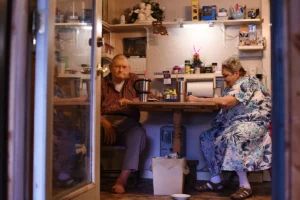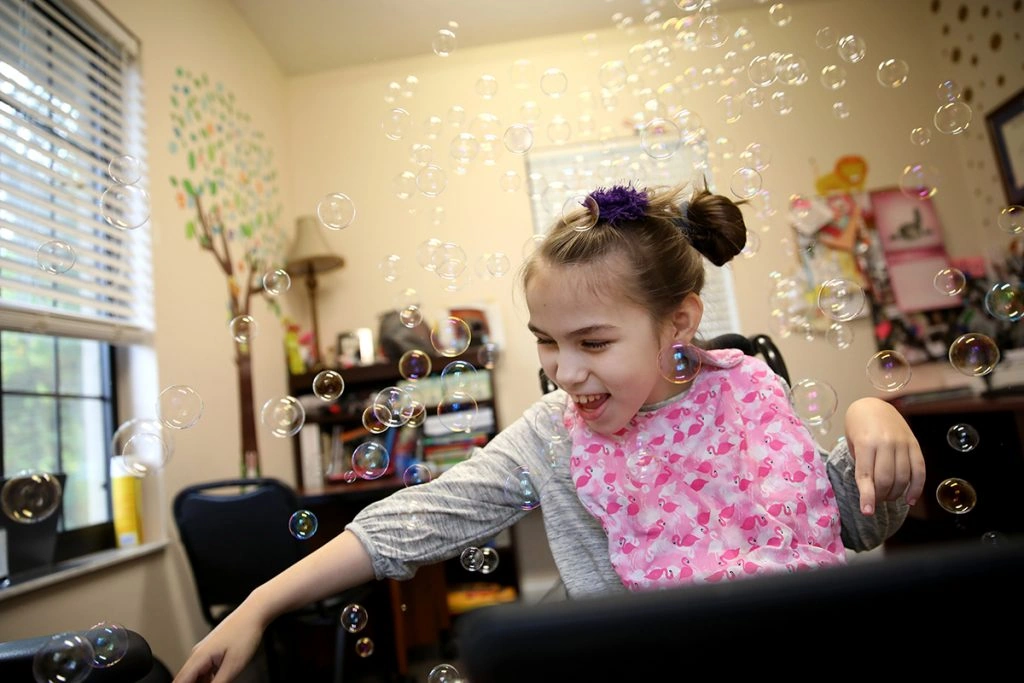
Her daughter Hannah, 10, sits at the dining table in their Ocala, Florida, residence.
Hannah faces difficulties eating independently. She was diagnosed with cerebral palsy, a neurological condition that impacts motor control, muscle tone and movement, when she was 6 months old.
Vicki, 48, sets two plates before Hannah. “Look here. Which pizza do you want? Do you want ‘The Lion King’ or Olaf?” Vicki asks, referencing the Disney figures on each plate. “Which would you like? Lion King? Olaf?”
Hannah answers with a sound — one that would be unclear to most. Yet without exchanging words, her mom understands what’s up.
“You don’t want either one?” she guesses. “You want pretzel bites?”
Hannah makes another indistinct noise.
“You’re a pain in the butt, do you know that?” Vicki jokes, then she takes the plates away from Hannah and hands a pizza slice to Hannah’s 21-year-old sister, Bethany.
Vicki returns to the freezer to fetch pretzel bites, one of Hannah’s preferred snacks.
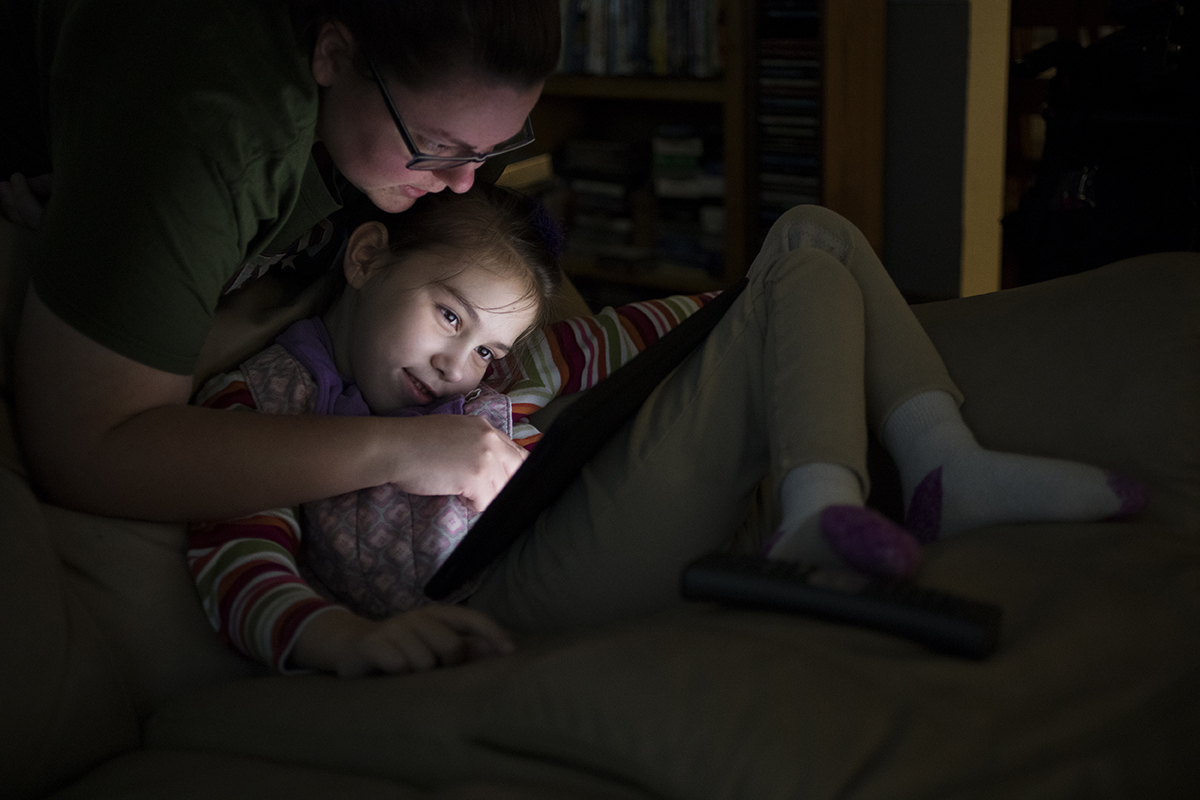
When Hannah’s lunch is ready, Vicki carries a plate to her, while Hannah’s gaze remains on the iPad before her. Vicki cuts the pretzel bites into small pieces and feeds her.
Hannah’s condition is hypotonia, meaning she has low muscle tone — notably in her head, neck and trunk. She can’t stand unaided, walk or talk.
Hannah has the cognitive capacity to communicate; she simply lacks the physical means to speak more than a few words. She uses an app on her iPad that allows her to choose words and phrases that are spoken aloud. In fact, Vicki says Hannah frequently uses the app to ask for pretzel bites.
There are numerous forms of cerebral palsy. For some people, the condition has a minor impact. Others need constant care.
According to the Cerebral Palsy Alliance Research Foundation, 1 in 323 U.S. infants receive a cerebral palsy diagnosis. There’s no established cure for the disorder, which affects about 17 million people worldwide.
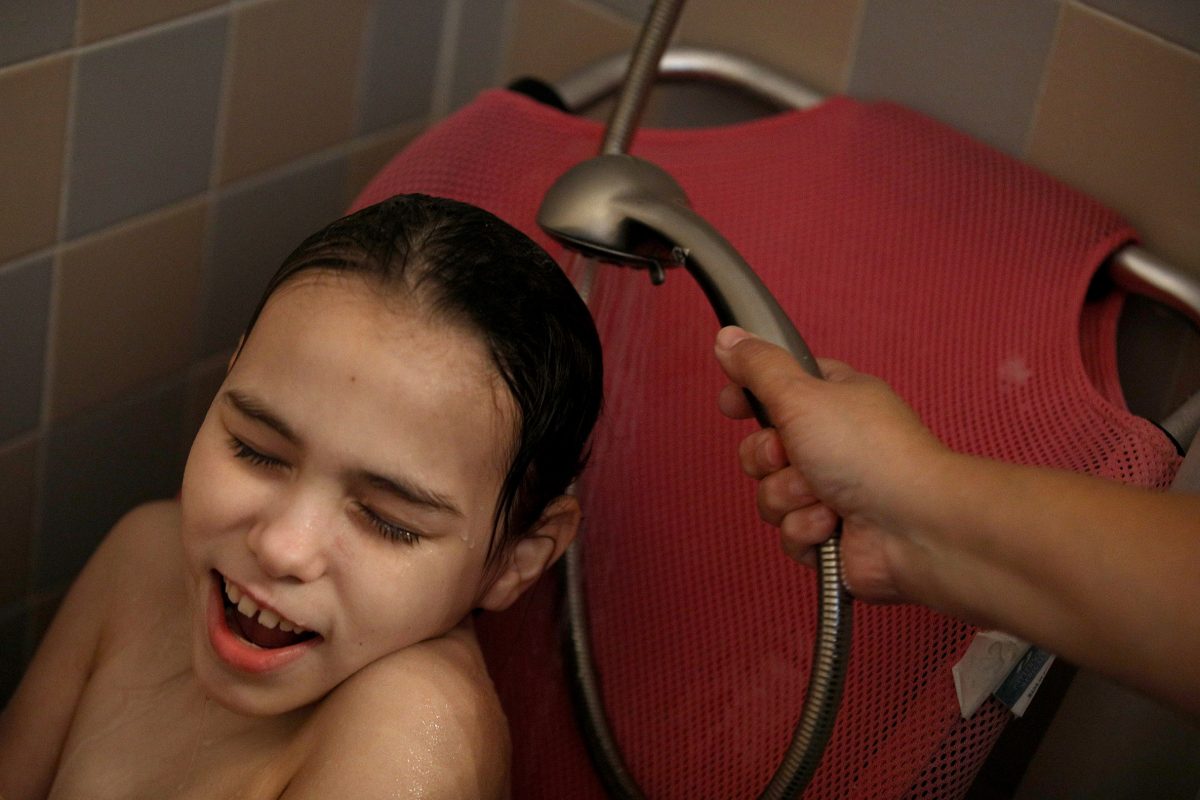
Hannah’s physical limitations mean that Vicki and her husband, Tim, must care for Hannah much like they would an infant. They feed her. They bathe her. They carry her down the hallway and lift her into her safety bed, which resembles an oversized crib.
Hannah’s parents also bear the full financial burden of raising a child with cerebral palsy.
The Fouches are a family of five living on under $45,000 a year. Although Bethany, their eldest daughter, no longer lives at home, Vicki and Tim have a 6-year-old daughter, Mikayla, and last summer they welcomed their 15-year-old niece, Naomi, into the household.
Tim, 48, who is a residential construction estimator for a custom home builder, is the family’s only income earner.
“I work hard,” Tim says. “As a husband and a dad, you try to balance working and being there for your family at the same time. When you do that and you still feel like you’re coming up short at the end of the month… it gets frustrating sometimes.”
Why Earning More Isn’t Feasible

The family qualifies for Medicaid and Social Security benefits for Hannah, along with a scholarship that covers home-schooling costs. But Vicki says she worries about the possibility of losing that support if her husband’s earnings increase.
“We’re basically between the proverbial rock and a hard place,” she says.
The Fouches know other families with disabled children who don’t qualify for assistance and can’t get certain treatments or equipment covered by private insurance.
“If [Tim] were to make more money and then they took [Medicaid away], it would cost us more over time,” Vicki explains.
Vicki typically manages paying the bills and the family budget since Tim works full time.
“How she does it, I don’t know,” Tim says. “She stretches something out of nothing, and she pays the bills. But it’s a struggle every month.”
The Fouches carry between $10,000 and $15,000 in credit card debt. They’ve relied on cards when unexpected costs arose, such as replacing the transmission in their minivan last year. They’ve made home-schooling purchases on credit, only to later learn Hannah’s scholarship wouldn’t reimburse those expenses.
Each year, they try to set aside part of their tax refund for emergencies. Sadly, that doesn’t last through the year. They don’t have any other financial cushion.
“We never have money to save,” Vicki says. “We’re fortunate that we have enough to pay our bills.”
Medicaid Provides Help… but Not Everything
Every week, Hannah sees a speech therapist, a physical therapist and an occupational therapist. She also takes part in therapeutic horseback riding. Thanks to assistance, the Fouches don’t have to pay for any of those services out of pocket.
The family has also had some of Hannah’s equipment covered by Medicaid: an electric wheelchair, a manual wheelchair, a walker, a shower chair and Hannah’s safety bed, along with her nutritional drinks and diapers.
“We’re very, very blessed,” Vicki says.
But Vicki notes that the diapers Medicaid provides tend to leak. The electric wheelchair has broken down several times.
Hannah never felt secure in the first shower chair they were able to obtain through Medicaid when she was small, so her father fashioned one out of PVC pipe and trampoline material.
Vicki says she’s grateful her husband is so handy. He also constructed a temporary wheelchair ramp for their front door and widened the kitchen entrance so Hannah’s wheelchair can pass through.
Obtaining approvals from Medicaid can be tough, Vicki says. She explains the agency requires detailed justification for why certain equipment or therapy is necessary and how Hannah will benefit.
Even when something is approved, the family sometimes still covers part of the cost. Last spring, for instance, Hannah attended three weeks of intensive therapy at a facility in Melbourne, Florida. Medicaid paid for the therapy itself, but the family had to cover travel and lodging because the facility was three and a half hours away.
The family held a bracelet fundraiser and raised about $2,300.
“We ended up having to come up with some of it out of our pocket,” she says. “We raised most of it, but not all.”
A Plan Put Aside

Vicki previously worked as a Girl Scouts program coordinator, but high day care costs led her to become a stay-at-home mom after Hannah was born. She believed it would be temporary and that she’d return to work once Hannah began kindergarten. Then she had an unexpected pregnancy with Mikayla.
Vicki had her tubes tied after that pregnancy. With Hannah in school, Vicki planned to re-enter the workforce once Mikayla reached kindergarten. But then Hannah began having troubling incidents at school.
“She came home one time with rug burn on her cheek, a black eye, a split-open lip, and they say she fell over at circle time,” Vicki recalls, suggesting she suspects Hannah fell from a changing table instead. “She would come home 90% of the time with her lunch [uneaten].”
The Fouches grew worried their daughter wasn’t receiving adequate care at school. Two weeks before Hannah was about to start third grade, her parents told her she’d be returning soon. She cried uncontrollably.
“What kid at 8 years old hates school so bad?” Vicki asks.
So the Fouches chose to home-school their children, and Vicki set aside her plan to go back to work. Though Vicki does a great deal for her family, she sometimes feels guilty that she can’t contribute financially. Tim, however, is deeply appreciative of the role she’s taken on.
“[It’s] worth a whole lot for her to be with our children, to keep them safe and make sure they’re taken care of and getting a good education,” he says.
That’s not the only sacrifice the Fouches have made.

Vicki says they avoid places that aren’t accessible for Hannah, like playgrounds or certain fairs. If Mikayla wants to go, she often must wait until one parent can stay home to care for Hannah.
The Fouches try to ensure Mikayla enjoys activities — such as gymnastics and T-ball — but funds aren’t always available. Vicki says they charged T-ball registration to their credit card. They pay per gymnastics class, and when money is tight, they skip weeks.
One special family treat is visiting Disney World, about an hour-and-a-half drive from their home. Last year, the Fouches had annual passes. They received them as a Christmas gift for the girls and paid in monthly installments. However, Vicki says they opted not to renew this year after Disney raised prices.
“That’s been really frustrating,” she says. “That’s really the only thing that we do with the kids… Hannah doesn’t feel disabled at Disney. She can go on all the rides. She can’t do that at all the other parks.”
Their Hopes and Uncertain Tomorrow
About ten years ago, when Hannah was first diagnosed with cerebral palsy, Vicki remembers the doctor explaining the diagnosis twice.
“I guess most people get hysterical and we didn’t, so the doctor [asked], ‘Do you understand what I’m saying to you?’” she says.
But Vicki and Tim recognized something serious was wrong with Hannah. Their infant daughter wasn’t reaching typical milestones for her age. Without telling each other, they each suspected cerebral palsy.
Rather than being shattered, they were thankful Hannah didn’t have a life-ending illness, but a condition that can improve over time with therapy.
The Fouches have watched Hannah make gains over the years. She can now sit up without support, whereas previously her body couldn’t hold itself upright.
One speech therapist once told the family that Hannah would never be able to operate a communication device.
“She said she would never be strong enough to push the buttons on the communication thing,” Vicki recalls. “And yeah, this kid’s a whip on the iPad. It’s not even funny.”


In early December, Hannah was measured for a leg brace designed to prevent her body from folding during sleep. Because she can’t control her limbs, it can be risky if she bends herself in half overnight, possibly injuring herself or even obstructing her breathing. Hannah frequently sleeps in her parents’ bed so they can closely watch her.
A few weeks after receiving the brace, Tim says she’s still adjusting. Hannah’s therapist recommended wearing the brace an hour or two in the evening at first, then gradually increasing use until she can sleep with it. When Hannah can wear the brace overnight and move back to her own bed, her parents hope to get more restful nights.
There’s additional equipment the Fouches wish Hannah could have to improve her quality of life.
They’d love for Hannah to have a mobile stander, a device that would let her stand and move without bearing her full weight.
“We can stand her for a short while… but the last few times we had her in her walker, she overheated and threw up,” Vicki says.

A device that prevents Hannah from straining to support herself would be ideal. Spending so much time in a wheelchair causes poor circulation in her legs.
However, Vicki says Medicaid won’t pay for the mobile stander because Hannah already has an electric wheelchair. She says the device would cost $5,600 out of pocket — money they don’t have.
She also says a hoist system at home to lift Hannah would be wonderful. At 60 pounds, Hannah is becoming harder to carry.
“I’m scared I’m going to fall with her,” says Vicki, who had to be hospitalized twice last year after severe falls. Fortunately, she wasn’t carrying Hannah on either occasion.
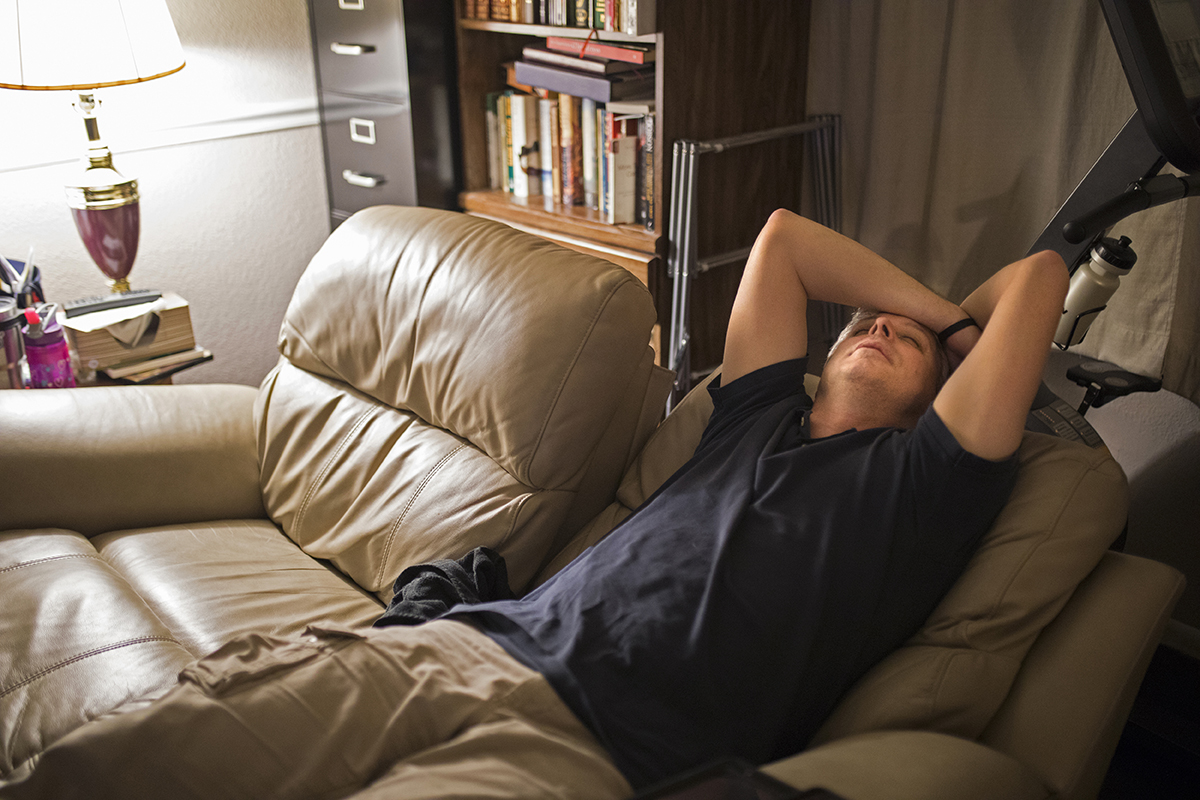
The Fouches also long for a handicap-accessible van, but it’s beyond their means. Vicki said converting their current minivan to be wheelchair-friendly would cost roughly $15,000.
Instead, they lift Hannah into the minivan and rely on her manual wheelchair when they go out.
Hannah is only 10 now, but Tim and Vicki worry about how independent she might be as an adult. It’s unclear what she’ll be able to do on her own in the future.
“If we could have one wish for her… I would really hope at some point that she could be able to speak,” Vicki says. “I think that would make a huge difference for her, instead of having to rely on a communication device. I don’t know if that will ever happen — and if it doesn’t, it’s fine — but if I had a choice between her walking or speaking, I’d rather have her speak.”
One thing Vicki and Tim are certain of is they never want to place Hannah in a nursing facility. Their faith gives them strength to face the obstacles that arise.
Overall, Vicki’s deepest wish for her daughter is one most parents hold.
“I just want her to have as good of a life as she can,” she says.

If you are raising a child with special needs, learn more about how to plan financially for your child’s future.
Nicole Dow is a senior writer at Savinly.