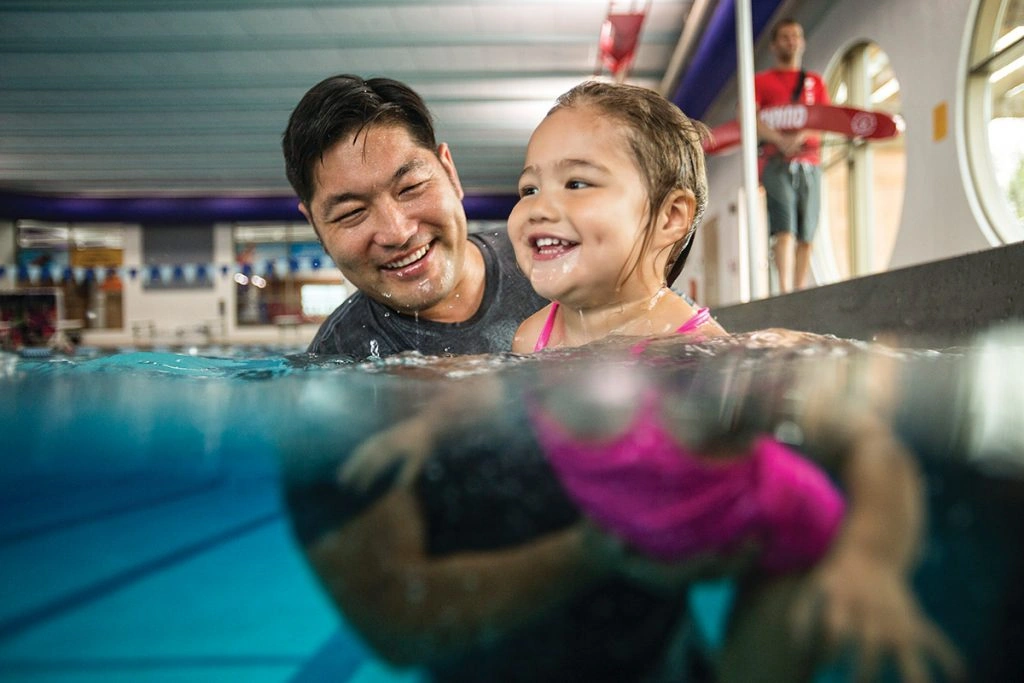
When school lets out, children rush to the water for enjoyment, exercise and relief from the heat.
But swimming is more than just recreation — it’s an essential life skill.
According to the U.S. Centers for Disease Control, about 10 people die from drowning each day on average, including two children under 15. The National Safety Council says drowning ranks as the second leading preventable cause of death for kids.
Despite those frightening figures, not every family can afford the roughly $40-per-lesson price tag for swim instruction.
“Seventy-nine percent of children in families with household incomes less than $50,000 have little to no swim ability,” said Lindsay Mondick, senior manager of aquatics at YMCA of the USA.
Because it often takes multiple sessions for a child to become proficient, swim lessons can total several hundred dollars per youngster.
“As a thrifty mom myself, I understand that swimming lessons sometimes fall off the budget list,” Mondick said. “But I believe it’s the only recreational activity that can also be life-saving.”
To expand access to water safety and swimming instruction, the national YMCA is funding spots for 33,000 children this year to take part in Safety Around Water programs at no charge.
Safety Around Water is a YMCA initiative that teaches children crucial water-safety techniques and introductory swim skills. Mondick says about 1,200 YMCA locations nationwide are offering the program.
Over a series of sessions (usually eight 40-minute classes), instructors help children build water confidence and teach skills to use if they unexpectedly find themselves underwater, such as treading water, flipping to float on their backs and pushing off from the pool bottom to reach the surface.
Children will also pick up basic swimming strokes and vital safety knowledge, including what to do if they see someone in trouble in the water. The classes are designed for beginning swimmers, generally ages 3 to 12.
Beyond the national funding, Mondick noted that many local Y branches run their own fundraisers and work with community partners to deliver the program free or at reduced cost.
Some sites restrict complimentary lessons to children below a certain income threshold or within particular zip codes or school districts. Registration may be limited and lesson schedules differ by location.
Visit your local YMCA branch to see whether it provides this free program in your area and to get more information.
The YMCA also offers paid swim lessons that move beyond basic survival techniques. Prices vary by location, and you may find YMCA fees are lower than for-profit swim schools or private instructors.
Mondick said the YMCA teaches roughly 1 million children to swim each year, and many branches offer scholarships or financial aid to keep programs within reach for low-income families.
For additional budget-friendly swim lesson options, check with your city- or county-run pools.
Nicole Dow is a senior writer at Savinly.