Alo yoga top: $58
Manduka yoga mat: $82
Hugger Mugger yoga block: $24.95
Prana yoga strap: $15
Multi-studio monthly pass at YogaWorks: $135
Total: $412.95
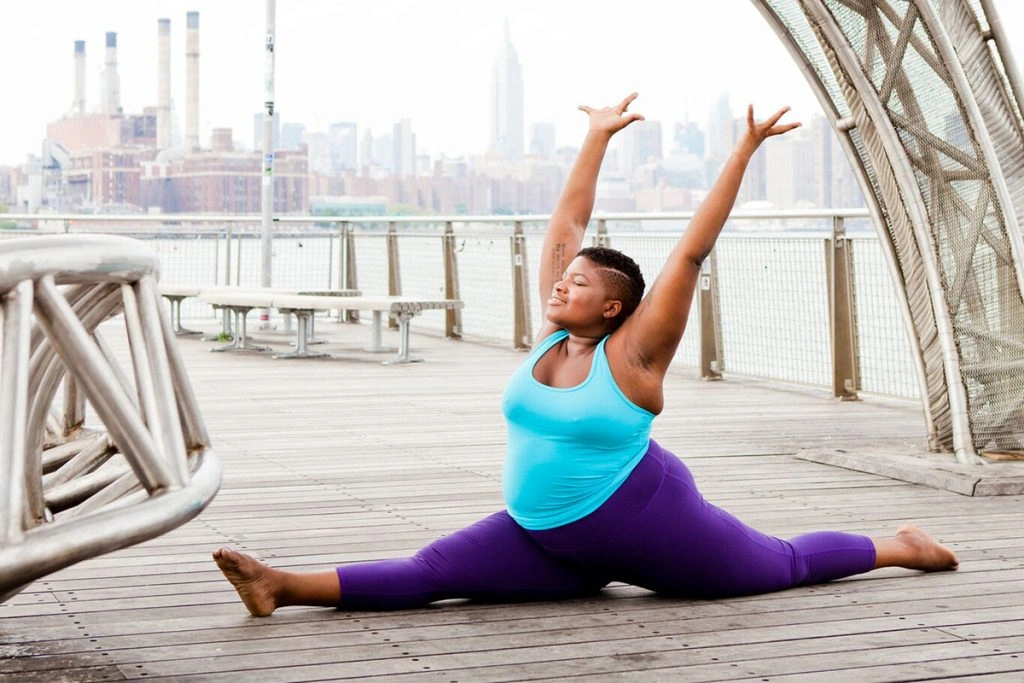
If you begin a yoga routine by buying all of the above, you’re approaching it the wrong way, says internationally known yoga instructor and body-positive advocate Jessamyn Stanley.
“There’s no reason to believe you must spend over $100 to get going,” she says. “That’s absurd.”
I talked with Stanley, a social-media figure and the author of “Every Body Yoga,” about the consumer culture surrounding wellness — yoga in particular — and how people can pursue yoga without breaking the bank.
In 2016, Yoga Alliance and Yoga Journal published findings from their Yoga in America Study, which reported about 36.7 million Americans practiced yoga and collectively spent $16.8 billion a year on classes, apparel, equipment and accessories.
That’s about $457.77 per person.
Although costs can quickly accumulate, they don’t have to. Stanley knows well what it’s like to begin a yoga practice with limited resources.
“I come from a working-class household, have always needed to hold a job, often multiple jobs, honestly,” she says.
She was also a graduate student at the time. Dropping hundreds on classes and gear simply wasn’t feasible.
Lowering the Cost of Instruction
To pare down expenses for yoga classes, Stanley advises students to hunt for discounts and consider work-trade arrangements.
When she first started going to classes at her local Bikram studio, Stanley bought a Groupon that provided a discounted month of unlimited sessions. After that ended, she discovered the studio’s work-study program and enrolled.
“I think I had to help tidy the studio four to five times a week, but I could practice whenever I wanted,” Stanley remembers. “That’s how I began practicing in studios. I literally couldn’t have afforded it otherwise.”
Practicing at home and exploring online class options is another route she recommends for budget-conscious students.
Stanley moved to online classes after leaving grad school and relocating. She started with a free trial of YogaGlo and later paid about $18 a month for the service.
“It’s much cheaper than attending a studio regularly,” Stanley says.
She understands some people feel uneasy practicing alone at home, but stresses its importance.
“Even if you attend studios, you should cultivate a home practice,” she says. “When I really invested in practicing at home, my practice became far more detailed and integrated than it ever had been before.”
And once you learn to practice independently, that skill stays with you regardless of your financial situation.
Being Resourceful With Yoga Equipment
Whether you practice in a studio or at home, you might be tempted to acquire a lot of gear — a mat, clothes, props.
But ultimately, none of those items are strictly necessary, Stanley notes.
“People have found so many ways to commercialize yoga,” she says. “All of these products — different leggings, mats, and extras — are not essential.”
Yoga has been practiced for millennia, Stanley points out, and the items we buy today didn’t exist then. Clever advertising often convinces people they need them.
Stanley didn’t buy a mat when she first practiced; she used her father’s old Pilates mat.
Instead of purchasing props, she improvised with household items.
“I used a dog leash as a strap for a long time,” she said.
Stanley’s mother later knitted her a strap after noticing the dog-leash workaround. Eventually, someone gifted her a proper yoga strap.
Rather than buying a block, she taped Star Wars VHS tapes together. Stanley also constructed a makeshift block from two taped cell phone boxes or used large books like “Harry Potter and the Deathly Hallows” and “The Joy of Cooking.”
In “Every Body Yoga,” Stanley offers additional suggestions for substituting common yoga equipment. But while she believes practice can be free, she isn’t opposed to buying gear.
“Are some items cool and genuinely useful in your practice? Absolutely,” she says. “I’m not denying that real yoga props can be superior to DIY ones. I prefer props made for their intended purpose. But if you can’t afford them, you shouldn’t feel obligated to have them.”
If someone chooses to splurge on a single piece, Stanley recommends investing in a quality mat.
“If you really love practicing and it becomes central to your life, investing in a mat that handles sweat, enhances grip and offers support and comfort is worthwhile,” she says.
Two mats she likes are JadeYoga, made sustainably from natural rubber and priced between $39.95 and $149.95, and Liforme, which Stanley calls “the Cadillac of yoga mats.”
But if that’s unaffordable (a Liforme mat can cost $140) — skip it. Stanley suggests borrowing a friend’s mat or buying a budget mat at Marshalls and placing a towel on top.
“It’s not that deep,” she says.
Advocating Accessible Yoga for Everyone
Stanley’s central point is that yoga should be available to all — regardless of shape, gender, race, culture, physical ability, faith or financial status.
She says people get caught up in yoga’s material trappings and assume they must acquire certain items to practice well, which is untrue.
“You can engage in wellness without money; it just takes some practice to train yourself to do that,” she explains.
Stanley, who lives in Durham, North Carolina, used to teach at community centers on a pay-what-you-can basis. Now, the classes she offers in Durham are entirely free, with any donations directed to a local charity.
She believes yoga should serve others. Removing costs allows her to share yoga in a non-transactional way.
“Yoga feels inaccessible because there aren’t enough free options,” Stanley says.
She insists financial means should never prevent someone from practicing yoga.
“It’s only a modern notion that there’s any connection between money and yoga,” Stanley says. “There shouldn’t be any link at all.”
Ana Morales is a staff writer at Savinly.