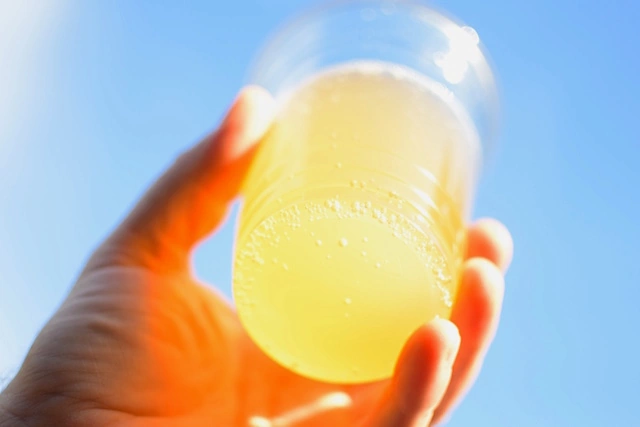
I first encountered kombucha thanks to my high school English teacher, and after trying that sweet-tart goodness I was immediately smitten.
My craving for kombucha, both refreshing and healthful, was restrained by its price — roughly $4 a bottle. Even strolling past the refrigerated drinks section made my wallet wince. So I limited myself to enjoying this fermented treat sparingly.

As tasty and invigorating as kombucha is, paying $4 a bottle felt wildly overpriced considering it’s basically tea, sugar, water and microbes. There’s a reason Whole Foods is nicknamed Whole Paycheck, and kombucha is a perfect example.
So I embarked on a mission to cut costs by brewing kombucha myself.
What Do You Need to Brew Kombucha at Home?

Collecting supplies is straightforward. You probably already have most of the ingredients and tools in your kitchen. I certainly did.
Water? Check. Tea? Yep. Sugar? Got it too.
Scoby (also known as a kombucha mother; it’s a community of bacteria and yeast that resembles a pancake)?
Well, I didn’t have that on hand, but you can easily purchase one, receive one from a friend or even cultivate your own from scratch or from the leftovers of store-bought kombucha (unflavored works best). Craigslist and local community groups are also good places to find a scoby.
For equipment, you’ll need a quart jar, coffee filters and a rubber band.
Thanks to my intense coffee habit (I favor French press, though I have a Mr. Coffee for hectic mornings), a rescued Classico pasta sauce jar and several tough rubber bands from broccoli I bought at the grocery, I was ready to go.
What If You Don’t Already Have Those Items?
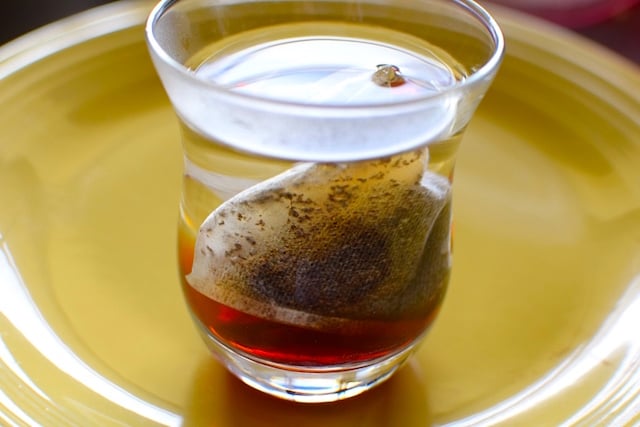
Let’s slow down for a moment — not everyone will be lucky enough to have most of the basics lying around.
If you must buy everything, expect a startup cost of about $6–$20 depending on how premium you go with sugar, tea, jars, etc.
Here’s a sample cost estimate:
Black tea (20 bags): $3
5-pound bag of sugar: $3
Scoby, jars, coffee filter, rubber band: Free–$14
That modest outlay will cover at least the first 10 quart batches, likely more, which breaks down to $1 or less per 16 ounces, or roughly 6.3 cents per ounce.
A 12-pack of 16-ounce bottles can set you back up to $170, though even the $50–$80 range isn’t cheap. Sure, it’s healthier than soda, but it’s steep. Even downsizing to 8-ounce bottles, a 12–24 pack runs around $30–$45.
Even if you assume you buy all supplies and get only 10 quarts from them, that still represents at least a 50–75% savings compared to store-bought kombucha.
Is Brewing Kombucha Difficult?
I found kombucha isn’t nearly as tricky to make as it might appear.
The initial setup took about 15–30 minutes. Try this recipe or this video to begin.
The first fermentation lasts roughly 30 days, and it’s largely hands-off. Ideally, keep your jar at room temperature, away from direct sunlight.
My brew sat on the top shelf of my pantry for a month, tucked between a bottle of Kahlua and a fifth of Jose Cuervo. Hey, kombucha can’t be your only vice.
Water Kefir: Another Affordable, Simple Fermented Beverage

My culinary curiosity kept growing. What other treats could I whip up in the empty Ball jars perched above my stove?
Enter water kefir. No typo there. You’re probably familiar with milk kefir from grocery store shelves, and water kefir (think something like La Croix or Zevia) is a comparable alternative.
It’s basically liquid fermented by bacteria and yeast grains. As the name implies, water kefir ferments water — specifically sugar water.
If kombucha seems simple, water kefir is even more so.Just prepare a batch of sugar water, let it cool, then add a handful of gelatinous water kefir grains. After a much shorter fermentation time — about four days — you’ll have a batch ready to flavor and bottle.
Harvesting water kefir grains from scratch isn’t as effortless as with kombucha, but it’s reasonably priced; some starter grains cost around $10. A quick Amazon search returns many options.
So what can you do with water kefir? It’s an excellent base for beverages and recipes, from homemade “sodas” to desserts and even dressings.
Add lemon juice and you have lemonade. A few teaspoons of vanilla turns it into cream soda.
One of my favorite blends is the Shamrock Water Kefir Shake, a tasty mix of avocado, kale, mint extract, honey, coconut milk (I swap almond milk), ice and water kefir.
Odd-sounding perhaps, but it’s fantastic. Pro tip: use plenty of mint extract and honey to counterbalance the kale’s earthy notes.
Like a kombucha scoby, water kefir grains can be reused for later batches, and they multiply. I got mine from a friend who had excess, so they were free — ask around; someone you know might have extras!
Can Brewing Kombucha and Water Kefir Save You Money?

Both beverages are loaded with probiotics. Once I started drinking probiotic-rich drinks regularly, I found my three-times-a-day probiotic and digestive enzyme routine unnecessary.
If you’re into probiotics, you know how expensive supplement bottles can be, and these fermented drinks reduced my need to buy those supplements. I ended up with an almost unlimited supply, plus the satisfaction of making it myself.
The Downsides of Brewing Your Own Kombucha and Kefir
Kombucha at a fraction of the cost and removing probiotics from your shopping list… by now you’re likely thinking, “what’s the downside?”
Like any living culture — and yes, to borrow Dr. Frankenstein, “it’s alive” — booch and kefir require upkeep. You must feed them or brew new batches on a regular schedule.
For kombucha, that’s roughly every week to month; for water kefir, it’s every day or two. With water kefir especially, if you don’t consume what you produce quickly, you could end up short on bottles. If it gets to be too much, consult this guide to taking a break.
Still, it’s a small inconvenience for the probiotic and financial advantages. At least you don’t have to walk your kefir in bad weather.
Your Turn: Have you tried making your own kombucha or water kefir? How did it go, and did it help you save money?
Disclosure: A kombucha cheers to saving! We appreciate the ability to include affiliate links in this post.
Ava Brooks is a freelance lifestyle writer who contributes to various outlets. When she’s not writing, she’s likely drinking too much coffee, spinning vinyl and rewatching classic TV shows.