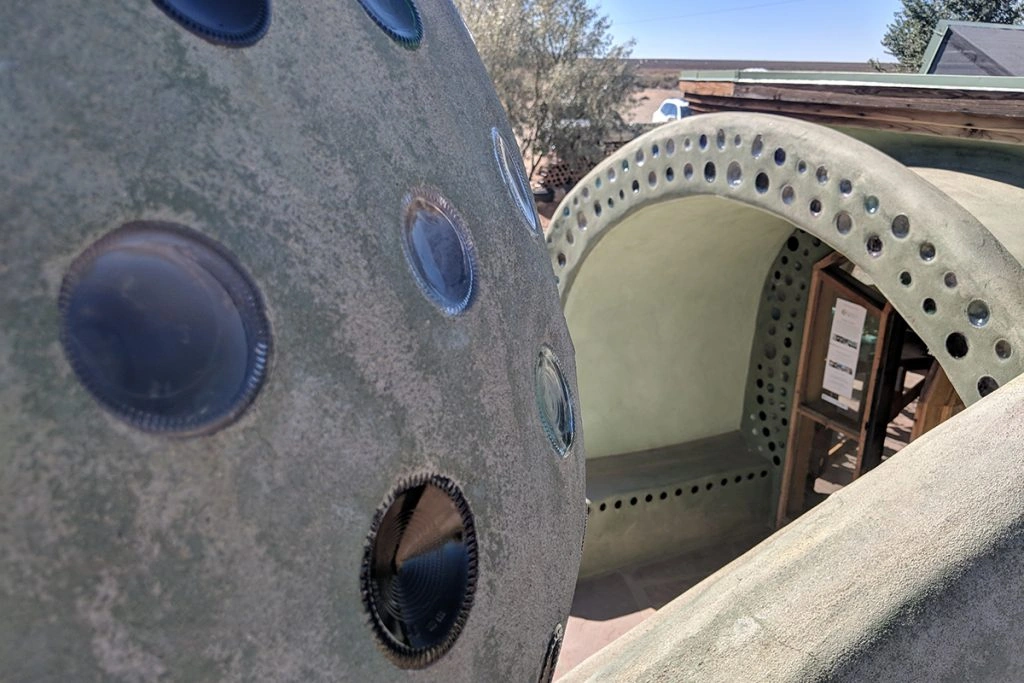
Dotting the northern New Mexico landscape with glass bottles and ringed by old tires, these structures sprout from the desert like clay-toned spacecraft. But this “ship” is of another variety.
They’re Earthships — an alternative housing model built around sustainability, both inside the residence and on a broader environmental scale. Made mostly from repurposed materials and designed to supply their own water, energy and thermal regulation (all through natural, off-grid methods), Earthships promise a lifestyle that’s both eco-friendly and budget-conscious.
But does this seemingly ideal way of living truly deliver? And if it does, why aren’t more people living in them?
What Exactly Is an Earthship?

Earthship Biotecture, the group at the heart of the Earthship movement, describes an Earthship as “a kind of home made from natural and recycled materials with energy efficiency in mind. It’s created to produce water, electricity and food for its own use.”
Put simply, it’s a self-sufficient, highly green, off-grid residence — one that removes the need for outside utilities and can shrink your grocery budget as well.
How does a house accomplish all that? By following six intentional design principles that exploit natural resources and foster a reciprocal relationship between people and the planet.
Sound intriguing? Let’s unpack how it functions.
We’ll begin with the essentials — temperature regulation and protection from weather. In most climates, that’s the reason we build shelters: to avoid freezing or overheating. (Staying dry in storms is a plus, too.)

Recall learning about adobe homes in history class? Earthships employ a comparable strategy, using the idea of “thermal mass” for natural insulation.
Many Earthship walls are constructed from recycled tires packed with rammed earth. These hefty earthen walls soak up the sun’s warmth during the day, keeping interiors cool, then release heat at night to keep the space comfortable. The tires add structural strength while helping address an environmental issue — what to do with used rubber.
Alongside thermal mass, Earthship designs include expansive south-facing windows that boost interior heating (helpful in cold months) and supply ample light for the built-in greenhouse — more on that shortly.
With “shelter” handled, what about the other necessities: food and water?
This is where the greenhouse comes into play. Every Earthship features an antechamber, the zone between the row of south-facing glass and the inner wall of the living area. This sun-warmed space keeps the living quarters cooler and creates an ideal environment for growing crops year-round.
Household water is harvested from rainfall into large cisterns and passed through a biomechanical filter before it reaches showers and faucets, just like a conventional home. Relatively clean wastewater from baths and sinks (graywater) is reused, with greenhouse plants serving as part of the filtration. The rest of the waste (the more hazardous “black water”) is handled via a standard septic system.
Lastly, power is generated by solar panels, wind turbines, or a blend of both. The home uses energy-efficient appliances tailored for a modest power supply.
When everything performs as intended, you end up with a house that heats, cools and powers itself, with a steady, recycled water supply.
And, not incidentally, Earthships also look pretty striking.
How Can an Earthship Lower Your Expenses?
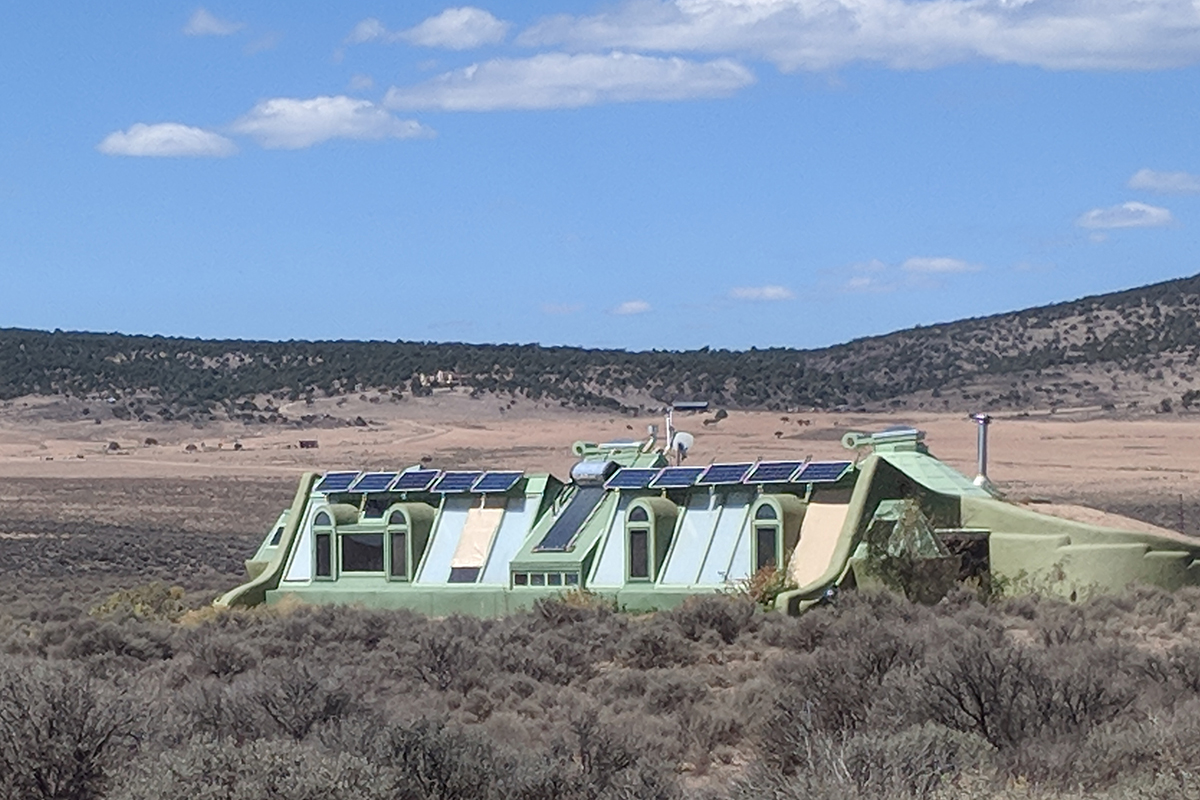
One of Earthship living’s primary aims is to dramatically shrink the occupant’s carbon footprint.
But Earthships can also offer long-term monetary benefits: when functioning properly, Earthship residents essentially eliminate utility bills — or at least reduce them to a minimum.
Consider the expense of heating and cooling alone. According to Choose Energy, climate control accounts for nearly half of a typical home’s energy use — roughly half of your electric bill. Moreover, air conditioning is a major contributor to global greenhouse gas emissions.
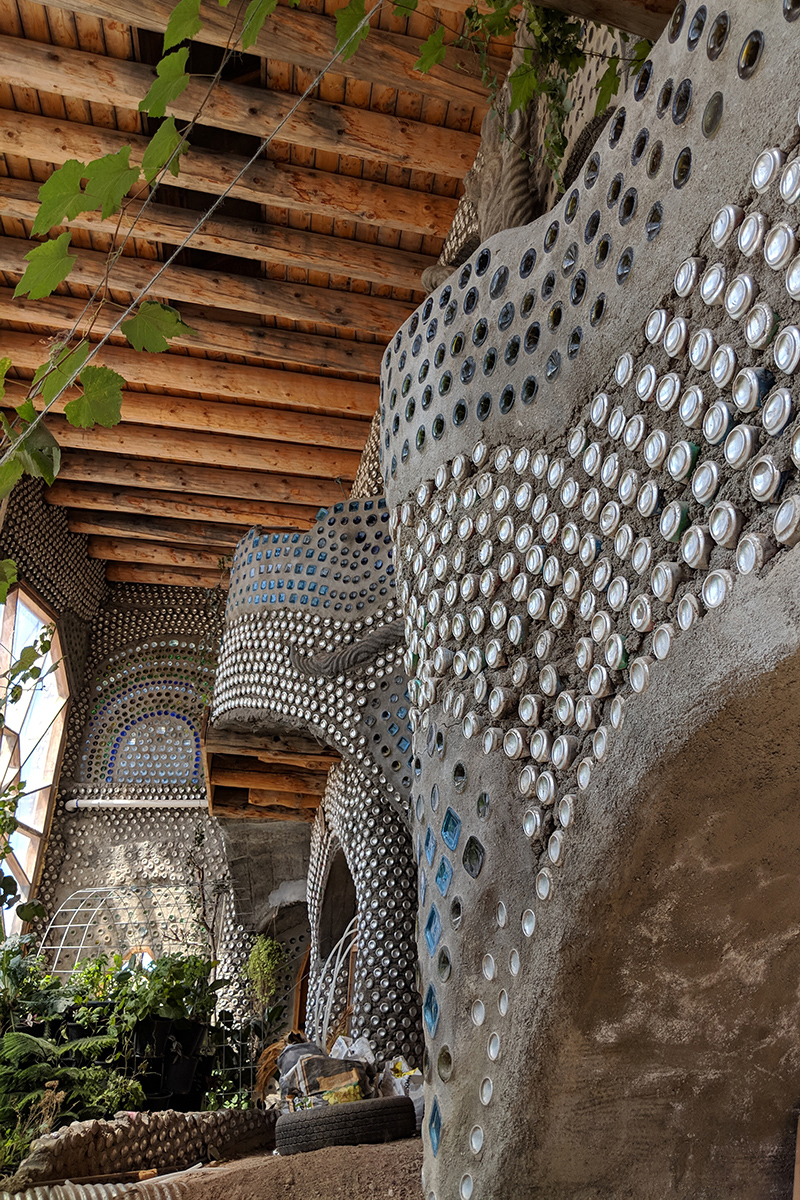
So living in a home that handles temperature control naturally eliminates a large slice of your utility expenses — and contributes to a greener daily life.
That’s before you factor in other utility dependencies like electricity and municipal water and sewer. Earthship Biotecture estimates average annual homeowner utility costs at around $2,580, versus about $300 for Earthship occupants.
If managed well (and you eat your greens), the greenhouse can also cut your grocery spending. While it’s unlikely to make you completely self-sufficient food-wise, you could plausibly halve your yearly food expenses.
And because Earthships use largely repurposed materials, the initial construction expense is theoretically lower than conventional housing.
Which brings us to an important caveat.
Why Aren’t Earthships More Common?
Conceived by Michael Reynolds in the 1970s, Earthships aren’t a brand-new concept. They’ve spread from their Taos roots to every U.S. state and more than 40 countries.
That reach might surprise those unfamiliar with them. Several reasons explain why this apparently ideal dwelling style hasn’t become ubiquitous.
First, the distinctive construction methods make Earthships hard to situate anywhere but very rural locations. Building with glass bottles and tires often conflicts with building codes — which frequently prohibit full off-grid living. While a few intentional Earthship communities exist, they’re typically remote… think a 15-minute drive outside the small desert town of Taos, which has fewer than 6,000 residents. Small-town life has perks, but extreme remoteness isn’t for everyone.

Second, Earthships aren’t necessarily easy (or inexpensive) to obtain. Because they’re unconventional, most lenders won’t underwrite a mortgage for an existing Earthship; building one yourself is possible but time-consuming and extremely labor-intensive. Packing earth into used tires is grueling work — each tire uses roughly four wheelbarrows of soil and weighs about 350 pounds when completed.
Earthship Biotecture will construct one for you, but the cost is roughly $250 per square foot. Even modest homes can run into the tens of thousands of dollars.
Finally, the promise of total self-sufficiency doesn’t always pan out. The tires in the walls can degrade over time, potentially causing off-gassing issues. As a living, evolving approach, some design flaws emerge only after extended habitation. For example, Santa Fe architect Rachel Preston Prinz, who’s worked with multiple Earthship clients, lists common drawbacks she’s observed.
Ways to Afford Housing — Whatever Its Form
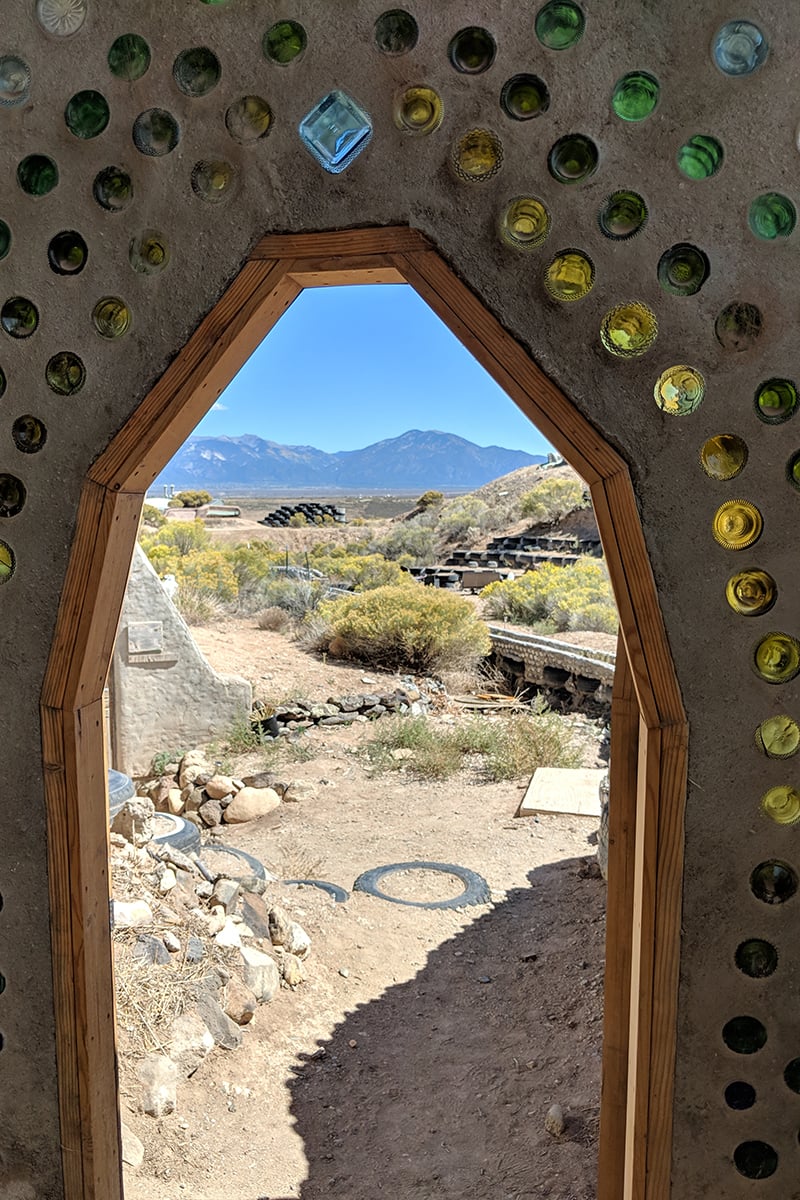
Whether the idea of living in an Earthship excites or repels you, most people would welcome spending less to keep a roof over their heads.
Luckily, you don’t need to move to a remote desert to cut housing costs.
From navigating first-time buyer hurdles to refinancing an existing mortgage to trimming utility bills, there are many smart strategies and insider tips for securing shelter without emptying your savings.
And if you do find yourself in northern New Mexico, it’s worth checking out these otherworldly homes in person. (Hint: you can even stay overnight in one, courtesy of Airbnb.)