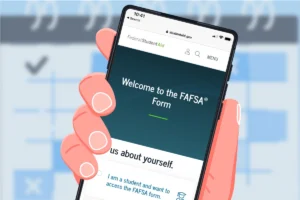
Submitting paperwork for financial aid is about to become a bit less stressful for students preparing for college and their families.
The Free Application for Federal Student Aid, commonly called the FAFSA, is getting a timing tweak so it lines up with the college application timeline rather than arriving afterward.
Beginning in fall 2016, you’ll be able torequest financial assistancealmost a full year before you expect to start school.
So if your goal is to enroll in fall 2017, you could complete your FAFSA as early as October 2016, using figures from your family’s 2015 tax documents.
Why This Shift Matters
Under the current FAFSA timeline, students and parents have to wait until January to apply for aid for the coming fall semester.
But completing the FAFSA requires tax information, and many households — waiting for multiple W-2s and 1099s — delay filing returns until February, March or even April.
By then, many applicants have already received admission offers. And without details about financial aid and award packages, it’s tougher for students to decide which schools are genuinely affordable.
“It has become clear that telling students about aid after they apply to colleges — the current practice — is no way to convince nervous students that college can be affordable,” writes University of Michigan professor Susan Dyanarski in the New York Times.
Moving up the FAFSA filing period by six months gives college-bound families the chance to make more informed financial choices before accepting an offer from the school of their dreams.
Knowing a family’s estimated expected contribution for tuition and living expenses before applications are finalized helps determine how much debt a student is comfortable taking on — including Stafford loans, Pell grants and work-study options.
IRS Integration Will Make FAFSA Even Easier
There’s more encouraging news for people filling out the FAFSA.
The IRS Data Retrieval Tool, which currently serves only about 20% of FAFSA filers, will be broadened next year so almost all applicants can pull recent tax information directly from the IRS.
This feature is a major improvement for families. Rather than rifling through a paper tax return to locate the numbers you must transcribe into the FAFSA, a single click will populate the necessary tax fields in the online form.
The update increases confidence that the form was completed accurately and will cut down on the number of applications that colleges must audit per Department of Education requirements — easing the workload for financial aid staff.
Beyond FAFSA: Strategies to Cover College Costs
While the FAFSA timing change improves the planning process, it doesn’t solve every funding challenge. It’s still your responsibility to save and explore ways to cover college expenses, whether you’re filling out forms for the 2016 academic year or planning for the future.
Below are some approaches to consider based on your circumstances:
Apply for Many Scholarships
Although some aid comes as grants that don’t need repaying, much of most aid packages consists of loans.
Your strategy: Keep applying for scholarships until you can’t keep going.
Numerous scholarships target incoming freshmen, while many others are aimed at upperclassmen, nontraditional students and part-timers.
Talk with your high school college counselor and explore local organizations for scholarship possibilities in your area.
Meanwhile, we have a compilation of 100 scholarships to help you begin, and another list of 100 unusual scholarships that highlights some unconventional ways to fund college.
Consult Financial Aid Officers
If you’re touring campuses, schedule time to speak with someone in the financial aid office.
These staff members can explain how to optimize aid at their institution, and they’re a prime resource for answers to money-related questions that may be stressing you out. (Then you can reserve your anxiety for the real scary part of applying to college: the essay.)
Even after you’re enrolled, it’s a good idea to meet with financial aid personnel to review challenges, opportunities, and payment options. Keep in mind that the financial aid office is there to support you, not to dissuade you!
Start Reducing Loan Balances Before Graduation
If you have earnings from a part-time job or a side gig, consider beginning loan repayments early — even prior to finishing school.
Paying down principal reduces the total interest you’ll owe once you leave school. And who enjoys paying interest?
Look Into Careers That Offer Loan Relief
Most students won’t land a full-ride to their ideal college. However, some career paths provide opportunities for student loan reduction or forgiveness after graduation.
The federal government offers loan forgiveness programs for teachers and public servants after a set period of qualified service. If you work as a nurse, corrections officer, family services professional or early intervention provider and hold certain Perkins loans, those loans might be fully forgiven.
Your Turn: How will the FAFSA updates influence your college search?